
Introduction
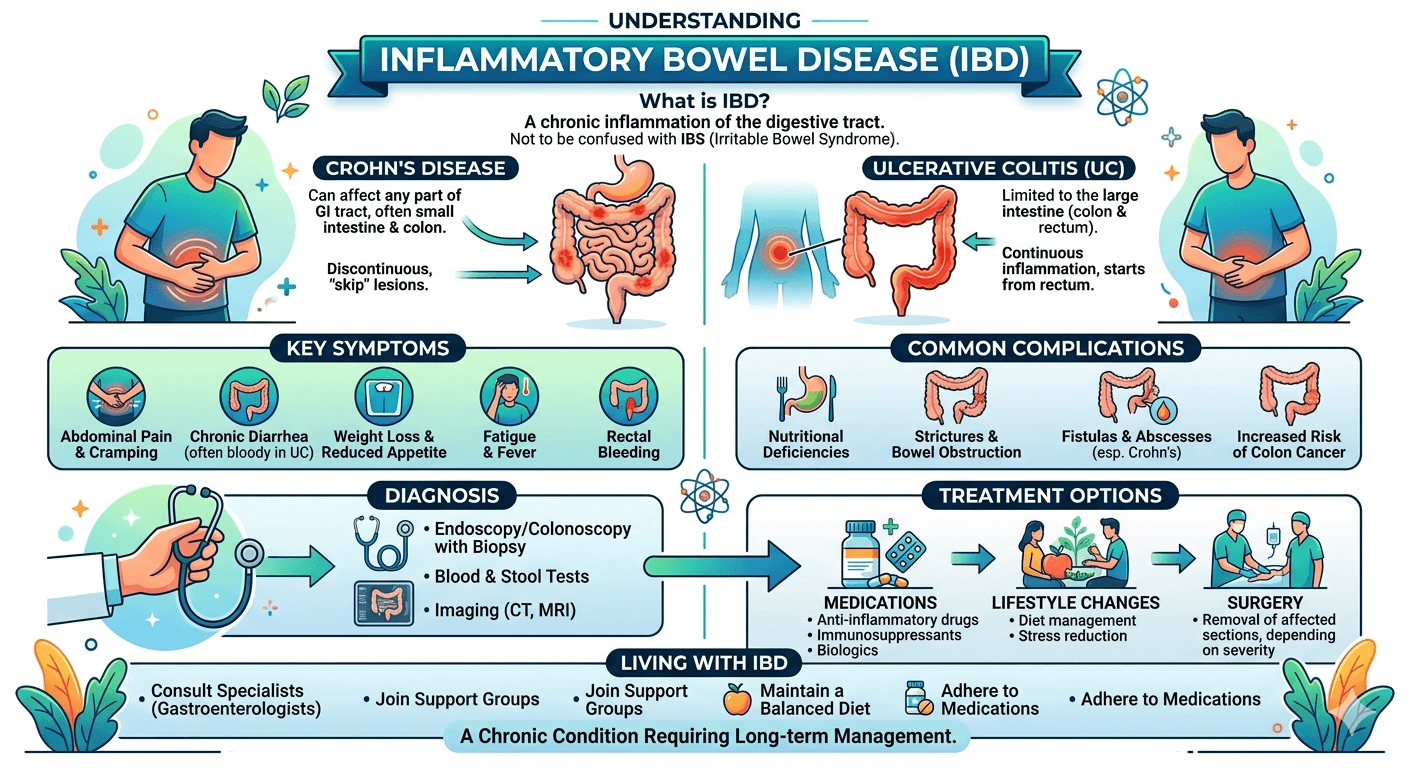
Inflammatory Bowel Disease (IBD) refers to a group of long-term disorders that cause inflammation within the digestive system. The two primary types are Crohn’s disease and ulcerative colitis. These conditions can greatly impact daily life by leading to symptoms such as abdominal discomfort, diarrhea, tiredness, weight reduction, and poor nutrient absorption.
Learn about Inflammatory Bowel Disease, including its causes, symptoms, diagnosis, complications, and treatment options in this complete medical guide.
IBD should not be confused with Irritable Bowel Syndrome (IBS). IBS is a functional digestive disorder without intestinal inflammation, whereas IBD involves chronic inflammation that may damage the bowel lining and result in severe complications.
Although the exact cause remains uncertain, experts believe IBD develops from an abnormal immune reaction influenced by genetics, environmental exposures, and gut microorganisms. The disease commonly alternates between active flare-ups and periods of remission.
Types of Inflammatory Bowel Disease
1. Crohn’s Disease
Crohn’s disease may affect any section of the gastrointestinal tract, from the mouth to the anus. However, it most often occurs in the lower small intestine and the beginning of the large intestine. Inflammation can involve all layers of the bowel wall.
Main Characteristics
- Patchy inflamed areas known as “skip lesions”
- Deep ulcer formation and thickened bowel walls
- Risk of fistulas, abscesses, and intestinal narrowing
- Possible effects on the skin, eyes, and joints
2. Ulcerative Colitis
Ulcerative colitis primarily affects the colon and rectum. The inflammation usually spreads continuously from the rectum and mainly involves the inner lining of the intestine.
Main Characteristics
- Continuous inflammation starting in the rectum
- Frequent bloody diarrhea
- Higher long-term risk of colon cancer
- More superficial inflammation than Crohn’s disease
Pathophysiology of IBD
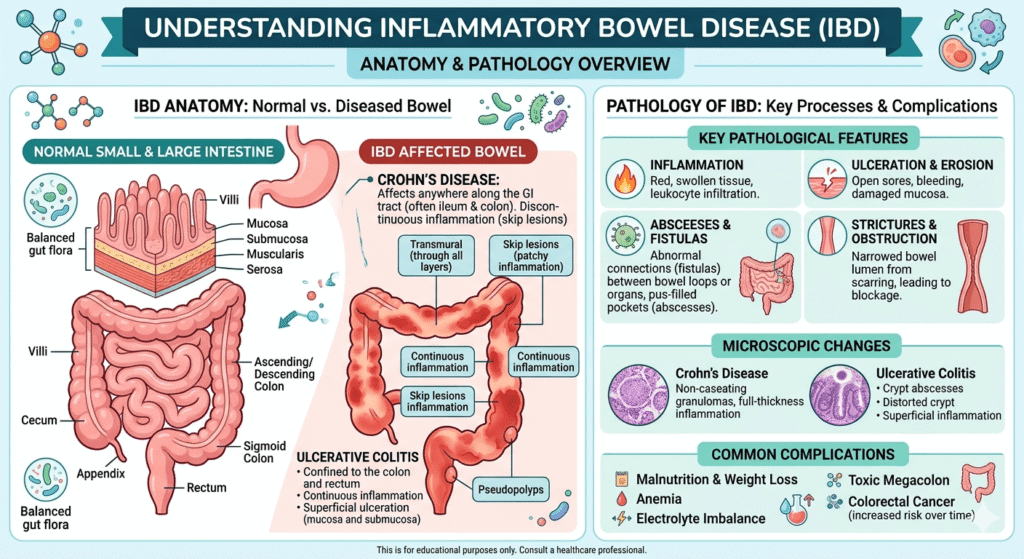
IBD develops through a complicated interaction involving immune dysfunction, intestinal bacteria, inherited factors, and environmental influences.
1. Immune System Abnormalities
Normally, the immune system protects against harmful organisms while tolerating healthy gut bacteria. In IBD, the immune system mistakenly attacks intestinal tissue.
This can result in:
- Persistent inflammation
- Increased inflammatory chemicals
- Ulceration and tissue injury
- Reduced healing ability
2. Genetic Predisposition
Research has identified multiple genes linked to IBD, especially Crohn’s disease. Individuals with affected family members are more likely to develop the condition.
Genetic changes may:
- Disrupt immune regulation
- Damage intestinal barrier function
- Alter gut bacteria interactions
3. Gut Microbiome Disturbance
The intestines contain beneficial microorganisms important for digestion and immunity. In IBD, imbalance in these bacteria may trigger excessive immune activity.
4. Environmental Influences
Environmental exposures may activate the disease in genetically susceptible individuals.
Potential triggers include:
- Smoking
- Certain medications
- Diets high in processed foods
- Stress
- Infections
- Pollution
5. Intestinal Injury
Ongoing inflammation may damage the bowel lining and lead to:
- Ulcers
- Bleeding
- Scar tissue
- Narrowed intestines
- Poor nutrient absorption
- Fistulas in Crohn’s disease
Causes of Inflammatory Bowel Disease
The precise cause of IBD is unknown, but several contributing factors have been identified.
1. Genetic Factors
- Family history of IBD
- Inherited gene mutations
- Increased risk among close relatives
2. Autoimmune Reactions
The immune system may wrongly attack healthy intestinal tissue, causing chronic inflammation.
3. Environmental Factors
- Smoking raises Crohn’s disease risk
- Urban lifestyles may contribute
- Diets rich in unhealthy fats and processed foods
- Pollutant exposure
4. Microbial Changes
Alterations in gut bacteria may stimulate abnormal immune responses.
5. Psychological Stress
Stress does not directly cause IBD, but it may worsen symptoms and provoke flare-ups.
Symptoms of Inflammatory Bowel Disease
Symptoms differ depending on the location and severity of inflammation.
Digestive Symptoms
- Chronic diarrhea
- Abdominal cramps and pain
- Blood in stool
- Urgent bowel movements
- Rectal bleeding
- Weight loss
- Reduced appetite
- Bloating
- Nausea
General Symptoms
- Fatigue
- Fever
- Weakness
- Malnutrition
- Delayed growth in children
Effects Outside the Intestines
Skin
- Erythema nodosum
- Pyoderma gangrenosum
Joints
- Arthritis
- Joint swelling and pain
Eyes
- Uveitis
- Episcleritis
Liver and Bile Ducts
- Primary sclerosing cholangitis
- Fatty liver disease
Diagnosis of IBD
Diagnosis involves medical evaluation, laboratory testing, imaging, and endoscopic procedures.
1. Medical History and Examination
Doctors evaluate:
- Symptom duration and intensity
- Family history
- Weight changes
- Nutritional condition
2. Blood Tests
Blood work may reveal:
- Anemia
- Elevated inflammatory markers such as ESR and CRP
- Electrolyte disturbances
- Nutritional deficiencies
3. Stool Testing
Stool tests help exclude infections and identify signs of intestinal inflammation.
4. Colonoscopy
Colonoscopy is a major diagnostic procedure that allows physicians to:
- Examine intestinal inflammation
- Detect ulcers and bleeding
- Collect biopsy samples
5. Imaging Techniques
- CT scans
- MRI enterography
- Abdominal ultrasound
These tests help identify complications such as fistulas, abscesses, and narrowed bowel segments.
6. Biopsy
Tissue samples taken during endoscopy help confirm the diagnosis and differentiate Crohn’s disease from ulcerative colitis.
Risk Factors for IBD
1. Family History
Having a close relative with IBD significantly increases the likelihood of developing the condition.
2. Age
IBD often appears between ages 15 and 35, although it can occur at any stage of life.
3. Smoking
Smoking is strongly linked to Crohn’s disease and may worsen its severity.
4. Diet
Highly processed foods and unhealthy fats may contribute to inflammation.
5. Environmental Factors
- Urban living
- Pollution
- Westernized lifestyle
6. Ethnicity
Certain ethnic populations experience higher rates of IBD.
7. Medications
Some medications associated with increased risk include:
- Nonsteroidal anti-inflammatory drugs (NSAIDs)
- Antibiotics
- Oral contraceptives
When to Seek Medical Attention
A doctor should be consulted if any of the following occur:
- Diarrhea lasting several weeks
- Blood in stool
- Severe abdominal pain
- Unexplained weight loss
- Fever with digestive symptoms
- Extreme fatigue
- Persistent rectal bleeding
- Difficulty eating due to nausea or pain
Immediate medical care is necessary for severe dehydration, intestinal blockage, or heavy bleeding.
Prognosis of IBD
IBD is a chronic lifelong illness, but many individuals can successfully manage symptoms with proper treatment and healthy lifestyle changes.
Factors Influencing Prognosis
- Severity of inflammation
- Frequency of flare-ups
- Treatment response
- Presence of complications
- Smoking habits
Potential Complications
Crohn’s Disease
- Fistulas
- Intestinal strictures
- Abscesses
- Malnutrition
Ulcerative Colitis
- Severe bleeding
- Toxic megacolon
- Higher colorectal cancer risk
Long-Term Outlook
With early diagnosis and effective treatment:
- Many patients achieve remission
- Quality of life improves
- Complications are reduced
- Nutritional status can be maintained
Ongoing medical follow-up and treatment adherence are important for long-term disease management.
Lifestyle and Dietary Management
Dietary Tips
- Eat smaller, frequent meals
- Maintain good hydration
- Avoid foods that trigger symptoms
- Reduce processed food intake
- Limit dairy if intolerant
- Choose nutrient-rich foods
Stress Reduction
- Meditation
- Yoga
- Counseling
- Adequate sleep
Smoking Cessation
Stopping smoking is particularly important for individuals with Crohn’s disease.
Conclusion
Inflammatory Bowel Disease is a chronic condition involving inflammation of the digestive tract, mainly in the form of Crohn’s disease and ulcerative colitis. The disorder develops due to a combination of immune abnormalities, genetic factors, environmental triggers, and disturbances in gut bacteria.
IBD can produce significant digestive symptoms and may also affect other body systems, including the skin, joints, and eyes. Early diagnosis and proper treatment are essential to minimize complications and improve quality of life.
While there is currently no permanent cure, modern therapies, dietary strategies, and lifestyle modifications allow many people with IBD to maintain long-term remission and live productive lives. Consistent medical care, medication adherence, and healthy daily habits remain essential for successful management.
Disclaimer: The information provided in this blog post is for educational and informational purposes only and should not be considered medical advice. It is not intended to replace professional medical consultation, diagnosis, or treatment.