
Introduction
Fatty liver disease is becoming one of the most common health issues today, especially in India. What makes it dangerous is how quietly it develops.
Most people don’t realize they have it until it progresses.
This guide answers the most important questions about fatty liver in a simple, practical way so you can take action early.
What is Fatty Liver Disease?
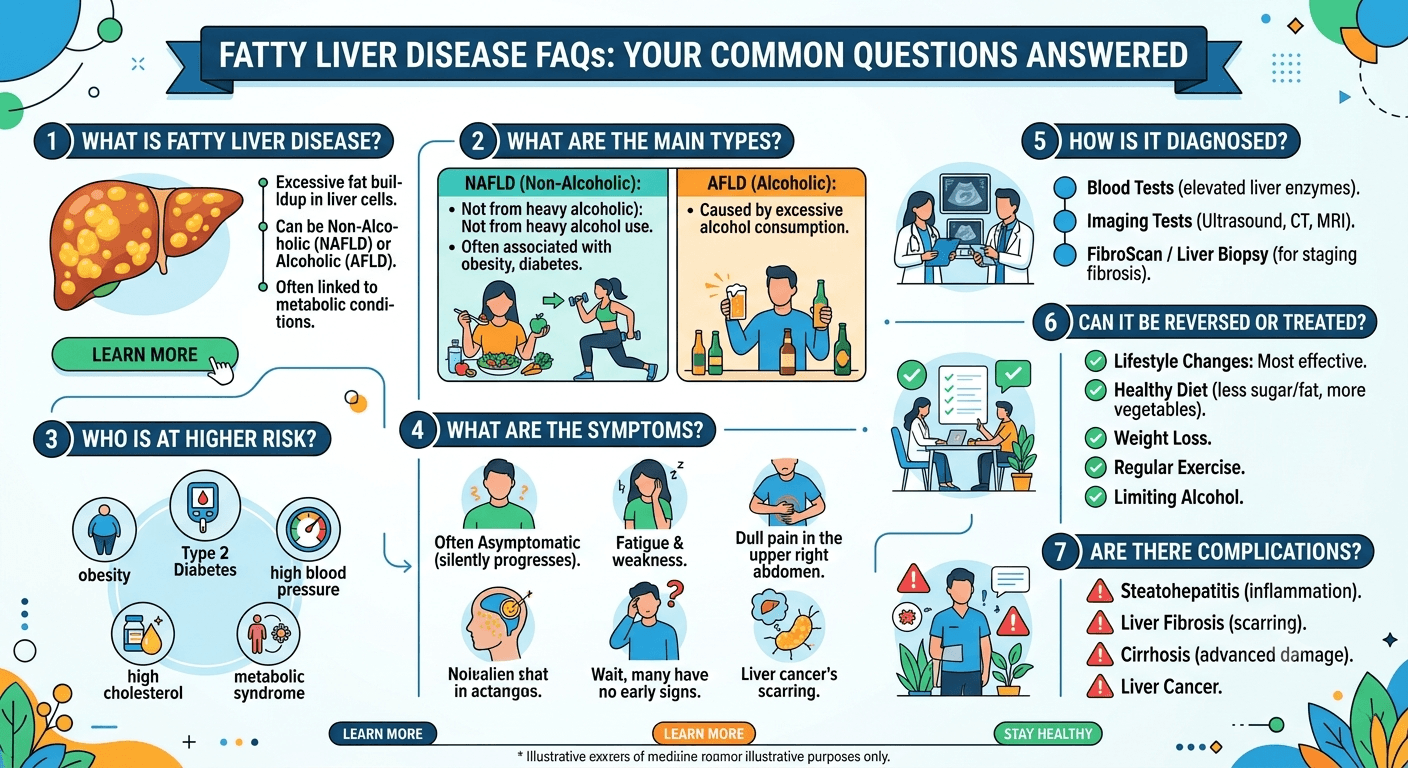
Fatty Liver Disease refers to excessive fat accumulation in liver cells. It is broadly classified into:
- Non-alcoholic fatty liver disease (NAFLD) – not related to alcohol use
- Alcoholic fatty liver disease (AFLD) – caused by excessive alcohol consumption
When fat exceeds 5–10% of liver weight, it is considered abnormal.
What causes Fatty Liver Disease?
Common causes include:
- Obesity and metabolic syndrome
- Insulin resistance and type 2 diabetes
- High cholesterol and triglycerides
- Excess alcohol intake
- Poor diet (high sugar, refined carbs, processed food)
- Sedentary lifestyle
- Certain medications (e.g., steroids, chemotherapy drugs)
What are the early symptoms of Fatty Liver Disease?
Early stages are often silent. When symptoms occur, they may include:
- Fatigue
- Mild discomfort in the upper right abdomen
- Bloating
- Loss of appetite
What are the warning signs of advanced disease?
As the disease progresses (to NASH or cirrhosis), symptoms may include:
- Persistent abdominal pain
- Jaundice (yellowing of skin and eyes)
- Swelling in legs or abdomen (ascites)
- Easy bruising
- Confusion (hepatic encephalopathy)
What is the difference between NAFLD and NASH?
Nonalcoholic Fatty Liver Disease (NAFLD) is a condition in which excess fat builds up in the liver in people who drink little or no alcohol.
In many people, NAFLD causes no major symptoms and may remain stable for years. It is often linked with:
- Obesity
- Type 2 diabetes
- Insulin resistance
- High cholesterol
- Metabolic dysfunction
Nonalcoholic Steatohepatitis (NASH) is a more serious form of NAFLD.
In NASH, the liver not only contains excess fat but also develops:
- Inflammation
- Liver cell injury
- Scarring (fibrosis)
Over time, NASH can progress to:
- Advanced fibrosis
- Cirrhosis
- Liver failure
- Liver cancer
Is Fatty Liver Disease reversible?
Yes, especially in early stages. Lifestyle changes can significantly reduce liver fat and even reverse damage:
- Weight loss (5–10% body weight)
- Regular exercise
- Healthy diet
Advanced stages like cirrhosis are usually irreversible.
How is Fatty Liver Disease diagnosed?
Diagnosis typically involves:
- Blood tests (liver enzymes: ALT, AST)
- Imaging (ultrasound, CT scan, MRI)
- FibroScan (to assess liver stiffness)
- Liver biopsy (gold standard, used in selected cases)
What is the best diet for Fatty Liver Disease?
A liver-friendly diet includes:
- Fruits and vegetables
- Whole grains
- Lean protein (fish, chicken, legumes)
- Healthy fats (olive oil, nuts)
Avoid:
- Sugary drinks
- Processed foods
- Trans fats
- Excess salt and alcohol
Which foods should be strictly avoided?
- Soft drinks and high-fructose corn syrup
- Fried foods
- Packaged snacks
- Red and processed meat
- Alcohol
Can exercise help in Fatty Liver Disease?
Yes. Exercise improves insulin sensitivity and reduces liver fat.
- Aim for 150–300 minutes/week of moderate activity
- Include both aerobic exercise and strength training
Is Fatty Liver Disease dangerous?
It can be. While early stages are harmless, untreated disease may progress to:
- NASH
- Fibrosis
- Cirrhosis
- Liver cancer
Can non-obese people get Fatty Liver Disease?
Yes. This is called lean NAFLD and is common in Asian populations. Causes include:
- Genetic predisposition
- Poor diet
- Metabolic abnormalities
Does Fatty Liver affect other organs?
Yes. It is closely linked with:
- Heart disease
- Type 2 diabetes
- Kidney disease
Cardiovascular disease is the leading cause of death in these patients.
Are there any medications for Fatty Liver Disease?
Currently, no specific FDA-approved drugs for NAFLD exist. However:
- Vitamin E (in selected patients)
- Pioglitazone (for insulin resistance)
- New drugs are under research
- L-Ornithine L-Aspartate (LOLA) is a stable salt of two amino acids used primarily to treat liver diseases.
- Ursodeoxycholic Acid is a hepatoprotective medication.
Treatment mainly focuses on lifestyle changes.
How long does it take to reverse Fatty Liver?
Improvement can be seen within:
- 4–12 weeks with lifestyle changes
- Significant reversal may take 3–6 months or longer
- Consistency is key.
Is alcohol completely banned in Fatty Liver Disease?
- In NAFLD: Best to avoid or strictly limit alcohol
- In AFLD: Complete abstinence is necessary
Can Fatty Liver Disease lead to liver cancer?
Yes. Long-standing NASH and cirrhosis increase the risk of hepatocellular carcinoma (HCC).
Is Fatty Liver common in India?
Yes, prevalence is rising rapidly due to:
- Sedentary lifestyle
- High carbohydrate diet
- Increasing obesity and diabetes rates
Studies estimate 25–30% of urban Indians may have NAFLD.
Can Fatty Liver be prevented?
Yes, prevention strategies include:
- Maintaining a healthy weight
- Regular physical activity
- Balanced diet
- Avoiding alcohol and processed foods
- Managing diabetes and cholesterol
When should you see a doctor?
Consult a doctor if you have:
- Persistent fatigue or abdominal discomfort
- Abnormal liver function tests
- Risk factors like obesity, diabetes, or alcohol use
Is Fatty Liver the same as liver failure?
No. Fatty liver is an early, often reversible stage. Liver failure occurs in advanced disease like cirrhosis.
Can herbal or natural remedies cure Fatty Liver?
Some may help support liver health (e.g., coffee, omega-3s), but:
- No herbal remedy alone can cure fatty liver
- Always consult a doctor before using supplements
Does drinking coffee help Fatty Liver?
Yes, moderate coffee consumption (2–3 cups/day) may:
- Reduce liver inflammation
- Slow disease progression
Can children develop Fatty Liver Disease?
Yes, especially with:
- Childhood obesity
- Poor diet and lack of exercise
This is becoming increasingly common worldwide.
What is the prognosis of Fatty Liver Disease?
- Early stage: Excellent prognosis with lifestyle changes
- Advanced stage (cirrhosis): Serious, may require liver transplant
Disclaimer: The information provided in this blog post is for educational and informational purposes only and should not be considered medical advice. It is not intended to replace professional medical consultation, diagnosis, or treatment. Always seek the guidance of a qualified healthcare professional regarding any medical condition or health-related concerns.