
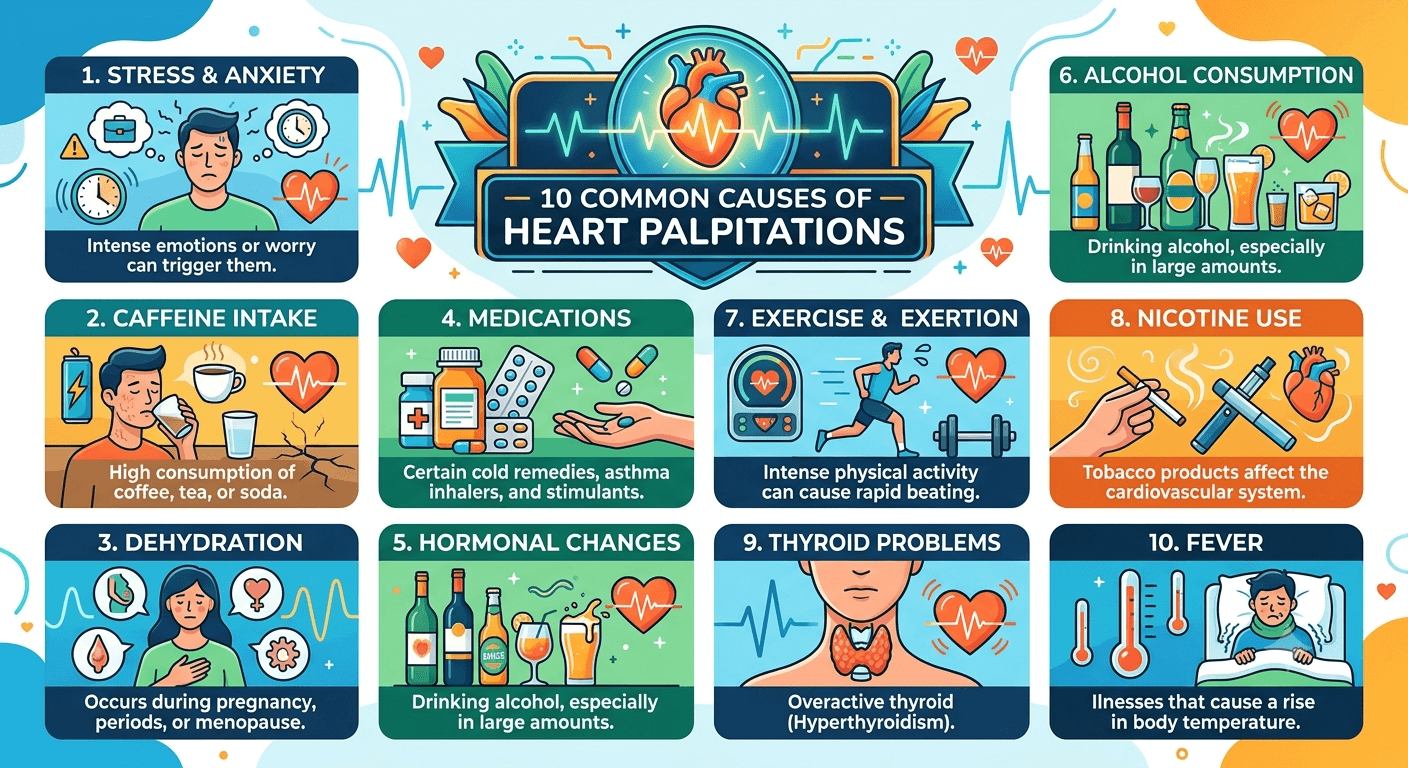
Discover the 10 common causes of heart palpitations you should never ignore. Learn about symptoms, risk factors, diagnosis, treatment options, and when to seek medical attention for a healthier heart.
Introduction
Heart palpitations are a frequent complaint that people suffer from throughout their lives. They occur when there is a sensation of racing, pounding, fluttering, skipping beats, or irregular heartbeats. While palpitations are often innocent, they can also be a sign of a medical problem requiring treatment.
Find out about 10 common reasons for heart palpitations you shouldn’t overlook. Get information about symptoms, risks, diagnosis, treatment and when to seek help for better heart health.
For patients, knowing about the meaning of heart palpitations can help in alleviating worries and getting prompt medical consultation where needed. For medical students, heart palpitations are a clinically relevant sign, which falls into the field of cardiology, endocrinology, psychiatry, and internal medicine.
In this article, we will discuss the physiology, causes, warning signs, diagnostic techniques, and management of heart palpitations with particular attention to 10 causes that shouldn’t be overlooked.
What Are Heart Palpitations?
Heart palpitations are the sensation of one’s heartbeat. Usually, the heart beats in a rhythmic manner, which is unnoticed by patients. However, when the heart beats faster, stronger, irregular, or prematurely, people become aware of such sensations.
Palpitations can be felt in the:
- Chest
- Throat
- Neck
- Upper abdomen
They can last:
- Some seconds
- Minutes
- Hours
- Sometimes even longer
The sensation itself does not always indicate a dangerous condition, but understanding the underlying cause is essential.
How the Heart Normally Beats
To understand palpitations, it helps to review normal cardiac conduction.
The heart’s electrical system begins at the sinoatrial (SA) node, often called the heart’s natural pacemaker.
The electrical impulse travels through:
- SA node
- Atria
- Atrioventricular (AV) node
- Bundle of His
- Purkinje fibers
- Ventricles
This coordinated process produces a regular heartbeat, typically between 60 and 100 beats per minute in adults at rest.
Any disturbance in this electrical pathway can result in palpitations.
What Do Heart Palpitations Feel Like?
Patients commonly describe palpitations as:
- Fluttering in the chest
- Racing heartbeat
- Heart “flip-flopping”
- Skipped beats
- Thumping sensation
- Rapid pounding
- Irregular rhythm
Associated symptoms may include:
- Lightheadedness
- Dizziness
- Shortness of breath
- Chest discomfort
- Fatigue
- Anxiety
The accompanying symptoms often provide important clues about the severity of the underlying condition.
10 Common Causes of Heart Palpitations
1. Cardiac Arrhythmias
One of the most important causes of palpitations is an abnormal heart rhythm, known as an arrhythmia.
Common arrhythmias include:
Atrial Fibrillation (AFib)
AFib causes rapid, chaotic electrical activity in the atria.
Symptoms may include:
- Irregular heartbeat
- Fatigue
- Shortness of breath
- Reduced exercise tolerance
AFib significantly increases the risk of stroke and should never be ignored.
Supraventricular Tachycardia (SVT)
SVT involves episodes of rapid heart rate originating above the ventricles.
Patients often report:
- Sudden onset
- Sudden termination
- Heart rates exceeding 150 beats per minute
Ventricular Arrhythmias
These arise from the ventricles and can be life-threatening.
Examples include:
- Ventricular tachycardia
- Ventricular fibrillation
Immediate medical evaluation is required.
2. Anxiety and Panic Disorders
The relationship between the mind and heart is powerful.
During anxiety or panic attacks, the body releases stress hormones such as:
- Adrenaline
- Noradrenaline
These chemicals increase:
- Heart rate
- Blood pressure
- Cardiac contractility
Patients may experience:
- Racing heartbeat
- Sweating
- Trembling
- Shortness of breath
- Fear of dying
Although anxiety-related palpitations are often benign, they can closely mimic serious cardiac conditions.
3. Excessive Caffeine Consumption
Caffeine stimulates the central nervous system and can increase heart rate.
Common sources include:
- Coffee
- Energy drinks
- Tea
- Soda
- Pre-workout supplements
Excessive intake may trigger:
- Premature atrial contractions
- Premature ventricular contractions
- Tachycardia
Individuals vary significantly in caffeine sensitivity.
4. Hyperthyroidism
An overactive thyroid gland produces excessive thyroid hormones.
These hormones increase metabolic activity throughout the body, including the cardiovascular system.
Symptoms often include:
- Palpitations
- Weight loss
- Heat intolerance
- Tremors
- Nervousness
- Increased appetite
Hyperthyroidism commonly causes:
- Sinus tachycardia
- Atrial fibrillation
Medical evaluation and treatment are essential.
5. Anemia
Anemia occurs when there are insufficient healthy red blood cells to deliver adequate oxygen to tissues.
The heart compensates by pumping harder and faster.
Common symptoms include:
- Palpitations
- Fatigue
- Weakness
- Dizziness
- Shortness of breath
Causes of anemia may include:
- Iron deficiency
- Vitamin B12 deficiency
- Chronic disease
- Blood loss
Treating the underlying anemia often resolves the palpitations.
6. Heart Disease
Structural heart disease is a significant cause of concerning palpitations.
Examples include:
Coronary Artery Disease
Reduced blood flow to heart muscle can trigger abnormal rhythms.
Heart Failure
Damaged heart tissue may disrupt normal electrical pathways.
Cardiomyopathy
Diseases affecting heart muscle structure increase arrhythmia risk.
Patients with known heart disease who develop new palpitations should seek prompt evaluation.
7. Electrolyte Imbalances
Normal heart function depends on carefully regulated electrolyte levels.
Key electrolytes include:
- Potassium
- Magnesium
- Calcium
- Sodium
Abnormal levels can alter electrical conduction.
Potential causes include:
- Dehydration
- Severe vomiting
- Diarrhea
- Kidney disease
- Certain medications
Both low and high potassium levels can produce dangerous arrhythmias.
8. Medication Side Effects
Many medications can trigger palpitations.
Examples include:
Respiratory Medications
- Albuterol inhalers
- Bronchodilators
Decongestants
- Pseudoephedrine
- Phenylephrine
Thyroid Medications
Excessive thyroid hormone replacement may increase heart rate.
Stimulants
- ADHD medications
- Weight-loss drugs
A careful medication review is an important part of evaluating palpitations.
9. Alcohol and Recreational Substances
Alcohol can affect cardiac electrical activity.
A phenomenon known as “holiday heart syndrome” occurs when excessive alcohol consumption triggers arrhythmias in otherwise healthy individuals.
Other substances associated with palpitations include:
- Cocaine
- Amphetamines
- Methamphetamine
- Cannabis (in some individuals)
- Nicotine
These substances may increase the risk of serious cardiovascular complications.
10. Pregnancy
Pregnancy places significant demands on the cardiovascular system.
Changes include:
- Increased blood volume
- Increased heart rate
- Higher cardiac output
Many pregnant women experience occasional palpitations that are benign.
However, evaluation may be necessary if symptoms are accompanied by:
- Fainting
- Severe shortness of breath
- Chest pain
- Persistent tachycardia
Underlying conditions such as anemia and thyroid disease should also be considered.
Warning Signs That Require Immediate Medical Attention
Certain symptoms suggest a potentially serious cause and warrant urgent evaluation.
Seek emergency care if palpitations occur with:
- Chest pain
- Fainting (syncope)
- Severe shortness of breath
- Persistent rapid heartbeat
- Loss of consciousness
- Severe dizziness
- Sudden weakness
- Signs of stroke
These symptoms may indicate a dangerous arrhythmia or cardiovascular emergency.
How Doctors Diagnose Heart Palpitations
Diagnosis begins with a thorough history and physical examination.
Important questions include:
- When did symptoms start?
- How often do they occur?
- How long do they last?
- What triggers them?
- Are there associated symptoms?
Diagnostic Tests
Electrocardiogram (ECG)**
Records the heart’s electrical activity.
Holter Monitor
Continuous ECG recording over 24–48 hours.
Event Monitor
Used for intermittent symptoms occurring less frequently.
Blood Tests
May evaluate:
- Thyroid function tests
- CBC
- Cardio Marker (Troponin I & T), CK-MB
- LDH
- Liver function test
- Electrolytes
- Infection (CRP, ESR)
Echocardiogram
Assesses heart structure and function.
Exercise Stress Testing
Evaluates symptoms related to physical activity.
Treatment of Heart Palpitations
Treatment depends entirely on the underlying cause.
Lifestyle Measures
Many patients benefit from:
- Reducing caffeine intake
- Limiting alcohol consumption
- Managing stress
- Staying hydrated
- Getting adequate sleep
- Avoiding smoking
Medication
Depending on the diagnosis, treatment may include:
- Beta blockers
- Antiarrhythmic drugs
- Thyroid medications
- Anxiety treatments
Procedures
Some arrhythmias require:
- Catheter ablation
- Pacemaker implantation
- Implantable cardioverter-defibrillator (ICD)
Prevention Strategies
While not all palpitations can be prevented, healthy lifestyle habits can significantly reduce risk.
Recommended measures include:
- Maintaining a healthy weight
- Exercising regularly
- Managing blood pressure
- Controlling diabetes
- Limiting stimulants
- Practicing stress-reduction techniques
- Following prescribed treatments
Regular medical checkups can identify risk factors before complications develop.
Frequently Asked Questions (FAQs)
Are heart palpitations always dangerous?
No. Many palpitations are harmless and related to stress, caffeine, or temporary physiological changes. However, some may indicate significant heart disease.
Can dehydration cause palpitations?
Yes. Dehydration can alter electrolyte balance and increase heart rate, leading to palpitations.
When should I see a doctor for palpitations?
You should seek medical evaluation if palpitations are frequent, persistent, worsening, or associated with dizziness, chest pain, or fainting.
Can anxiety alone cause palpitations?
Yes. Anxiety and panic attacks are among the most common non-cardiac causes of palpitations.
Does caffeine affect everyone the same way?
No. Sensitivity to caffeine varies widely among individuals. Some people experience palpitations even with small amounts.
Can young healthy people develop dangerous arrhythmias?
Although uncommon, serious arrhythmias can occur in young individuals, particularly those with inherited heart conditions or structural abnormalities.
Conclusion
Palpitations are a symptom and not a disorder, the importance of which varies from entirely harmless to potentially fatal. Although occasional palpitations due to stress, caffeine, or insomnia might not raise any concerns, recurring or repeated episodes warrant closer scrutiny. Arrhythmias, hyperthyroidism, anemia, structural heart disorders, or electrolyte imbalances are just some of the disorders where palpitations form part of the symptom complex.
As far as patients are concerned, the bottom line here is clear: palpitations should never be ignored if they happen frequently or if they are serious and associated with worrying symptoms. From the medical student’s perspective, palpitations serve as a perfect case study of a single symptom which is caused by a wide variety of physiological and pathophysiological mechanisms.
Early recognition and timely evaluation can make the difference between reassurance and life-saving intervention.
Disclaimer: The information provided in this blog post is for educational and informational purposes only and should not be considered medical advice. It is not intended to replace professional medical consultation, diagnosis, or treatment.