
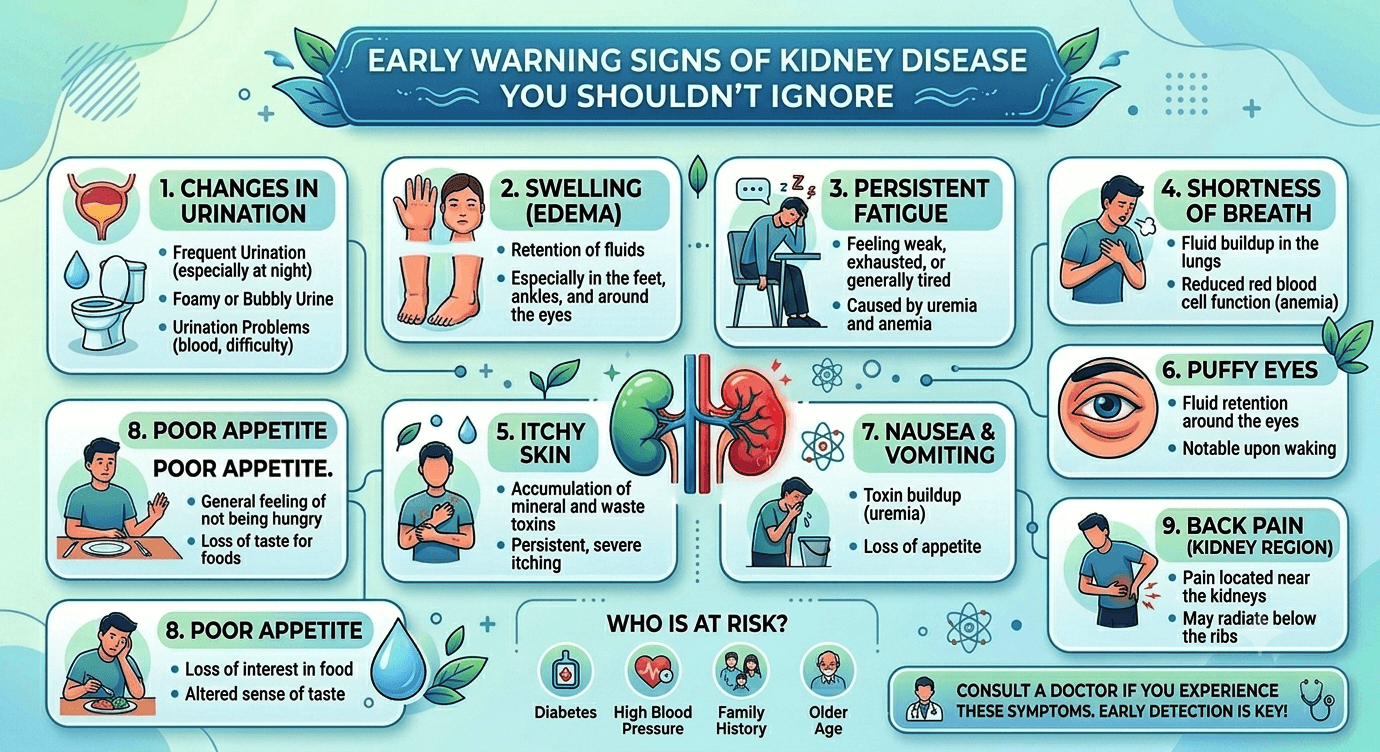
Early warning signs of kidney disease
Early warning signs of kidney disease are often overlooked. Discover key symptoms, risk factors, and why early diagnosis matters.
Introduction
The condition of kidney dysfunction is frequently referred to as a “silent disease.” This is because there is usually no symptom manifestation until a great deal of harm is done to the kidney. The function of the kidneys involves the filtration of the blood for any wastes, the regulation of fluid balance and electrolytes, controlling blood pressure, and releasing hormones that produce red blood cells and contribute to bone health.
Learn the early warning signs of kidney disease, why they occur, who is at risk, and when to seek medical attention. A comprehensive guide for patients and medical students.
Based on statistics in global health care, chronic kidney disease (CKD) is common around the world, and there are hundreds of millions of individuals affected with this ailment. It is one of the causes of disability and death.
It is important for both health care professionals and patients to recognize the earliest manifestations of kidney disease.
Understanding the Role of Healthy Kidneys
Before moving on to the discussion about the signs of kidney disease, it should be understood what normal kidneys do:
| Cleanse metabolic waste products out of the body via filtration through the kidneys; |
| Maintain the right water balance in the body by filtering out toxic substances through Urine. |
| Electrolyte balance control (sodium, potassium, calcium, and phosphate); |
| Blood pressure regulation through RAAS (renin-angiotensin-aldosterone system); |
| Erythropoietin production to promote red blood cells synthesis; |
| Vitamin D activation for bones health preservation. |
With the deterioration of renal function, these functions are disturbed and cause various symptoms.
Why Early Symptoms Are Often Missed
Kidneys possess a remarkable functional reserve. A person can lose a substantial portion of kidney function before experiencing noticeable symptoms.
Early symptoms are often:
- Mild
- Non-specific
- Mistaken for stress, aging, or other medical conditions
As a result, many patients remain undiagnosed until laboratory abnormalities or advanced disease become evident.
Early Warning Signs of Kidney Disease You Shouldn’t Ignore
Fatigue and Weakness
Unexplained fatigue is a classic initial symptom.
Reasons Behind It
There are several contributing factors:
Increased accumulation of metabolic wastes (uremia)
Anemia secondary to decreased erythropoietin production
Balancing of electrolytes
Impaired sleep patterns
Clinical Presentation
Patients usually have complaints about:
| Diminishing energy | Poor exercise tolerance |
| Concentration difficulties | General muscle weakness |
Medical students are advised to consider CKD when there is fatigue along with certain risk factors such as diabetes mellitus or hypertension.
Alterations in Urination Patterns
Alterations in urination are very common initial symptoms.
Increased Urination
Patients typically experience:
Increase in urinary frequency, especially nighttime (nocturia)
Large volume of urine
Decreased Urination
Sometimes, patients complain about:
Reduced volume of urination
Difficult voiding
Frothy Urine
When urine becomes foamy or bubbly, it is due to:
Proteinuria
Glomerulopathy
The loss of proteins through the kidneys is a major indicator of their damage.
Bloody Urine
There might be:
Pinkish urine
Reddish urine
Cola-colored urine
Prompt medical attention should be sought for any kind of bloody urine.
Swelling of the Lower Limbs, Ankles, Face
What Causes the Swelling?
Excess water and sodium are less easily absorbed by damaged kidneys.
The result is fluid accumulation in:
| Ankles | Feet |
| Legs | Hands |
| Around the eyes | Peri orbital Puffiness |
An indication of early protein loss through the kidneys may be morning eye puffiness.
Clinical Importance.
Those who experience persistent swelling should never be ignored, particularly when dealing with:
Hypertension.
Heart disease.
High Blood Pressure.
Hypertension and kidney disease are linked in both directions..
Kidney Disease Can Cause Hypertension.
Damaged kidneys may:
Retain sodium.
Activate the RAAS system.
Increase vascular resistance.
Hypertension Can Damage Kidneys.
Uncontrolled blood pressure for an extended period can damage kidney blood vessels and accelerate the development of CKD.
Red Flag.
The diagnosis of underlying kidney disease in individuals with hard-to-control hypertension is necessary.
Loss of Appetite and Nausea.
During the decline of kidney function, the accumulation of toxins in the bloodstream occurs.
Symptoms Include.
- Reduced appetite.
- A taste of metallic odor is present in the mouth.
- Nausea.
- Early satiety.
- Uremic Symptoms.
- Advanced toxin buildup may cause:
- Vomiting.
- Weight loss.
- Malnutrition.
Medical evaluation is necessary for individuals at high risk who experience mild changes in their appetite.
Difficulty Concentrating and Brain Fog.
Similarly, the kidneys and brain are closely linked by vascular and metabolic pathways.
Why It Occurs.
Possible mechanisms include:
| Anemia. | Uremia. |
| Sleep disturbances. | Electrolyte abnormalities. |
| Common Complaints. | Patients may describe: |
| Memory problems. | Poor concentration. |
| Mental fatigue. | Reduced work performance. |
Although not commonly recognized, these symptoms can be crucial indicators.
Persistent Itching (Pruritus)
Itching may be a sign of an unanticipated illness in early kidney disease.
Underlying Mechanisms.
Factors may include:
- Accumulation of metabolic waste.
- Elevated phosphate levels.
- Chronic inflammation.
- Dry skin.
Clinical Features.
Patients often report:
- Generalized itching.
- Symptoms worse at night.
- Skin rash without any obvious signs.
If you experience chronic itching, it’s important to consider systemic factors like kidney disease.
Muscle Cramps.
Why Do They Occur?
Kidney dysfunction can disrupt:
- Calcium balance.
- Potassium regulation.
- Magnesium levels.
These anomalies cause more muscle cramps.
Typical Presentation.
- Night-time leg cramps.
- Muscle spasms.
- Painful contractions.
Despite being common and often benign, frequent cramps may indicate an underlying kidney problem.
Shortness of Breath.
It is possible to experience shortness of breath in the early stages of kidney disease.
Contributing Factors.
Anemia.
The reduction of red blood cell count and oxygen supply is caused by a decrease in erythropoietin production.
Fluid overload.
Excess fluid can accumulate in the lungs, leading to breathing difficulties.
Warning Signs.
Seek prompt medical attention if you are experiencing breathlessness and:
- Chest pain.
- Significant swelling.
- Rapid weight gain.
Unexplained Weight Changes.
Weight Gain.
Fluid retention can cause:
- Rapid weight gain.
- Swelling.
- Bloating.
Weight Loss.
Progressive kidney disease may cause:.
- Poor appetite.
- Nausea.
- Muscle wasting.
Consider studying sudden weight fluctuations.
Sleep Problems.
CKD is increasingly associated with sleep disturbances.?
Common Issues.
- Insomnia.
- Restless legs syndrome.
- Frequent nighttime urination.
- Obstructive sleep apnea.
Impact.
Poor sleep contributes to:
- Fatigue.
- Cognitive impairment.
- Reduced quality of life.
Major Risk Factors for Kidney Disease
Patients with the following conditions should undergo regular kidney screening:
| Risk Factor | Reason |
| Diabetes mellitus | Leading cause of CKD |
| Hypertension | Damages kidney blood vessels |
| Cardiovascular disease | Shared vascular risk factors |
| Obesity | Increases kidney workload |
| Family history of kidney disease | Genetic predisposition |
| Smoking | Accelerates vascular damage |
| Autoimmune disorders | Can directly affect kidneys |
| Advanced age | Natural decline in kidney function |
When Should Patients Seek Medical Attention?
Consult a healthcare professional if you experience:
| Persistent fatigue | Foamy urine |
| Blood in urine | Swelling of legs or face |
| Uncontrolled hypertension | Frequent nighttime urination |
| Persistent nausea | Unexplained itching |
Early evaluation can prevent progression to advanced kidney disease.
Key Diagnostic Tests
Blood Tests
- CBC
- ESR
- CRP
- Lipid profile
- Kidney function test (KFT)
- Liver function tests
- RBS, HbA1c
- Estimated glomerular filtration rate (eGFR)
- Blood urea nitrogen (BUN)
- Electrolyte panel
Urine Tests
- Urinalysis
- Urine albumin-to-creatinine ratio (ACR)
- Protein quantification
Imaging
- Ultrasound (whole abdomen)
- CT scan (selected cases)
- MRI (when indicated)
Kidney Biopsy
Kidney biopsy done when the diagnosis remains uncertain or glomerular disease is suspected.
Prevention Strategies
Many cases of kidney disease can be delayed or prevented.
Healthy Lifestyle Measures
- Maintain healthy blood pressure
- Control diabetes effectively
- Stay physically active
- Limit excessive salt intake
- Avoid smoking
- Maintain a healthy weight
- Stay adequately hydrated
Medication Safety
Avoid unnecessary use of nephrotoxic medications such as:
- Excessive NSAIDs (e.g., ibuprofen)
- Certain herbal supplements
- Unregulated over-the-counter remedies
Always consult a healthcare professional before starting new medications.
Frequently Asked Questions (FAQs)
1. Can kidney disease develop without symptoms?
Yes. Early kidney disease is often asymptomatic, which is why regular screening is important for high-risk individuals.
2. Is foamy urine always a sign of kidney disease?
Not always. However, persistent foamy urine may indicate proteinuria and should be medically evaluated.
3. Can kidney disease be reversed?
Some causes of kidney injury are reversible if identified early. Chronic kidney disease is usually not fully reversible, but progression can often be slowed.
4. Who should be screened for kidney disease?
People with diabetes, hypertension, cardiovascular disease, obesity, or a family history of kidney disease should undergo regular screening.
5. Why does kidney disease cause swelling?
Damaged kidneys may retain sodium and water and lose protein through urine, leading to fluid accumulation in tissues.
6. What is the most essential test for kidney function?
The estimated glomerular filtration rate (eGFR) is one of the most important measures of kidney function and is typically calculated using serum creatinine.
7. Can young adults develop kidney disease?
Yes. Although risk increases with age, kidney disease can occur in younger individuals due to genetic disorders, autoimmune diseases, infections, or diabetes.
8. When is dialysis needed?
Dialysis is generally considered when kidney function becomes severely impaired and the kidneys can no longer adequately remove waste products and excess fluid.
Conclusion
Due to the silent nature of kidney disease, early detection is crucial. Why? Before developing severe kidney failure symptoms, which may include fatigue, changes in the way you urinate, swelling, elevated blood pressure and fever, itching, muscle cramps or difficulty sleeping. Patients can receive early medical evaluation and improved outcomes by being aware of these warning signs. Accurate diagnosis and patient care rely on medical students who understand the pathophysiology behind these symptoms.
The most effective approach is to use routine screening of high-risk individuals and appropriately manage diabetes, hypertension, and other contributing conditions to detect potential risks early. These early warning signals can assist in preserving kidney function and improving long-term health by working with patients and their healthcare providers.
Disclaimer: The information provided in this blog post is for educational and informational purposes only and should not be considered medical advice. It is not intended to replace professional medical consultation, diagnosis, or treatment.