
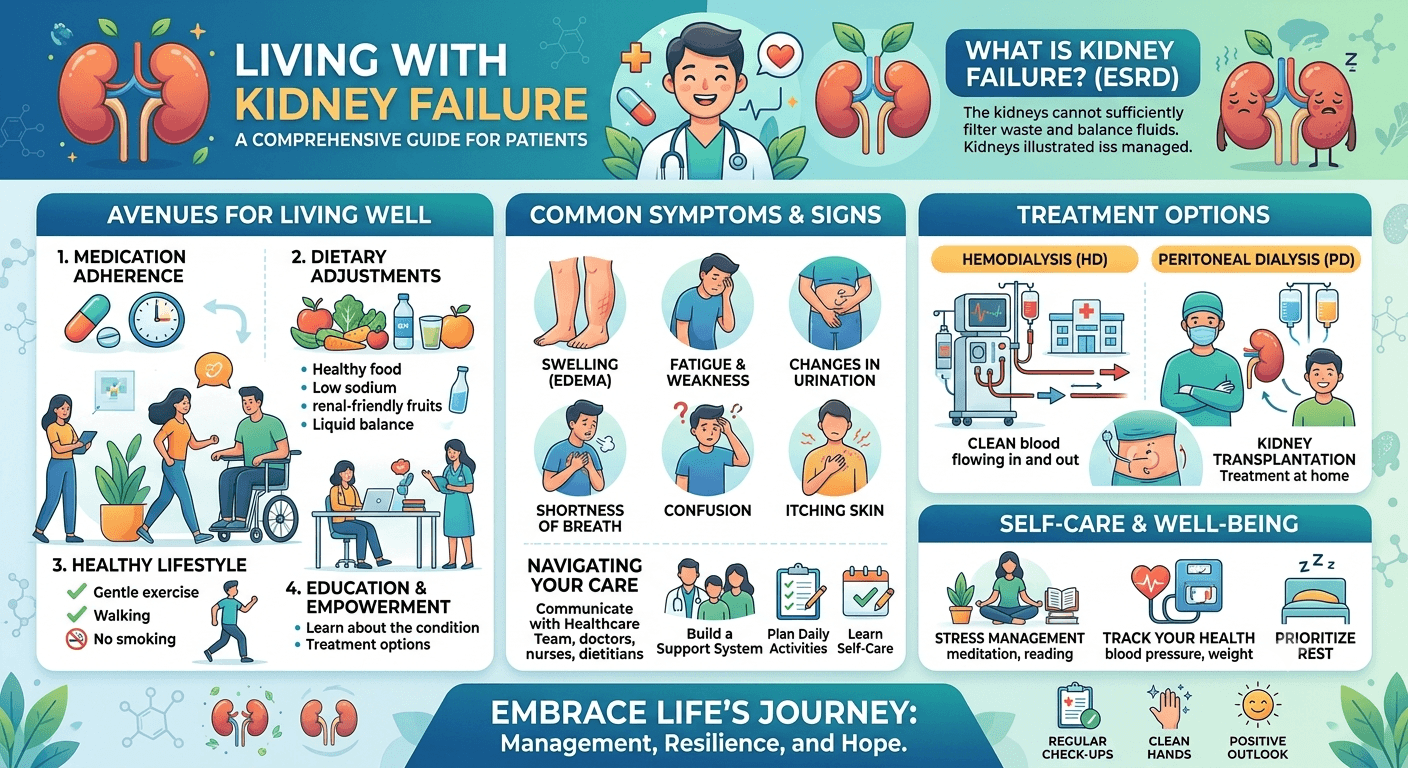
Living with Kidney Failure: Expert Tips for Better Kidney Health
Living with Kidney Failure can be challenging, but the right care makes a difference. Discover expert tips to protect kidney health, manage symptoms, and improve your quality of life.
Introduction
A diagnosis of kidney failure can feel overwhelming, but it does not mean life has to stop. Advances in medical care, dialysis technology, kidney transplantation, and supportive therapies have significantly improved both survival and quality of life. Many people with kidney failure continue to work, travel, raise families, and enjoy meaningful activities with proper medical care and lifestyle adjustments.
Living with Kidney Failure
Living well with kidney failure requires a partnership between the patient, family members, nephrologists, primary care physicians, nurses, dietitians, pharmacists, and mental health professionals. The goal is not only to manage the disease but also to preserve independence, prevent complications, and maintain physical and emotional well-being.
1. Follow Your Treatment Plan
Kidney failure is a chronic condition that requires ongoing medical care. Adhering to the treatment plan prescribed by your healthcare provider is one of the most effective ways to reduce complications.
This includes:
- Taking medications exactly as prescribed.
- Attending all medical appointments.
- Undergoing recommended blood and urine tests.
- Following dialysis schedules without missing sessions.
- Reporting new or worsening symptoms promptly.
Consistency is key. Even if you feel well, skipping medications or dialysis sessions can lead to serious health consequences.
2. Adopt a Kidney-Friendly Diet
Nutrition plays a central role in managing kidney failure. Since damaged kidneys cannot efficiently remove excess minerals and fluids, dietary modifications help reduce the workload on the kidneys and prevent complications.
General Dietary Recommendations
A renal dietitian may recommend:
- Limiting sodium to help control blood pressure and reduce swelling.
- Managing protein intake according to the stage of kidney disease.
- Restricting potassium-rich foods if blood potassium levels are elevated.
- Reducing phosphorus intake to protect bone health.
- Controlling fluid intake in advanced kidney disease or for patients on dialysis.
Foods That Are Often Limited
- Processed and packaged foods
- Fast food
- Salty snacks
- Processed meats
- Soft drinks containing phosphate additives
- High-potassium fruits and vegetables (when advised)
Healthier Choices
- Fresh fruits (based on potassium recommendations)
- Low-sodium vegetables
- Whole grains (when appropriate)
- Lean poultry and fish
- Healthy fats such as olive oil
- Adequate calories to maintain a healthy weight
Dietary recommendations vary depending on laboratory results and whether a person is receiving dialysis. Individualized nutrition counseling is strongly recommended.
3. Stay Physically Active
Regular physical activity offers numerous benefits, including:
- Improved cardiovascular health
- Better blood pressure control
- Increased muscle strength
- Enhanced mood
- Improved energy levels
- Better sleep quality
Most individuals benefit from at least 150 minutes of moderate-intensity exercise per week, as tolerated. Activities may include walking, cycling, swimming, yoga, or light resistance training.
Always consult your healthcare provider before beginning a new exercise program.
4. Monitor Blood Pressure and Blood Sugar
Controlling blood pressure (hypertension) and blood glucose (diabetes) is essential for slowing the progression of kidney disease.
Blood Pressure Goals
Many patients with chronic kidney disease aim for a blood pressure target recommended by their healthcare provider, often below 130/80 mmHg, depending on individual circumstances.
Diabetes Management
People with diabetes should:
- Monitor blood sugar regularly.
- Take diabetes medications as prescribed.
- Follow dietary recommendations.
- Attend regular eye, foot, and kidney screenings.
Good diabetes control helps protect the kidneys from further damage.
5. Avoid Smoking and Limit Alcohol
Smoking damages blood vessels, accelerates kidney disease progression, and increases the risk of heart disease and stroke.
Excessive alcohol consumption may:
- Increase blood pressure
- Cause dehydration
- Interfere with medications
- Worsen existing kidney disease
Quitting smoking and limiting alcohol intake can substantially improve long-term health outcomes.
6. Stay Up to Date With Vaccinations
People with kidney disease have an increased risk of infections.
Healthcare providers commonly recommend:
- Annual influenza vaccination
- COVID-19 vaccination (as appropriate)
- Pneumococcal vaccination
- Hepatitis B vaccination, particularly for patients receiving dialysis
Vaccination schedules should always be discussed with a healthcare professional.
Emotional and Mental Health
Kidney failure affects more than physical health. Many individuals experience emotional challenges after diagnosis, including anxiety, depression, fear, frustration, and uncertainty about the future.
Common concerns include:
- Changes in lifestyle
- Financial stress
- Dependence on dialysis
- Reduced ability to work
- Fear of complications
Seeking emotional support is an important part of treatment.
Helpful resources include:
- Family and friends
- Support groups
- Mental health counselors
- Clinical psychologists
- Social workers
- Patient advocacy organizations
Open communication with healthcare providers can also help address emotional and practical concerns.
Potential Complications of Kidney Failure
Without appropriate treatment, kidney failure can lead to serious complications affecting multiple organ systems.
These may include:
Cardiovascular Disease
People with chronic kidney disease are at significantly increased risk of:
- Heart attack
- Stroke
- Heart failure
- Peripheral artery disease
Cardiovascular disease remains the leading cause of death in patients with chronic kidney disease.
Anemia
Reduced production of erythropoietin by damaged kidneys results in fewer red blood cells, causing:
- Fatigue
- Weakness
- Shortness of breath
- Reduced exercise tolerance
Bone Disease
Impaired vitamin D activation and disturbances in calcium and phosphorus balance can lead to:
- Weak bones
- Bone pain
- Increased fracture risk
- Secondary hyperparathyroidism
Electrolyte Imbalances
Dangerously high potassium levels (Hyperkalemia) can cause life-threatening heart rhythm abnormalities.
Fluid Overload
Excess fluid may accumulate in:
- Legs
- Lungs
- Abdomen
Severe fluid overload can result in breathing difficulties and heart failure.
Metabolic Acidosis
The inability of the kidneys to eliminate acid can cause metabolic acidosis, affecting muscle function, bone health, and overall metabolism.
Can Kidney Failure Be Prevented?
Although not all cases are preventable, many can be delayed or avoided through healthy lifestyle choices and regular medical care.
Prevention Tips
- Maintain healthy blood pressure.
- Control diabetes effectively.
- Stay physically active.
- Eat a balanced diet.
- Maintain a healthy weight.
- Avoid smoking.
- Limit alcohol consumption.
- Drink adequate fluids unless otherwise advised.
- Avoid unnecessary use of NSAID pain relievers.
- Manage cholesterol levels.
- Treat urinary tract infections promptly.
- Attend regular health checkups if you have risk factors.
Early detection through routine screening is particularly important for individuals with diabetes, hypertension, or a family history of kidney disease.
Frequently Asked Questions (FAQs)
Can kidney failure be reversed?
Acute kidney injury may be reversible if the underlying cause is treated promptly. Chronic kidney disease, however, generally causes permanent damage. While treatment can slow or stabilize progression, advanced kidney failure is usually irreversible.
What are the earliest signs of kidney failure?
Early symptoms may include:
Fatigue
Swelling of the feet or ankles
Changes in urination
High blood pressure
Foamy urine
Loss of appetite
Because symptoms can be subtle, routine blood and urine tests are important for people at risk.
Is dialysis a cure for kidney failure?
No. Dialysis replaces some of the kidneys’ filtering functions by removing waste products and excess fluid from the blood. It helps sustain life but does not restore normal kidney function or cure kidney failure.
Can a person live a normal life with one kidney?
Yes. Many people live healthy, active lives with one functioning kidney, including kidney donors. Regular medical follow-up and a healthy lifestyle help protect the remaining kidney.
How long can someone live with kidney failure?
Life expectancy depends on several factors, including age, overall health, the cause of kidney failure, adherence to treatment, and access to dialysis or transplantation. Many people live for years or even decades with appropriate care.
What foods should people with kidney failure avoid?
Dietary restrictions vary depending on the stage of kidney disease and blood test results. Many people are advised to limit:
High-sodium processed foods
Excess phosphorus
High-potassium foods (when potassium levels are elevated)
Excessive protein (in some stages)
Sugary beverages
A renal dietitian can provide personalized guidance.
When should I see a doctor?
Seek medical attention if you experience:
Persistent swelling
Blood in the urine
Foamy urine
Reduced urine output
Persistent fatigue
Uncontrolled high blood pressure
Shortness of breath
Persistent nausea or vomiting
Early evaluation can prevent further kidney damage.
Who should be screened for kidney disease?
Screening is recommended for individuals with:
Diabetes
High blood pressure
Cardiovascular disease
A family history of kidney disease
Obesity
Age over 60 years
Recurrent kidney stones or urinary tract infections
Routine blood and urine tests can detect kidney disease before symptoms develop.
Conclusion
Kidney failure is a serious but manageable medical condition that affects millions of people worldwide. Because the kidneys play a vital role in filtering waste, regulating blood pressure, maintaining electrolyte balance, supporting red blood cell production, and promoting bone health, their failure can have widespread effects on the body. Fortunately, many cases of kidney disease can be slowed or even prevented from progressing through early diagnosis, appropriate medical treatment, and healthy lifestyle choices.
Recognizing the 12 warning signs discussed in this article, including persistent fatigue, swelling, changes in urination, shortness of breath, nausea, itching, muscle cramps, and difficulty concentrating, can lead to earlier medical evaluation and better outcomes. Individuals with diabetes, high blood pressure, cardiovascular disease, or a family history of kidney disease should undergo regular kidney function screening, even if they feel well.
Modern treatments such as medications, dietary therapy, dialysis, and kidney transplantation have transformed the outlook for people living with kidney failure. Equally important are patient education, adherence to treatment plans, emotional support, and close collaboration with healthcare professionals. With timely intervention and comprehensive care, many individuals with kidney failure can lead productive, fulfilling lives.
Key Takeaway:
Never ignore persistent symptoms that may suggest kidney disease. If you notice changes in your health, particularly swelling, altered urination, unexplained fatigue, or uncontrolled high blood pressure, seek medical evaluation promptly. Early action remains one of the most powerful tools for protecting kidney function and preserving overall health.
Start with Part 1 and Part 2 for a complete understanding of kidney failure