
Blood in Vomit: 10 Causes, Risks, and Warning Signs
Is blood in vomit an emergency? Learn 10 potential causes, understand the risks, and find out exactly which warning signs require immediate medical attention.
Introduction
Bleeding in vomit may cause considerable anxiety in many patients. It may appear in different forms such as bright red, dark clots or like coffee grounds and it always indicates the development of a bleed somewhere in the upper gastrointestinal tract. Though sometimes bleeding is rather benign, in other cases, it may indicate serious conditions and requires immediate medical intervention.
As a healthcare specialist, I usually make my patients understand that it is essential to know about possible causes and warning signs to obtain adequate treatment. From the viewpoint of a medical student, hematemesis is an important symptom which may indicate certain disorders in the esophagus, stomach, or duodenum.
This paper will consider 10 main causes of blood in vomit, their risks, warning signs, methods of diagnostics and treatment.
Disclaimer: The information provided in this blog post is for educational and informational purposes only and should not be considered medical advice.
Understanding Blood in Vomit
Blood in vomit occurs when bleeding develops within the:
- Esophagus
- Stomach
- Duodenum (first part of the small intestine)
- Occasionally the mouth, throat, or respiratory tract
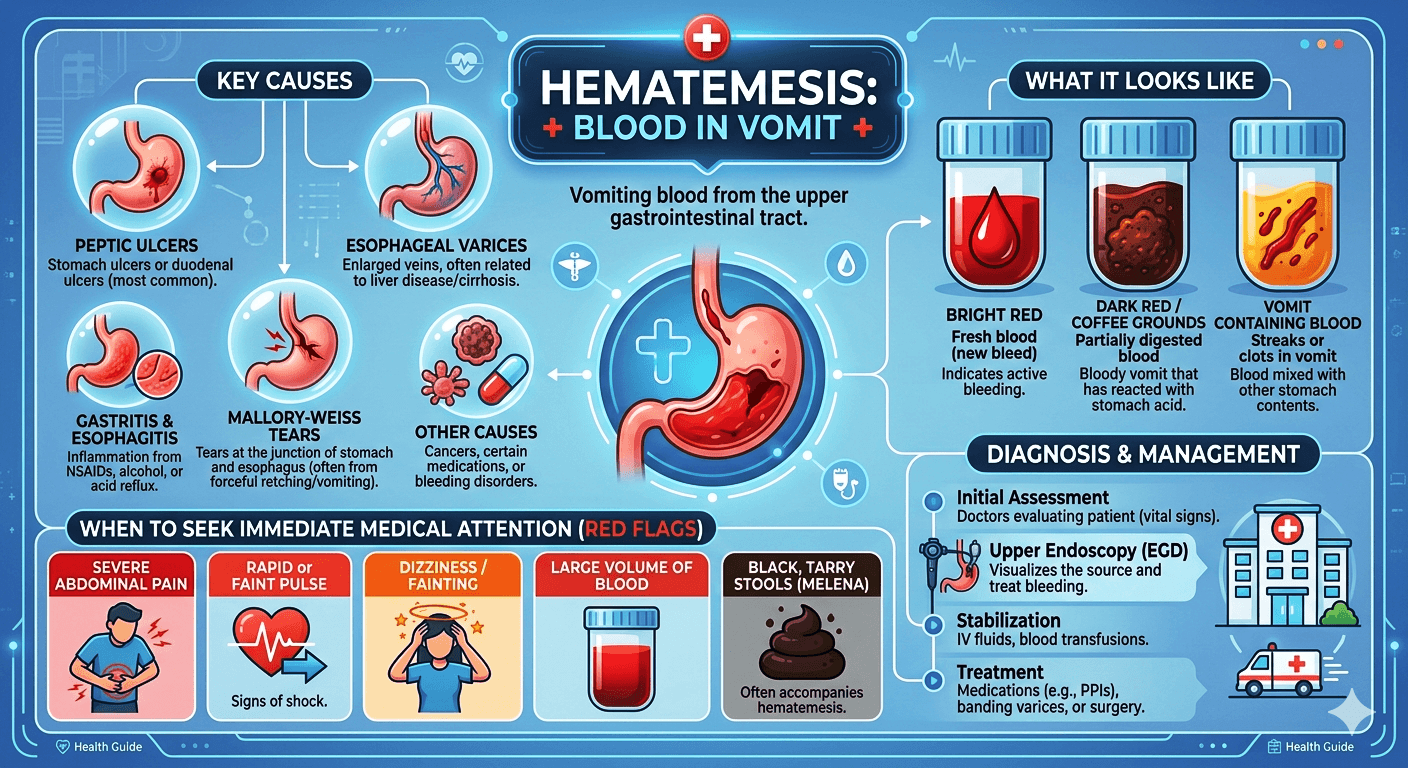
The appearance of blood can provide important diagnostic clues:
| Appearance | Possible Meaning |
| Bright red blood | Active or recent bleeding |
| Dark red blood | Slower bleeding |
| Coffee-ground appearance | Blood exposed to stomach acid |
| Blood mixed with food | Stomach-related bleeding |
Not all red-colored vomit contains blood. Certain foods, drinks, or medications may mimic the appearance of blood, but any suspicion of true bleeding warrants medical evaluation.
10 Causes of Blood in Vomit
1. Peptic Ulcers
Peptic ulcers are among the most common causes of hematemesis.
These sores develop in the lining of the:
- Stomach
- Duodenum
Common causes include:
- Infection with Helicobacter pylori
- Long-term use of NSAIDs (such as ibuprofen or naproxen)
- Excessive smoking
- Chronic alcohol consumption
Why Ulcers Bleed
An ulcer can erode into nearby blood vessels. When this happens, bleeding may range from mild to severe.
Symptoms
- Burning abdominal pain
- Nausea
- Bloating
- Black stools
- Vomiting blood
2. Gastritis
Gastritis refers to inflammation of the stomach lining.
When severe, inflamed tissues may bleed, resulting in blood-stained vomit.
Common Causes
- Alcohol abuse
- NSAID medications
- Stress-related illness
- Autoimmune disorders
- Infections
Symptoms
- Upper abdominal discomfort
- Nausea
- Loss of appetite
- Vomiting
- Blood in vomit
Mild gastritis may resolve with treatment, but severe bleeding requires urgent care.
3. Esophageal Varices
Esophageal varices are enlarged veins within the esophagus.
They commonly occur in patients with:
- Liver cirrhosis
- Portal hypertension
- Chronic liver disease
Why They Are Dangerous
These veins have thin walls and can rupture suddenly.
Clinical Features
- Massive vomiting of blood
- Dizziness
- Rapid heart rate
- Low blood pressure
- Shock
This condition represents a true medical emergency and carries significant mortality if untreated.
4. Mallory-Weiss Tear
A Mallory-Weiss tear is a laceration at the junction of the esophagus and stomach.
It often occurs after:
- Severe vomiting
- Persistent retching
- Excessive coughing
- Heavy alcohol use
Symptoms
- Bright red blood in vomit
- Chest discomfort
- Abdominal pain
- History of repeated vomiting
Most tears heal naturally, though severe bleeding occasionally requires endoscopic treatment.
5. Esophagitis
Esophagitis is inflammation of the esophagus.
Potential Causes
- Acid reflux disease (GERD)
- Certain medications
- Infections
- Radiation therapy
Chronic irritation may damage blood vessels and lead to bleeding.
Symptoms
- Painful swallowing
- Heartburn
- Chest discomfort
- Blood in vomit
6. Stomach Cancer
Although less common than ulcers or gastritis, stomach cancer can cause gastrointestinal bleeding.
Risk Factors
- Smoking
- Family history
- Chronic gastritis
- H. pylori infection
Warning Signs
- Unexplained weight loss
- Persistent stomach pain
- Early fullness after meals
- Fatigue
- Blood in vomit
Early diagnosis significantly improves outcomes.
7. Esophageal Cancer
Cancer of the esophagus may cause progressive bleeding as tumors invade nearby tissues.
Symptoms
- Difficulty swallowing
- Weight loss
- Chest pain
- Chronic reflux
- Blood in vomit
Bleeding is often gradual but can occasionally become severe.
8. Severe Gastroenteritis
Intense vomiting caused by viral or bacterial infections may damage the lining of the upper gastrointestinal tract.
Repeated forceful vomiting can:
- Irritate tissues
- Cause minor tears
- Trigger bleeding
Associated Symptoms
- Diarrhea
- Fever
- Dehydration
- Abdominal cramps
Small streaks of blood may appear after repeated episodes of vomiting.
9. Swallowed Blood
Sometimes the blood originates outside the digestive tract.
Examples Include
- Nosebleeds
- Dental bleeding
- Oral injuries
- Throat injuries
Blood may be swallowed unknowingly and later appear in vomit.
Healthcare providers distinguish this from true gastrointestinal bleeding through history-taking and examination.
10. Blood-Clotting Disorders
Conditions affecting normal blood clotting can increase bleeding risk throughout the body, including the digestive tract.
Examples
- Hemophilia
- Liver failure
- Low platelet counts
- Anticoagulant medication use
Even minor irritation may produce noticeable bleeding in susceptible individuals.
Risk Factors for Vomiting Blood
Several factors increase the likelihood of hematemesis.
Lifestyle Factors
- Heavy alcohol use
- Smoking
- Poor diet
- Chronic NSAID use
Medical Conditions
- Liver disease
- Portal Hypertension
- Type 2 Diabetes
- Acid reflux
- Peptic ulcer disease
- Blood-clotting disorders
Medication Risks
Certain drugs increase bleeding risk:
- Aspirin
- Ibuprofen
- Naproxen
- Warfarin
- Apixaban
- Rivaroxaban
Medical students should always obtain a detailed medication history when evaluating gastrointestinal bleeding.
Warning Signs That Require Immediate Medical Attention
Some symptoms indicate potentially severe blood loss and should never be ignored.
Seek Emergency Care If Blood in Vomit Is Accompanied By:
- Large amounts of blood
- Black, tarry stools
- Severe abdominal pain
- Chest pain
- Difficulty breathing
- Fainting
- Confusion
- Pale skin
- Rapid heartbeat
- Low blood pressure
These symptoms may indicate significant internal bleeding requiring urgent intervention.
How Doctors Diagnose the Cause
Accurate diagnosis requires a systematic approach.
Medical History
Doctors typically ask about:
- Timing of bleeding
- Quantity of blood
- Associated symptoms
- Medication use
- Alcohol consumption
Physical Examination
Assessment includes:
- Vital signs
- Abdominal examination
- Signs of liver disease
- Evidence of anemia
Laboratory Tests
Common investigations include:
- Complete blood count (CBC)
- Coagulation studies
- Liver function tests
- Lipid profile
- LDH
- KFT
- Viral markers for Hepatitis
- Blood chemistry panels
Upper Endoscopy
Upper gastrointestinal endoscopy remains the most valuable diagnostic tool.
It allows physicians to:
- Visualize the bleeding source
- Diagnose ulcers
- Identify varices
- Obtain biopsies
- Deliver treatment
Treatment Options
Treatment depends on the underlying cause and severity.
Emergency Stabilization
For significant bleeding:
- Intravenous fluids
- Blood transfusions
- Oxygen support
- Monitoring in hospital
- Endoscopic Band Ligation (EVL)
Medications
Doctors may prescribe:
- Proton pump inhibitors
- Beta Blockers (carvedilol, nadolol)
- Antibiotics for H. pylori
- Acid-reducing medications
- Drugs to control portal hypertension (beta blockers)
- Vasoactive Drugs (terlipressin or Octreotide)
Endoscopic Therapy
Endoscopy can stop bleeding through:
- Clipping
- Injection therapy
- Thermal coagulation
- Band ligation of varices
Surgery
Surgery may be necessary when:
- Endoscopic treatment fails
- Cancer is present
- Severe ulcers continue to bleed
Frequently Asked Questions (FAQs)
Is blood in vomit always serious?
Not always. Small amounts of blood may result from irritation or minor tears. However, because it can signal severe bleeding, medical evaluation is recommended.
What does coffee-ground vomit mean?
Coffee-ground vomit usually indicates blood that has been partially digested by stomach acid, suggesting upper gastrointestinal bleeding.
Can stress cause blood in vomit?
Stress alone rarely causes bleeding, but severe illness-related stress can contribute to gastritis and ulcer formation.
When should I go to the emergency room?
Seek emergency care immediately if vomiting blood is accompanied by dizziness, fainting, rapid heartbeat, breathing difficulty, or large-volume bleeding.
Can acid reflux cause blood in vomit?
Yes. Severe reflux can cause esophageal inflammation and bleeding, although major bleeding is uncommon.
How is vomiting blood different from coughing up blood?
Vomiting blood originates from the digestive tract, while coughing up blood usually comes from the lungs or airways.
Can children vomit blood?
Yes. Causes may include swallowed blood, infections, gastritis, or rare gastrointestinal disorders. Pediatric evaluation is important.
Is blood in vomit a sign of cancer?
Sometimes, but cancer is a less common cause than ulcers, gastritis, or tears. Persistent symptoms require investigation.
Conclusion
Bloody vomit is an alarming sign that must not be taken lightly. Whereas gastritis, small tears, or swallowed blood might lead to minor bleeding, peptic ulcers, esophageal varices, liver diseases, and gastrointestinal cancers are among some serious illnesses.
For patients, the most critical point is that any hematemesis is to be checked immediately, especially in case of accompanying weakness, dizzy spells, black stools, or ongoing bleeding. For medical students, hematemesis will always be one of the critical clinical presentations.
Timely diagnosis and therapy are vital, which means knowing causes, risks, and warning signs is essential for everyone.