
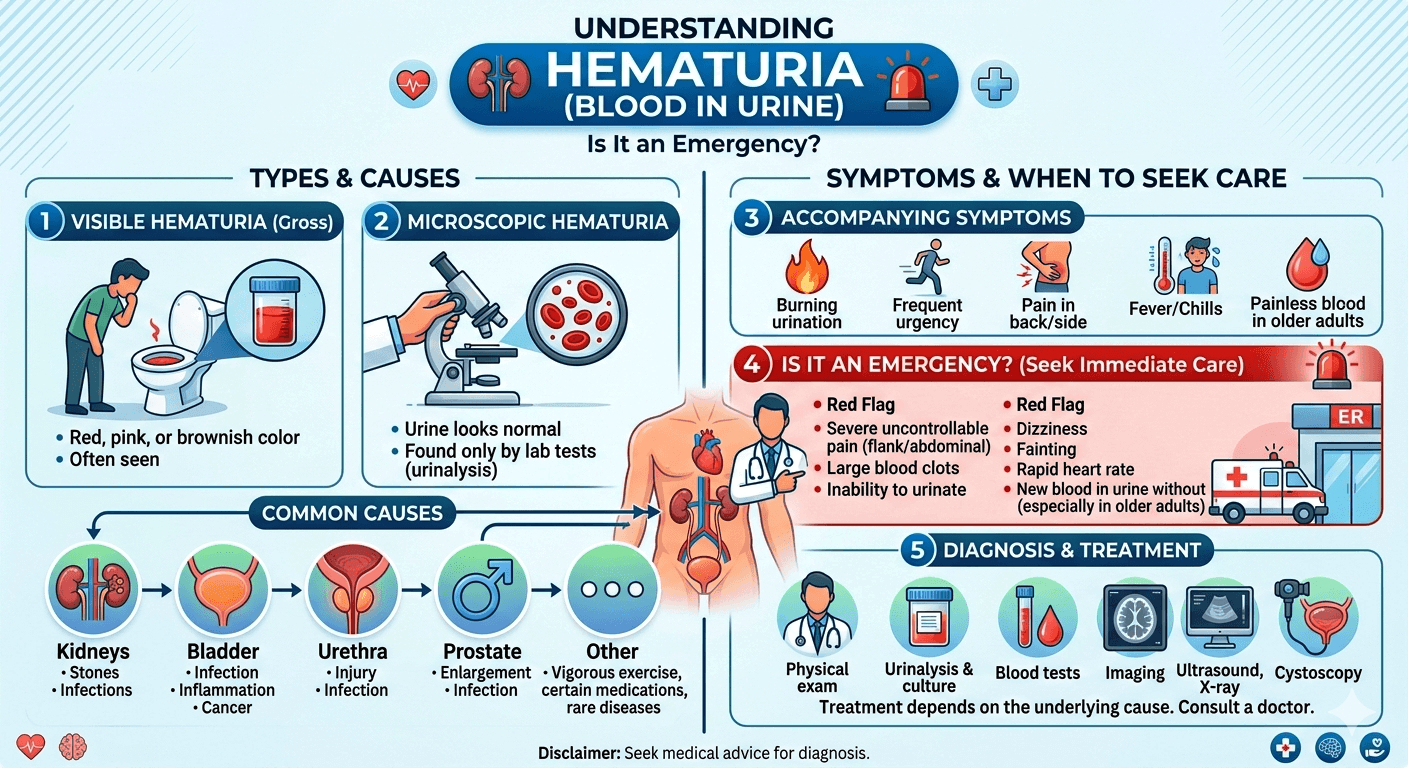
Blood in Urine (Hematuria): Is It an Emergency?
Blood in Urine (Hematuria): Is It an Emergency? Learn the common causes, warning signs, diagnosis, and treatment options for hematuria, and discover when blood in the urine requires immediate medical attention.
Introduction
Discovering blood in your urine can be alarming. Many patients immediately fear the worst, while medical students often wonder about the broad range of conditions that can cause this symptom. As a physician, one of the most common questions I hear is: Blood in Urine (Hematuria): Is It an Emergency?
The answer depends on the underlying cause and associated symptoms. While some cases are harmless and temporary, others may signal serious conditions requiring urgent medical attention. Understanding hematuria is essential for both patients and healthcare trainees because it can range from a minor issue to an important warning sign of disease.
Finding blood in your urine can be alarming Learn the common causes, warning signs, diagnosis, and treatment options for hematuria, and discover when blood in the urine requires immediate medical attention.
Understanding Hematuria
Hematuria refers to the presence of red blood cells in the urine. Normally, urine should not contain visible blood. When blood enters the urinary tract, it can alter the appearance of urine or be detected only through laboratory testing.
The urinary system includes:
- Kidneys
- Ureters
- Bladder
- Urethra
Bleeding can originate from any part of this system. The challenge for healthcare providers is determining where the blood is coming from and why it is occurring.
For patients, seeing blood in urine often causes anxiety. Fortunately, many causes are treatable when diagnosed early.
How Common Is Blood in Urine?
Hematuria is more common than many people realize.
Studies suggest that microscopic hematuria may be found in up to 13% of adults during routine testing. Gross hematuria, where blood is visible to the naked eye, is less common but usually prompts immediate medical evaluation.
The likelihood of serious disease increases with:
- Age over 40 years
- Smoking history
- Occupational chemical exposure
- Family history of urinary tract cancers
Types of Hematuria
Understanding the different forms of hematuria helps guide diagnosis and treatment.
Gross Hematuria
Gross hematuria occurs when blood is visible in the urine.
Urine may appear:
- Pink
- Red
- Brown
- Tea-colored
- Cola-colored
Even a small amount of blood can dramatically change urine color.
Patients frequently notice gross hematuria immediately and seek medical care.
Microscopic Hematuria
Microscopic hematuria occurs when blood cells are present but cannot be seen without a microscope.
This type is often discovered during:
- Routine health examinations
- Employment screenings
- Annual physicals
- Evaluation of unrelated symptoms
Although microscopic hematuria may seem less concerning, it still requires investigation because serious diseases can present this way.
How Urine Normally Appears
Healthy urine is generally:
- Pale yellow
- Straw-colored
- Clear
Color variations can occur due to:
- Hydration status
- Foods
- Vitamins
- Medications
Certain substances may mimic blood in urine:
- Beets
- Blackberries
- Rhubarb
- Some antibiotics
- Phenazopyridine
Laboratory testing helps distinguish true hematuria from harmless discoloration.
Why Blood Appears in Urine
Blood enters urine when there is disruption somewhere along the urinary tract.
Possible mechanisms include:
- Infection-induced inflammation
- Stone-related injury
- Tumor bleeding
- Glomerular damage
- Trauma
- Vascular abnormalities
The kidneys normally filter blood while retaining red blood cells. When this filtration barrier becomes damaged, blood may leak into the urine.
Common Causes of Hematuria
Urinary Tract Infections (UTIs)
UTIs are among the most frequent causes of blood in urine.
Symptoms may include:
- Burning during urination
- Frequent urination
- Urgency
- Lower abdominal discomfort
- Cloudy urine
Inflammation of the bladder lining can lead to bleeding.
Women experience UTIs more often than men because of anatomical differences.
Kidney Stones
Kidney stones are a classic cause of hematuria.
As stones move through the urinary tract, they may scratch delicate tissues, causing bleeding.
Typical symptoms include:
- Severe flank pain
- Nausea
- Vomiting
- Blood in urine
- Pain radiating to the groin
The pain is often described as one of the most intense pains a person can experience.
Enlarged Prostate
In older men, benign prostatic hyperplasia (BPH) frequently contributes to hematuria.
An enlarged prostate may:
- Obstruct urine flow
- Irritate nearby blood vessels
- Increase bladder pressure
Symptoms often include:
- Weak urine stream
- Frequent nighttime urination
- Difficulty starting urination
Kidney Disease
Many kidney disorders can cause microscopic or gross hematuria.
Hematuria may occur in patients with chronic kidney disease.
Examples include:
- Glomerulonephritis
- IgA nephropathy
- Lupus nephritis
- Hereditary kidney diseases
These conditions often involve inflammation or damage to kidney filtration units.
Associated findings may include:
- Protein in urine
- High blood pressure
- Swelling
- Reduced kidney function
Cancer of the Urinary Tract
One of the most important causes of painless blood in urine is cancer.
Potential malignancies include:
- Bladder cancer
- Kidney cancer
- Ureteral cancer
- Urethral cancer
Painless visible blood in urine should never be ignored, especially in older adults and smokers.
Early detection significantly improves outcomes.
Less Common Causes
Additional causes include:
- Vigorous exercise
- Trauma
- Blood clotting disorders
- Certain medications
- Radiation therapy
- Sickle cell disease
- Polycystic kidney disease
- Endometriosis affecting the urinary tract
Exercise-induced hematuria may occur after long-distance running and typically resolves within 48 to 72 hours.
Risk Factors
Several factors increase the likelihood of developing hematuria:
| Risk Factor | Impact |
| Smoking | Increases cancer risk |
| Older age | Higher incidence of urinary diseases |
| Family history | Raises genetic risk |
| Kidney disease | Direct cause of bleeding |
| Recurrent UTIs | Causes chronic inflammation |
| Certain medications | May increase bleeding tendency |
| Chemical exposure | Associated with bladder cancer |
Recognizing these factors helps healthcare providers prioritize investigations.
Is Hematuria an Emergency?
This is the central question: Blood in Urine (Hematuria): Is It an Emergency?
Not every case requires emergency treatment, but some situations demand immediate evaluation.
Seek Emergency Medical Care If You Have:
- Large amounts of blood in urine
- Blood clots causing urinary blockage
- Inability to urinate
- Severe flank or abdominal pain
- High fever with urinary symptoms
- Significant trauma
- Dizziness or fainting
- Rapid blood loss symptoms
These may indicate serious conditions such as:
- Obstructing kidney stones
- Severe infection
- Major urinary tract injury
- Significant bleeding disorders
When It Is Less Urgent
You should still schedule prompt medical evaluation if:
- Blood appears without pain
- Microscopic hematuria is discovered
- Symptoms persist
- Hematuria recurs
Even painless bleeding may signal bladder or kidney cancer.
Red Flag Symptoms
Medical students should remember these warning signs that increase concern:
Painful Hematuria
Often associated with:
- Stones
- Infections
- Trauma
Painless Hematuria
Raises concern for:
- Malignancy
- Certain kidney diseases
Systemic Symptoms
Watch for:
- Weight loss
- Night sweats
- Fatigue
- Fever
These may indicate serious underlying illness.
Diagnostic Evaluation
A systematic evaluation is essential.
Medical History
Healthcare providers ask about:
- Duration
- Pain
- Smoking history
- Medications
- Family history
Physical Examination
Assessment may include:
- Blood pressure
- Abdominal examination
- Prostate examination
- Signs of kidney disease
Urinalysis
Urinalysis helps identify:
- Red blood cells
- Protein
- Infection
- Crystals
Blood Tests
Blood work may assess:
- Kidney function
- Liver function test
- CRP
- ESR
- PT INR
- Autoimmune markers
Imaging Studies
Common imaging methods include:
- Ultrasound
- CT scan
- MRI
Cystoscopy
A cystoscope allows direct visualization of the bladder and urethra.
This procedure is particularly valuable when evaluating unexplained hematuria in adults.
Treatment Approaches
Treatment depends entirely on the cause.
For Urinary Tract Infections
- Antibiotics
- Increased hydration
- Follow-up urine testing
For Kidney Stones
- Pain management
- Hydration
- Medical expulsive therapy
- Surgical removal if necessary
For Enlarged Prostate
- Medications
- Minimally invasive procedures
- Surgery
For Kidney Disease
Management may involve:
- Blood pressure control
- Immunosuppressive therapy
- Lifestyle modifications
For Cancer
Treatment options include:
- Surgery
- Chemotherapy
- Radiation therapy
- Immunotherapy
Prevention Strategies
Not all causes are preventable, but several strategies can reduce risk.
Stay Hydrated
Adequate fluid intake helps:
- Prevent stones
- Reduce infections
- Support kidney health
Avoid Smoking
Smoking is a major risk factor for bladder cancer and kidney cancer.
Treat Infections Promptly
Early treatment reduces complications.
Manage Chronic Diseases
Good control of:
- Diabetes
- Hypertension
- Autoimmune diseases
helps protect kidney function.
Frequently Asked Questions (FAQs)
Can dehydration cause blood in urine?
Dehydration alone rarely causes hematuria but can contribute to stone formation, which may lead to bleeding.
Is blood in urine always a sign of cancer?
No. Most cases are caused by infections, stones, or benign conditions. However, cancer must be ruled out, especially in older adults.
Can exercise cause hematuria?
Yes. Intense exercise, particularly long-distance running, can result in temporary hematuria.
How much blood is concerning?
Any visible blood should be evaluated by a healthcare provider, even if only a small amount is present.
Can hematuria go away on its own?
Occasionally. However, spontaneous resolution does not eliminate the need for medical assessment.
Should microscopic hematuria be investigated?
Yes. Persistent microscopic hematuria often requires further evaluation to exclude serious disease.
Can medications cause blood in urine?
Yes. Blood thinners and certain medications may increase bleeding risk or reveal underlying urinary tract problems.
Conclusion
From a physician’s perspective, the safest approach is prompt evaluation whenever blood appears in the urine. Patients should seek immediate medical attention if hematuria is accompanied by severe pain, fever, urinary obstruction, or signs of significant blood loss. For medical students, hematuria serves as an important clinical sign that requires a structured and thorough diagnostic approach.
Remember: early evaluation leads to earlier diagnosis, better treatment options, and improved outcomes. If you notice blood in your urine, consult a healthcare professional without delay.
Read More National Kidney Foundation
Disclaimer: The information provided in this blog post is for educational and informational purposes only and should not be considered medical advice. It is not intended to replace professional medical consultation, diagnosis, or treatment.