
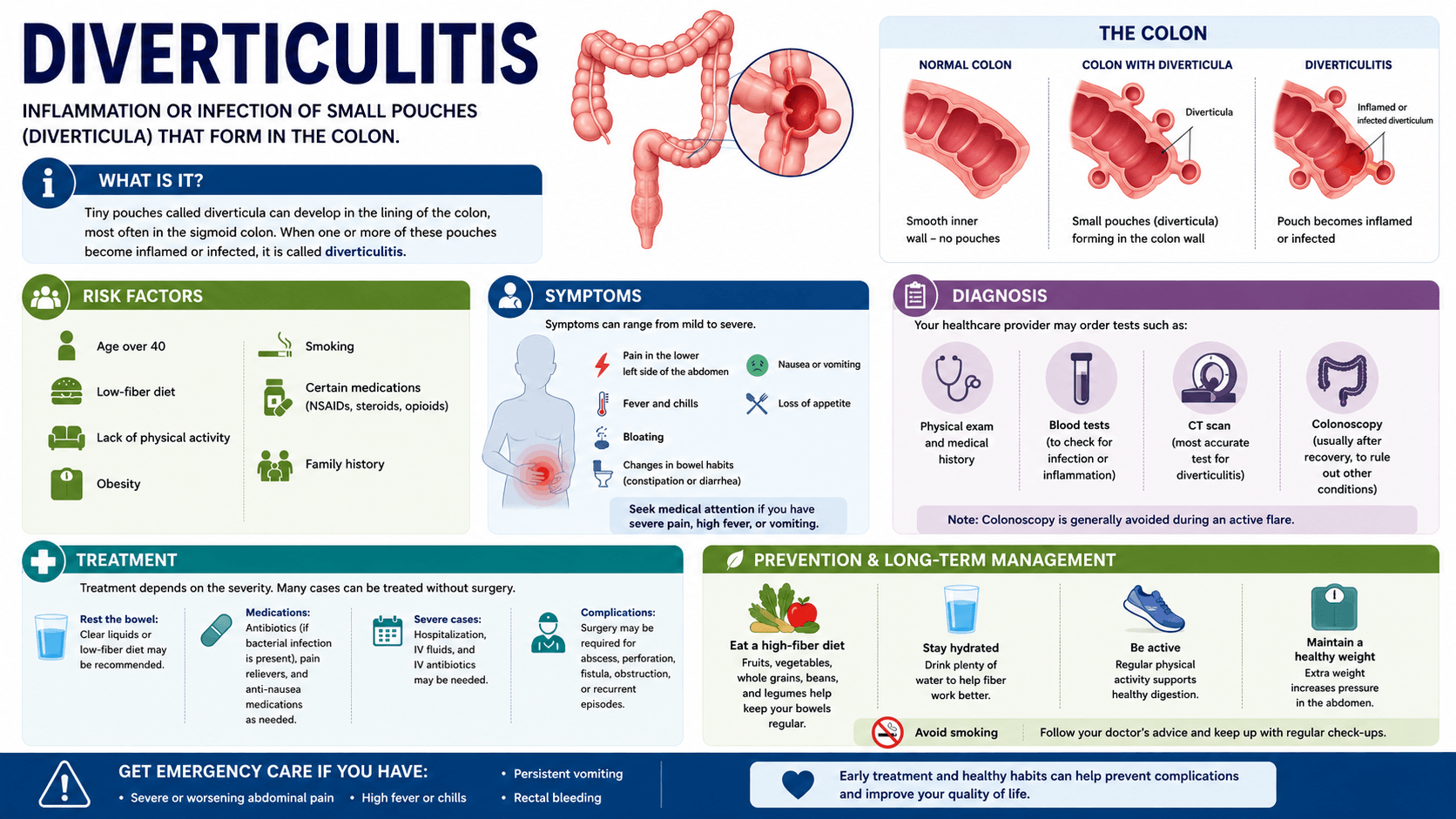
What Is Diverticulitis? Signs, Risk Factors, and Treatment options
Learn about what is diverticulitis, including its symptoms, causes, diagnosis, treatment options, complications, and prevention strategies in this comprehensive guide.
Introduction
Diverticulitis is a digestive disease that can result in significant pain in the abdomen and, at times, lead to severe complications. In patients, knowledge of the disease helps minimize their anxiety levels and directs them towards the right treatment. In medical students, on the other hand, diverticulitis is a good example of how structural changes in the colon can lead to inflammation and infection.
Learn about diverticulitis, including its causes, symptoms, risk factors, diagnosis, treatment options, and prevention strategies. Discover when to seek medical care and how lifestyle changes can help reduce the risk of complications.
As a health practitioner, I have observed that, although most patients know what diverticulitis is, they do not understand its nature, causative agents, and treatment measures. This article presents an in-depth overview of diverticulitis, covering aspects such as causes, symptoms, risk factors, diagnosis, treatment modalities, and preventive measures for the disease.
Understanding Diverticulitis
Diverticulitis develops when small pouches forming on the wall of the colon become inflamed or infected.
For you to understand diverticulitis better, it is important to learn about diverticulosis.
What Is Diverticulosis?
Diverticulosis is a disease characterized by the formation of small, bulging sacs referred to as diverticula along the lining of the large intestine (colon). These sacs are most prevalent in the sigmoid colon, the lower section of the large intestine.
Diverticulosis is a very common disease and becomes more prevalent as people age. Most individuals with diverticula do not experience any symptoms.
What Is Diverticulitis?
If there is inflammation or infection of the diverticula, the condition is referred to as diverticulitis.
There may be different stages of the inflammation, ranging from simple irritation to a serious infection; complications of the condition include abscess formation, perforation, or blockage of the intestines.
Anatomy and Pathophysiology
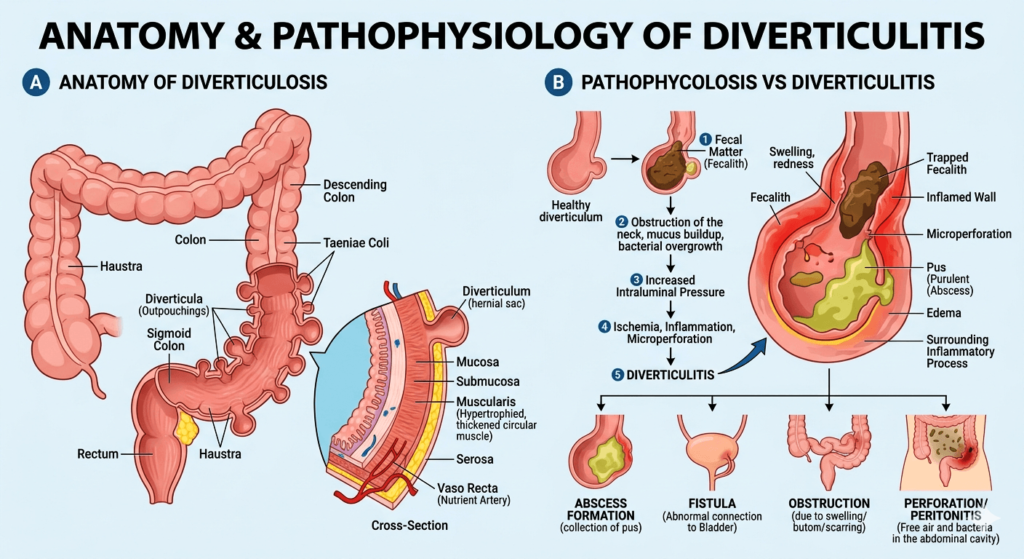
To understand diverticulitis, it is essential to first understand the anatomy of the colon.
The colon (large intestine), is the final portion of the gastrointestinal tract. It consists of:
- Cecum
- Ascending colon
- Transverse colon
- Descending colon
- Sigmoid colon
- Rectum
Diverticulitis most commonly affects the sigmoid colon, the S-shaped segment located just before the rectum. This region experiences relatively high intraluminal pressure during bowel movements, making it particularly susceptible to the formation of diverticula.
Development of Diverticula
Diverticula form due to herniation of the colon wall through weak spots at high pressure.
Increased intra-colonic pressure plays an important role in the development of the disease.
Usually, they are formed in places where there is a penetration of blood vessels into the intestinal wall.
Mechanism of Developing Diverticulitis
Although the mechanism of development is unknown, several factors could be contributing:
- Obstruction of the diverticulum with stools;
- Inflammation;
- Gut microflora changes;
- Tiny hole formation in the wall of the diverticulum;
- Decreased blood supply to the damaged area.
Signs and Symptoms of Diverticulitis
The presentation of diverticulitis can vary from mild to severe.
Common Symptoms
The most frequent symptoms include:
- Abdominal pain
- Tenderness over the affected area
- Fever
- Nausea
- Vomiting
- Loss of appetite
- Changes in bowel habits
Characteristic Pain Location
In Western populations, diverticulitis most commonly affects the sigmoid colon, causing:
However, right-sided diverticulitis may occur and is relatively more common in some Asian populations.
Gastrointestinal Symptoms
Patients may experience:
- Constipation
- Diarrhea
- Bloating
- Excessive gas
- Difficulty passing stool
Systemic Symptoms
More significant inflammation may produce:
- Fever
- Chills
- Fatigue
- General malaise
When Symptoms Suggest a Medical Emergency
Certain symptoms may indicate serious complications and require immediate medical attention.
These include:
- Severe abdominal pain
- High fever
- Persistent vomiting
- Signs of sepsis
- Abdominal rigidity
- Inability to pass stool or gas
- Rectal bleeding
- Dizziness or fainting
Prompt evaluation is essential because delayed treatment can increase the risk of life-threatening complications.
Risk Factors for Diverticulitis
Not everyone with diverticulosis develops diverticulitis. Several factors increase the likelihood of inflammation.
Age
Risk increases with advancing age.
Although diverticulosis is increasingly recognized in younger adults, it remains most common in individuals over 50 years old.
Dietary Factors
A diet low in dietary fiber may contribute to:
- Increased colonic pressure
- Altered bowel habits
- Changes in gut microbial composition
Low consumption of fruits, vegetables, legumes, and whole grains has been associated with a greater risk of diverticular disease.
Obesity
Excess body weight is a significant risk factor.
Obesity is associated with:
- Increased inflammation throughout the body
- Higher rates of complicated diverticulitis
- Increased likelihood of recurrence
Physical Inactivity
Regular exercise supports healthy bowel function and may reduce the risk of diverticular disease complications.
Sedentary lifestyles are associated with a higher incidence of diverticulitis.
Smoking
Smoking appears to increase:
- Risk of diverticulitis
- Risk of perforation
- Risk of recurrent disease
Medication Use
Certain medications may increase susceptibility, including:
- Nonsteroidal anti-inflammatory drugs (NSAIDs)
- Corticosteroids
- Opioids
- Some immunosuppressive agents
Genetic Factors
Family history plays a role.
Studies suggest that genetic predisposition contributes significantly to the development of diverticular disease and its complications.
Complications of Diverticulitis
While many cases are uncomplicated, some patients develop serious complications.
Abscess
An abscess is a localized collection of pus near the infected diverticulum.
Symptoms may include:
- Persistent fever
- Ongoing abdominal pain
- Elevated inflammatory markers
Perforation
A perforation occurs when the intestinal wall ruptures.
This can lead to:
- Peritonitis
- Severe infection
- Septic shock
Perforation is a medical emergency.
Fistula Formation
A fistula is an abnormal connection between the colon and another structure.
Common examples include:
- Colon-to-bladder fistula
- Colon-to-vagina fistula
- Colon-to-skin fistula
Patients may experience recurrent infections or passage of gas through unusual routes.
Bowel Obstruction
Repeated inflammation can cause scarring and narrowing of the colon, resulting in partial or complete obstruction.
Recurrent Diverticulitis
Some patients experience repeated episodes, which may affect quality of life and influence treatment decisions.
How Diverticulitis Is Diagnosed
Accurate diagnosis is important because many other conditions can mimic diverticulitis.
Medical History
Clinicians assess:
- Location of pain
- Duration of symptoms
- Previous episodes
- Associated gastrointestinal symptoms
- Medication use
Physical Examination
The examination often reveals:
- Localized abdominal tenderness
- Guarding
- Signs of systemic infection
Laboratory Tests
Common investigations include:
- Complete blood count (CBC)
- C-reactive protein (CRP)
- ESR
- Electrolytes
- Kidney function tests
Elevated white blood cell counts and inflammatory markers often support the diagnosis.
Computed Tomography (CT) Scan
CT imaging is considered the gold standard for diagnosing diverticulitis.
A CT scan can identify:
- Inflamed diverticula
- Abscesses
- Perforations
- Obstruction
- Fistulas
It also helps determine disease severity and guides treatment planning.
Colonoscopy
Colonoscopy is generally avoided during an acute attack because of the risk of perforation.
However, it is often recommended several weeks after recovery to:
- Exclude colorectal cancer
- Evaluate the extent of diverticular disease
- Investigate persistent symptoms
Classification of Diverticulitis
Uncomplicated Diverticulitis
This form involves localized inflammation without major complications.
Characteristics include:
- Mild to moderate symptoms
- No abscess
- No perforation
- No obstruction
Most cases fall into this category.
Complicated Diverticulitis
Complicated disease includes:
- Abscess formation
- Perforation
- Fistula
- Obstruction
- Generalized peritonitis
These patients often require hospitalization and more aggressive treatment.
Treatment Options for Diverticulitis
Treatment depends on disease severity, patient characteristics, and the presence of complications.
Management of Mild Uncomplicated Diverticulitis
Many patients can be treated at home.
Treatment may include:
- Rest
- Adequate hydration
- Pain management
- Temporary dietary modifications
Current evidence suggests that antibiotics may not always be necessary for carefully selected patients with mild uncomplicated diverticulitis.
Clinical judgment remains essential.
Dietary Recommendations During Recovery
During acute symptoms, physicians may recommend:
- Clear liquids initially
- Gradual advancement to low-fiber foods
- Return to a balanced high-fiber diet after recovery
Examples of clear liquids include:
- Water
- Broth
- Gelatin
- Oral rehydration solutions
Antibiotic Therapy
Antibiotics may be prescribed when:
- Symptoms are moderate to severe
- Patients are immunocompromised
- Significant systemic infection is present
- Complications are suspected
The choice of antibiotic depends on local guidelines and patient-specific factors.
Hospital Treatment
Hospitalization may be necessary for patients with:
- Severe pain
- High fever
- Inability to tolerate oral intake
- Significant comorbidities
- Complicated diverticulitis
Hospital-based treatment often includes:
- Intravenous fluids
- Intravenous antibiotics
- Pain control
- Monitoring for complications
Interventional Procedures
Percutaneous Abscess Drainage
For larger abscesses, radiologists may insert a drainage catheter under CT or ultrasound guidance.
Benefits include:
- Control of infection
- Reduced need for emergency surgery
Faster recovery
Surgical Treatment
Surgery is reserved for selected situations.
Indications for Surgery
Potential indications include:
- Perforation
- Generalized peritonitis
- Large abscesses not responding to drainage
- Recurrent severe attacks
- Obstruction
- Fistula formation
Types of Surgical Procedures
Colon Resection
The diseased segment of colon is removed and healthy sections are reconnected.
Hartmann Procedure
In emergency situations, surgeons may:
- Remove the affected colon segment
- Create a temporary colostomy
- Restore bowel continuity later if feasible
The specific operation depends on patient stability and disease severity.
Frequently Asked Question (FAQ)
What is the difference between diverticulosis and diverticulitis?
Diverticulosis refers to the presence of small pouches (diverticula) in the wall of the colon. Most people with diverticulosis have no symptoms. Diverticulitis occurs when one or more of these pouches become inflamed or infected, leading to symptoms such as abdominal pain, fever, and digestive disturbances.
What are the most common symptoms of diverticulitis?
The most common symptom is persistent pain in the lower left side of the abdomen. Other symptoms may include:
Fever and chills
Nausea or vomiting
Constipation or diarrhea
Abdominal tenderness
Bloating and gas
Symptoms can range from mild discomfort to severe illness requiring hospitalization.
What causes diverticulitis and who is at risk?
The exact cause is not fully understood, but factors that increase the risk include:
Age over 40 years
A low-fiber diet
Obesity
Physical inactivity
Smoking
Regular use of certain medications, such as NSAIDs and steroids
A family history of diverticular disease
These factors may contribute to inflammation or infection of diverticula.
How is diverticulitis diagnosed?
Doctors diagnose diverticulitis using a combination of:
Medical history and physical examination
Blood tests to look for signs of infection or inflammation
Imaging studies, especially a CT scan of the abdomen and pelvis, which is the most accurate test for confirming diverticulitis and identifying complications
A colonoscopy is usually performed after recovery to evaluate the colon and rule out other conditions.
What are the treatment options for diverticulitis?
Treatment depends on the severity of the condition:
Mild cases: Rest, increased fluid intake, and dietary modifications
Moderate cases: Oral antibiotics may be prescribed when appropriate
Severe cases: Hospitalization, intravenous antibiotics, and close monitoring
Complicated cases: Surgery may be necessary if there is an abscess, perforation, fistula, or recurrent severe attacks
Conclusion
Fortunately, most patients are diagnosed with uncomplicated diverticulitis and manage to get cured without serious complications. New scientific research helps to understand the condition better and allows individual approaches to treatment with the use of medication, imaging tests, and surgery. Early diagnosis, appropriate evaluation, and a healthy way of life are considered the keys to success.
Disclaimer: The information provided in this blog post is for educational and informational purposes only and should not be considered medical advice. It is not intended to replace professional medical consultation, diagnosis, or treatment.
Read more https://www.niddk.nih.gov/health-information/digestive-diseases/diverticulosis-diverticulitis