
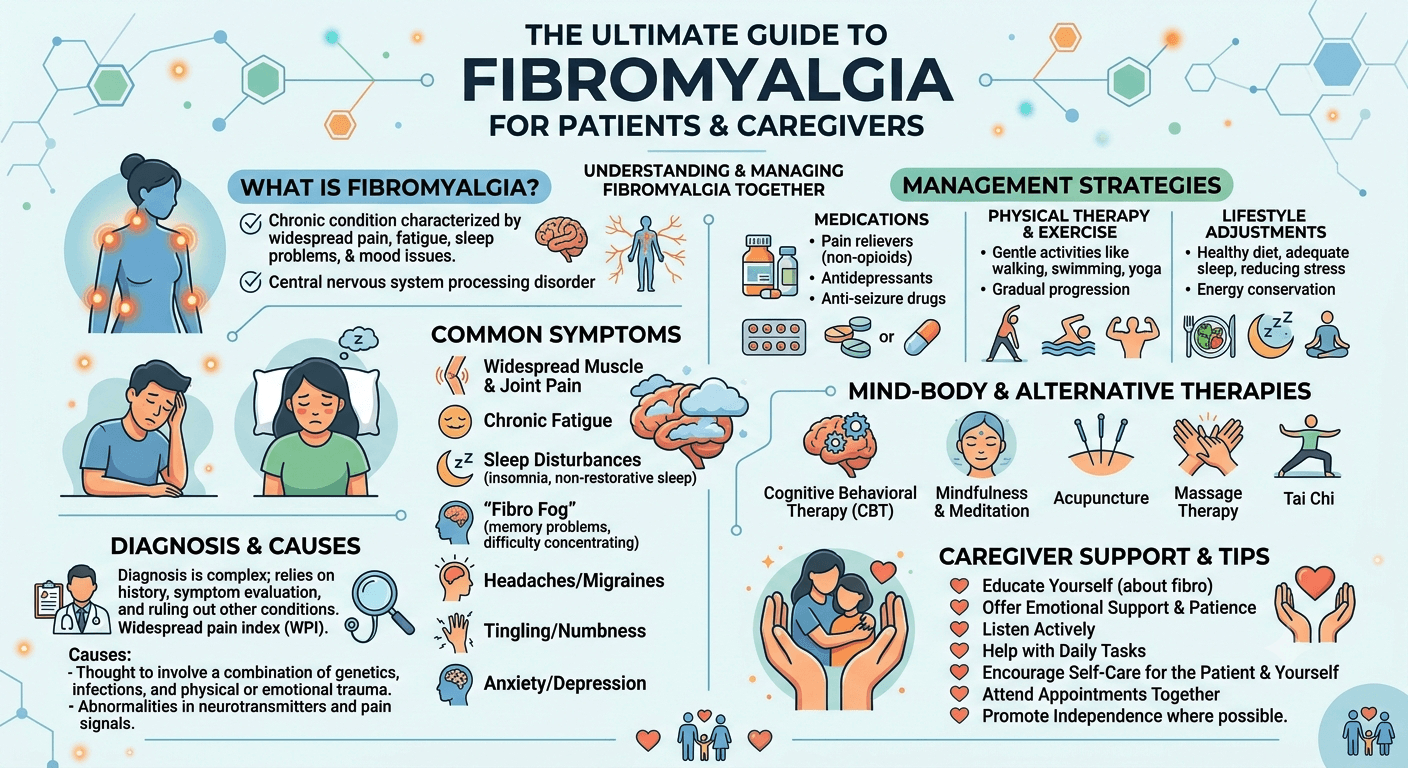
The Ultimate Guide to Fibromyalgia for Patients and Caregivers
Empower your journey with the definitive resource for managing fibromyalgia. Written for patients and caregivers, this comprehensive guide demystifies chronic pain, fatigue, and brain fog. Discover actionable management strategies, evidence-based treatments, and daily coping mechanisms designed to improve quality of life and restore hope. Your path to wellness starts here.
Introduction
Fibromyalgia is indeed an example of a chronic illness that afflicts many individuals across the globe. Symptoms associated with fibromyalgia include constant pain, extreme fatigue, sleeping problems, and cognitive impairments. Fibromyalgia has received attention from many medical practitioners but is still poorly understood by many as being one of the chronic pains out there.
Get equipped with the best guide that will guide you through your fight with fibromyalgia. This guide has been written for patients and caregivers to empower them with knowledge on how they can cope with fibromyalgia. The guide discusses effective ways of dealing with fibromyalgia, including symptom management, treatment, and coping techniques.
It can be quite difficult for patients to deal with fibromyalgia. On the other hand, it can be quite tricky for a caregiver to understand their loved one who suffers from fibromyalgia due to its complex symptoms that cannot be seen by the naked eye.
Understanding Fibromyalgia
https://www.youtube.com/watch?v=QJ3utlgO2Ko
What Is Fibromyalgia?
Fibromyalgia is a chronic pain disorder characterized by:
- Widespread musculoskeletal pain
- Persistent fatigue
- Sleep disturbances
- Cognitive difficulties (fibro fog)
- Heightened sensitivity to sensory stimuli
Unlike conditions such as rheumatoid arthritis or osteoarthritis, fibromyalgia does not cause visible joint damage or inflammation. Instead, it is believed to involve changes in how the brain and nervous system process pain signals.
Fibromyalgia is recognized by major medical organizations worldwide and is classified as a legitimate neurological and pain-processing disorder.
Who Is Most Commonly Affected?
- Women are diagnosed more frequently than men.
- Symptoms commonly appear between ages 20 and 60.
- Children and older adults can also develop fibromyalgia.
- Individuals with autoimmune disorders may have a higher risk.
Impact on Daily Life
Fibromyalgia affects much more than physical comfort.
Common challenges include:
Physical Impact
- Difficulty performing household tasks
- Reduced stamina
- Exercise intolerance
- Frequent pain flares
Emotional Impact
- Frustration
- Anxiety
- Depression
- Feelings of isolation
Occupational Impact
- Reduced productivity
- Increased sick days
- Difficulty maintaining full-time employment
Social Impact
- Cancelled plans
- Strained relationships
- Reduced participation in activities
Many patients describe the condition as unpredictable, with symptoms fluctuating from day to day.
Understanding the Anatomy and Physiology
The Nervous System’s Role: Central Sensitization
One of the leading theories explaining fibromyalgia is a phenomenon known as central sensitization.
What Is Central Sensitization?
Central sensitization occurs when the nervous system becomes overly responsive to stimuli.
In fibromyalgia:
- Pain signals are amplified.
- Non-painful sensations may become painful.
- Pain may persist long after an injury has healed.
Imagine the body’s pain volume control becoming stuck at a much higher setting than normal.
How Pain Processing Changes
Normally, the brain helps filter incoming sensory information.
In fibromyalgia:
- Pain signals are intensified.
- The brain becomes more sensitive to stimuli.
- Pain inhibition systems become less effective.
As a result, patients may experience significant pain without obvious tissue damage.
Neurotransmitters Involved
Neurotransmitters are chemical messengers that allow nerve cells to communicate.
Elevated Neurotransmitters
Research suggests increased levels of:
- Substance P
- Glutamate
- Nerve growth factors
These chemicals may enhance pain perception.
Reduced Neurotransmitters
Lower levels of:
- Serotonin
- Dopamine
- Norepinephrine
may contribute to:
- Increased pain sensitivity
- Fatigue
- Mood disturbances
- Sleep problems
The Musculoskeletal System’s Role
Despite significant muscle and joint pain, fibromyalgia is not primarily a muscle disease.
Researchers believe:
- Muscles may become painful because of altered pain processing.
- Reduced physical activity can contribute to deconditioning.
- Muscle tension may worsen symptoms.
No consistent structural abnormalities have been identified in muscles or joints that fully explain fibromyalgia pain.
Symptoms and Diagnosis
Common Symptoms of Fibromyalgia
Symptoms vary widely between individuals.
Widespread Pain
The hallmark symptom is chronic widespread pain.
Patients often describe it as:
- Aching
- Burning
- Throbbing
- Stabbing
- Deep soreness
Pain may affect:
- Neck
- Shoulders
- Back
- Hips
- Arms
- Legs
Fatigue
Fibromyalgia-related fatigue goes beyond ordinary tiredness.
Patients often report:
- Exhaustion despite adequate sleep
- Low-energy levels
- Reduced endurance
Many describe feeling as though they have the flu every day.
Sleep Disturbances
Sleep problems are extremely common.
These include:
- Difficulty falling asleep
- Frequent awakenings
- Non-restorative sleep
- Restless legs symptoms
Poor sleep often intensifies pain and fatigue.
Cognitive Dysfunction (Fibro Fog)
Fibro fog can include:
- Memory difficulties
- Concentration problems
- Slower information processing
- Difficulty finding words
These symptoms can affect work, education, and daily functioning.
Additional Symptoms
Many individuals also experience:
- Headaches
- Migraines
- Irritable bowel syndrome (IBS)
- Temporomandibular joint (TMJ) pain
- Dizziness
- Sensitivity to light and sound
- Numbness and tingling sensations
Diagnostic Criteria and Process
How Fibromyalgia Is Diagnosed
That’s correct, There is currently no single laboratory test that can definitively diagnose fibromyalgia.
Diagnosis typically relies on:
Medical History
Healthcare providers assess:
- Pain patterns
- Symptom duration
- Fatigue levels
- Sleep quality
Physical Examination
Doctors may evaluate:
- Areas of tenderness
- Range of motion
- Signs of alternative conditions
Symptom Assessment Tools
Modern diagnostic criteria emphasize:
- Widespread pain index (WPI)
- Symptom severity scale (SSS)
Challenges in Diagnosis
Fibromyalgia often remains undiagnosed for years.
Reasons include:
- Symptoms overlap with many other disorders.
- Symptoms may fluctuate.
- Standard blood tests are usually normal.
- Misconceptions about chronic pain persist.
Many patients see multiple healthcare providers before receiving a diagnosis.
Differential Diagnoses
Healthcare professionals may need to rule out:
- Rheumatoid arthritis
- Lupus
- Hypothyroidism
- Multiple sclerosis
- Chronic fatigue syndrome
- Polymyalgia rheumatica
- Vitamin deficiencies
- Sleep disorders
Accurate diagnosis is critical because treatment approaches differ significantly among these conditions.
Causes and Risk Factors
What Causes Fibromyalgia?
Despite decades of research, the exact cause of fibromyalgia remains unclear. Rather than being linked to a single disease process, fibromyalgia is now understood as a complex condition that develops through an interaction of genetic, biological, neurological, and environmental factors.
Genetic Factors
Fibromyalgia often runs in families, suggesting that genetics play an important role in determining who may be susceptible to the condition.
Certain inherited traits may influence:
- How the body processes pain
- The way an individual responds to physical and emotional stress
- The function of neurotransmitters involved in pain regulation, such as serotonin and norepinephrine.
Physical Trauma
Some patients report the onset of symptoms following a significant physical event. Potential triggers may include:
- Motor vehicle accidents
- Surgical procedures
- Sports injuries
- Other forms of physical trauma
However, many people experience similar injuries without developing fibromyalgia, indicating that trauma is only one piece of a much larger puzzle.
Infections and Illnesses
In certain cases, fibromyalgia symptoms appear after an infection or severe illness. Researchers have observed associations with:
- Viral infections
- Serious bacterial illnesses
- Prolonged inflammatory conditions
Psychological and Emotional Stress
Chronic stress can have profound effects on the body and nervous system. Long-term emotional stress has been associated with:
- Increased nervous system sensitization
- Disrupted sleep patterns
- Hormonal imbalances
- Heightened pain perception
Treatment and Management Strategies
A Personalized Approach to Care
Fibromyalgia affects each person differently. As a result, there is no single treatment that works for everyone.
The most successful management plans typically combine several approaches, including:
- Appropriate medications
- Regular physical activity
- Psychological support
- Lifestyle modifications
- Patient education
The goal is not only to reduce symptoms but also to improve overall quality of life and daily functioning.
Medications
Pain Relievers
Some individuals may experience symptom relief with medications such as acetaminophen and certain non-opioid pain relievers. Because fibromyalgia is not primarily an inflammatory condition, traditional anti-inflammatory medications often provide limited benefit compared with their effectiveness in conditions such as arthritis.
Antidepressants
Several antidepressant medications have demonstrated benefits beyond treating depression. These medications may help improve:
- Pain levels
- Sleep quality
- Fatigue
- Overall well-being
Many of these benefits are thought to result from their effects on neurotransmitters involved in pain regulation.
Anticonvulsant Medications
Certain anticonvulsant drugs can alter nerve signaling and reduce pain sensitivity in some patients with fibromyalgia.
Potential benefits include:
- Reduced pain intensity
- Improved sleep quality
- Enhanced daily functioning
Non-Pharmacological Therapy
Physical Therapy
Physical therapy is often an important component of treatment. A skilled physical therapist can help patients:
- Improve flexibility and mobility
- Build strength safely
- Reduce stiffness
- Develop personalized exercise programs
Success is usually achieved through gradual progression rather than aggressive exercise.
Occupational Therapy
Occupational therapists assist with:
- Energy conservation
- Workplace adaptations
- Daily activity modification
These strategies can help reduce symptom flares.
Cognitive Behavioral Therapy (CBT)
Cognitive Behavioral Therapy is sometimes misunderstood. Its purpose is not to suggest that fibromyalgia symptoms are psychological or imaginary.
Instead, CBT helps patients:
- Develop healthier coping strategies
- Manage stress more effectively
- Address unhelpful thought patterns
- Improve overall quality of life
Research shows that psychological resilience can play a significant role in living well with chronic pain.
Lifestyle Modifications
Exercise
Exercise remains one of the most effective long-term strategies for managing fibromyalgia.
Recommended activities often include:
- Walking
- Swimming
- Water aerobics
- Cycling
- Light resistance training
Sleep Hygiene
Because poor sleep is closely linked to symptom severity, improving sleep habits can make a meaningful difference.
Helpful strategies include:
- Maintaining a consistent sleep schedule
- Limiting caffeine later in the day
- Creating a dark, quiet sleep environment
- Reducing screen exposure before bedtime
Diet and Nutrition
No specific diet cures fibromyalgia.
However, many patients benefit from:
- Balanced nutrition
- Adequate hydration
- Limiting highly processed foods
- Monitoring personal food sensitivities
A registered dietitian can provide individualized guidance.
Stress Management
Effective stress reduction techniques include:
- Relaxation exercises
- Journaling
- Counseling
- Support groups
- Nature exposure
- Creative hobbies
Stress management is often an essential part of symptom control.
Conclusion
While there is currently no cure, many individuals achieve substantial symptom improvement through a combination of medical treatment, exercise, psychological support, healthy lifestyle habits, and effective self-management strategies. Because symptoms vary widely between individuals, treatment plans should always be personalized and developed in partnership with qualified healthcare professionals.
For patients, understanding fibromyalgia can foster confidence, resilience, and greater control over their health journey. For caregivers, empathy, education, and ongoing support can make a meaningful difference. With the right approach, many people living with fibromyalgia can improve their quality of life and continue pursuing fulfilling personal, professional, and social goals.
Disclaimer: The information provided in this blog post is for educational and informational purposes only and should not be considered medical advice. It is not intended to replace professional medical consultation, diagnosis, or treatment. Always seek the guidance of a qualified healthcare professional regarding any medical condition or health-related concerns.