
Introduction
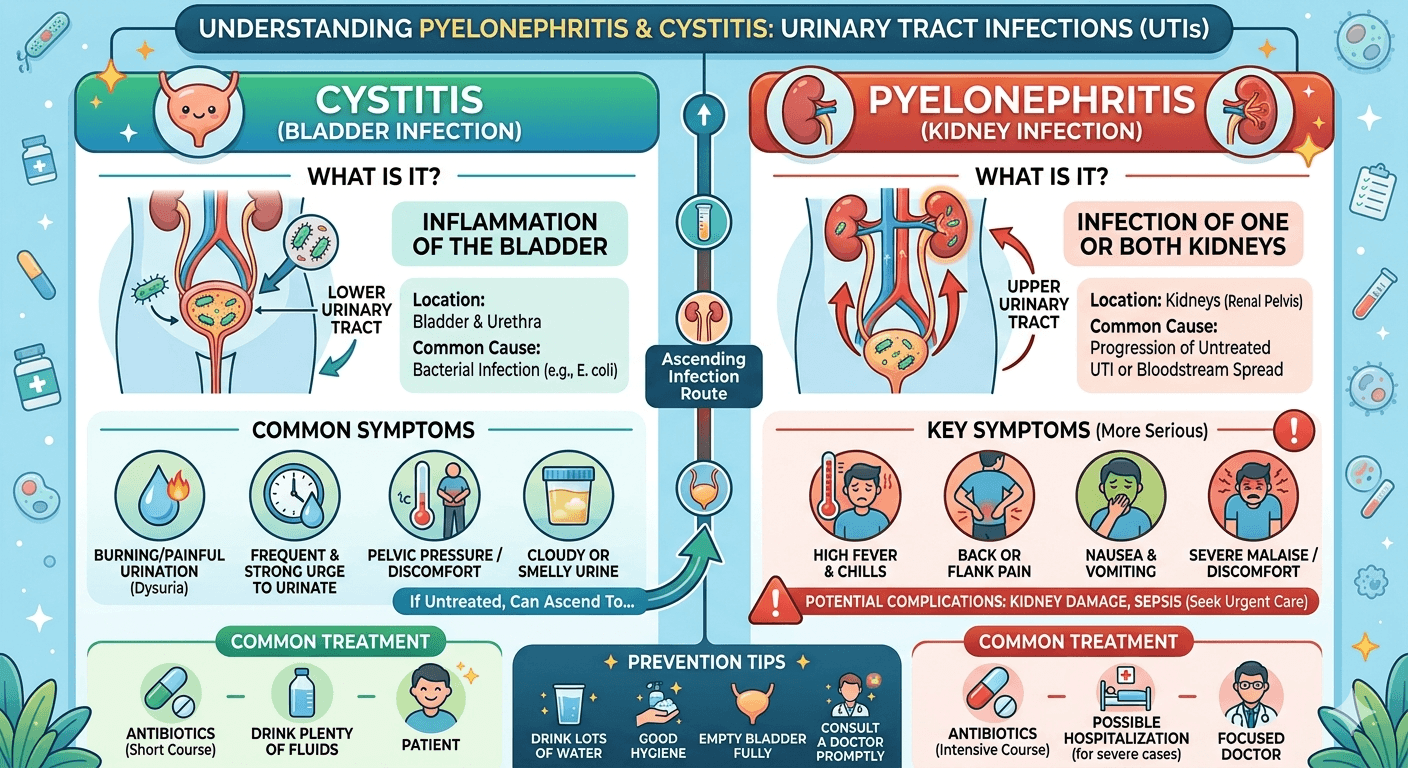
Pyelonephritis and cystitis are among the most common infections affecting the urinary tract. Both conditions are forms of urinary tract infection (UTI), but they differ in their location, severity, clinical presentation, and potential complications. Understanding these disorders is important because prompt diagnosis and treatment can prevent serious outcomes such as kidney damage and sepsis.
Learn about Pyelonephritis and cystitis, two common urinary tract infections. This detailed guide covers causes, symptoms, diagnosis, treatment options, complications, and prevention strategies for patients and medical students.
Overview of the Urinary Tract
The urinary system consists of:
- Kidneys
- Ureters
- Urinary bladder
- Urethra
The kidneys filter blood and produce urine. Urine passes through the ureters into the bladder, where it is stored before being expelled through the urethra.
Urinary tract infections may involve different parts of this system:
- Cystitis: Infection of the urinary bladder
- Pyelonephritis: Infection of the kidney and renal pelvis.
What is Cystitis?
Cystitis is inflammation of the urinary bladder, most commonly caused by bacterial infection. It is considered a lower urinary tract infection and is one of the most frequent bacterial infections encountered in clinical practice.
Women are affected more often than men because the female urethra is shorter, allowing bacteria easier access to the bladder.
Causes of Cystitis
The most common causative organism is:
- Escherichia coli (E. coli)
Other pathogens include:
- Klebsiella species
- Proteus species
- Enterococcus species
- Staphylococcus saprophyticus
These bacteria usually originate from the gastrointestinal tract and enter the urinary tract through the urethra.
Risk Factors for Cystitis
- Female sex
- Sexual activity
- Pregnancy
- Menopause
- Diabetes mellitus
- Poor hydration
- Urinary catheterization
- Use of spermicides
- Previous urinary tract infections
- Urinary obstruction
Symptoms of Cystitis
Patients commonly present with:
- Dysuria (burning or pain during urination)
- Increased urinary frequency
- Urinary urgency
- Suprapubic discomfort
- Cloudy urine
- Foul-smelling urine
- Hematuria (blood in urine)
Systemic symptoms such as high fever are usually absent.
Physical Examination Findings
- Mild Suprapubic tenderness
- Usually normal vital signs
- No costovertebral angle tenderness
What is Pyelonephritis?
Pyelonephritis is a bacterial infection involving the kidney tissue and renal pelvis. It is an upper urinary tract infection and is generally more severe than cystitis.
Most cases develop when bacteria spread upward from an infected bladder into one or both kidneys.
Types of Pyelonephritis
Acute Pyelonephritis
A sudden bacterial infection characterized by fever, flank pain, and urinary symptoms. It may become life-threatening if not treated promptly.
Chronic Pyelonephritis
A recurrent or persistent kidney infection leading to progressive renal scarring and deterioration of kidney function. It is less common and often associated with urinary tract abnormalities.
Pathophysiology
The infection typically follows an ascending route:
- Bacteria enter the urethra.
- The bladder becomes infected (cystitis).
- Organisms ascend through the ureters.
- One or both kidneys become infected (pyelonephritis).
Less commonly, infection may spread to the kidneys through the bloodstream.
Risk Factors for Pyelonephritis
- Untreated bladder infection
- Kidney stones
- Vesicoureteral reflux
- Enlarged prostate
- Pregnancy
- Diabetes mellitus
- Urinary tract obstruction
- Immunosuppression
- Urinary retention
- Long-term catheter use
These conditions facilitate bacterial growth or impair urinary drainage.
Clinical Features of Pyelonephritis
Symptoms
Patients often present with:
- High fever
- Chills and rigors
- Flank pain
- Back pain
- Nausea and vomiting
- Dysuria
- Urinary urgency
- Increased urinary frequency
- Malaise
- Fatigue
The presence of fever and flank pain strongly suggests kidney involvement.
Physical Examination
Typical findings include:
- Fever
- Tachycardia
- Costovertebral angle tenderness
- Signs of dehydration
- Occasionally hypotension in severe infection
Comparison Between Cystitis and Pyelonephritis
| Feature | Cystitis | Pyelonephritis |
| Site of infection | Bladder | Kidney |
| Type of UTI | Lower UTI | Upper UTI |
| Fever | Rare | Common |
| Flank pain | Absent | Present |
| Nausea/Vomiting | Rare | Common |
| Severity | Mild | Moderate to severe |
| Hospitalization | Rarely needed | Sometimes required |
| Risk of sepsis | Low | Higher |
Diagnosis
Medical History
Important questions include:
- Duration of symptoms
- Presence of fever
- Flank pain
- Previous UTIs
- Pregnancy status
- Diabetes history
- Urinary obstruction symptoms
Urinalysis
Urinalysis often demonstrates:
- Pyuria (white blood cells)
- Bacteriuria
- Positive leukocyte esterase
- Positive nitrites
- Microscopic hematuria
Urinalysis is one of the most useful initial investigations.
Urine Culture
Urine culture identifies the causative organism and determines antibiotic sensitivity.
It is especially important in:
- Pyelonephritis
- Recurrent infections
- Complicated UTIs
- Pregnancy
Blood Tests
Particularly useful in pyelonephritis:
- Complete blood count (CBC)
- Elevated white blood cell count
- Blood cultures in severe infection
- Urine culture & sensitivity test
- Renal function tests
- RBS, HbA1c
- Lipid Profile
Imaging Studies
Imaging is generally unnecessary in uncomplicated cystitis.
USG whole abdomen
Imaging may be indicated when:
- Symptoms persist despite treatment
- Obstruction is suspected
- Recurrent infections occur
- Renal abscess is suspected
Common modalities include:
- Ultrasonography
- CT scan
- MRI
Treatment of Cystitis
Antibiotics
Commonly prescribed antibiotics include:
- Nitrofurantoin
- Trimethoprim-sulfamethoxazole
- Fosfomycin
- Selected cephalosporins
Choice depends on local resistance patterns and patient-specific factors.
Supportive Measures
- Increase fluid intake
- Complete the antibiotic course
- Avoid bladder irritants
- Maintain good hygiene
Treatment of Pyelonephritis
Pyelonephritis requires prompt treatment because complications can develop rapidly.
Outpatient Management
Suitable for stable patients who can tolerate oral medications.
Management includes:
- Oral antibiotics
- Adequate hydration
- Analgesics and antipyretics
Hospital Admission
Hospitalization may be necessary for:
- Severe infection
- Sepsis
- Persistent vomiting
- Pregnancy
- Urinary obstruction
- Immunocompromised patients
Intravenous Antibiotics
Examples include:
- Ceftriaxone
- Piperacillin-tazobactam
- Fluoroquinolones when appropriate
- Carbapenems for resistant organisms
Therapy should be adjusted according to culture results.
Complications
Complications of Cystitis
- Recurrent urinary tract infections
- Ascending infection causing pyelonephritis
- Hemorrhagic cystitis (rare)
Complications of Pyelonephritis
- Renal abscess
- Kidney scarring
- Chronic kidney disease
- Acute kidney injury
- Sepsis
- Septic shock
- Kidney failure
Untreated Pyelonephritis can become life-threatening.
Pyelonephritis During Pregnancy
Pregnant women are at increased risk because hormonal and anatomical changes promote urinary stasis.
Potential complications include:
- Maternal sepsis
- Preterm labor
- Low birth weight infants
- Increased maternal morbidity
Screening and treatment of asymptomatic bacteriuria during pregnancy help reduce risk.
Prevention
Preventive measures include:
- Drinking adequate water
- Avoiding delayed urination
- Proper perineal hygiene
- Urinating after sexual intercourse
- Controlling diabetes
- Avoiding unnecessary catheter use
- Completing prescribed antibiotics
When Should Patients Seek Urgent Medical Care?
Immediate medical attention is required if a patient develops:
- High fever
- Severe flank pain
- Persistent vomiting
- Blood in urine
- Pregnancy with urinary symptoms
- Confusion
- Difficulty breathing
- Symptoms of sepsis
These findings may indicate a severe kidney infection requiring urgent treatment.
Key Learning Points for Medical Students
- Cystitis is a lower urinary tract infection involving the bladder.
- Pyelonephritis is an upper urinary tract infection involving the kidneys.
- E. coli is the most common pathogen.
- Fever, chills, and flank pain strongly suggest pyelonephritis.
- Urinalysis and urine culture remain the cornerstone of diagnosis.
- Imaging is reserved for complicated or refractory cases.
- Early antibiotic therapy prevents renal damage and sepsis.
- Recurrent infections warrant investigation for structural abnormalities.
Conclusion
Cystitis and pyelonephritis are common but clinically important urinary tract infections. Cystitis usually remains confined to the bladder and is often uncomplicated, whereas pyelonephritis affects the kidneys and may result in serious complications if not treated promptly. Recognizing the symptoms, identifying risk factors, performing appropriate investigations, and initiating timely antimicrobial therapy are essential for optimal patient outcomes. Early diagnosis and treatment significantly reduce the risk of kidney damage, recurrent infection, and sepsis.
FAQ 1: What is the difference between cystitis and Pyelonephritis?
Cystitis is an infection of the urinary bladder and is classified as a lower urinary tract infection. It commonly causes burning during urination, urinary frequency, and urgency. Pyelonephritis is a more serious infection that affects one or both kidneys and is considered an upper urinary tract infection. In addition to urinary symptoms, it often causes fever, chills, flank pain, nausea, and vomiting.
FAQ 2: Can a bladder infection (cystitis) turn into a kidney infection (Pyelonephritis)?
Yes. If cystitis is left untreated or inadequately treated, bacteria can travel from the bladder through the ureters to the kidneys, leading to Pyelonephritis. Early diagnosis and appropriate antibiotic treatment are important to prevent this complication.
FAQ 3: What are the warning signs that a urinary tract infection has reached the kidneys?
Symptoms suggesting kidney involvement include:
- High fever
- Chills or shaking
- Pain in the back or side (flank pain)
- Nausea and vomiting
- General weakness or fatigue
These symptoms require prompt medical evaluation because kidney infections can become serious if not treated quickly.
FAQ 4: How are Pyelonephritis and cystitis diagnosed?
Diagnosis typically involves:
- Medical history and physical examination
- Urinalysis to detect white blood cells, bacteria, and blood
- Urine culture to identify the causative organism
- Blood tests in severe cases
- Imaging studies such as ultrasound or CT scan when complications or urinary tract obstruction are suspected
FAQ 5: How can I reduce my risk of developing urinary tract infections?
You can help prevent cystitis and pyelonephritis by:
- Drinking plenty of water
- Not delaying urination
- Practicing good personal hygiene
- Urinating after sexual intercourse
- Managing diabetes effectively
- Avoiding unnecessary urinary catheter use
- Completing prescribed antibiotic treatments
- Seeking medical attention for recurrent urinary symptoms
These preventive measures can significantly reduce the risk of recurrent urinary tract and kidney infections.
Disclaimer: The information provided in this blog post is for educational and informational purposes only and should not be considered medical advice. It is not intended to replace professional medical consultation, diagnosis, or treatment. Always seek the guidance of a qualified healthcare professional regarding any medical condition or health-related concerns. The author and publisher are not responsible for any actions taken based on the information presented in this article.