
You Should Never Ignore
Introduction
Hypothyroidism is among the most widespread endocrine conditions globally, but many individuals remain unaware they have it because symptoms often appear slowly and can seem unrelated. This disorder develops when the thyroid gland cannot produce sufficient thyroid hormones to support the body’s metabolic needs. The primary hormones involved thyroxine (T4) and triiodothyronine (T3) help regulate metabolism, energy levels, temperature, heart activity, digestion, brain performance, and numerous other body functions.
This guide explains hidden signs of hypothyroidism, along with its causes, underlying mechanisms, risk factors, diagnostic approaches, complications, and treatment options.
Since thyroid hormones impact nearly every organ system, hypothyroidism may cause a broad range of subtle symptoms that are frequently mistaken for aging, stress, depression, vitamin deficiencies, or other illnesses. Detecting these warning signs early is crucial because untreated hypothyroidism can eventually result in infertility, heart disease, nerve damage, severe depression, or even Myxedema coma.
Understanding the Thyroid Gland
The thyroid is a butterfly-shaped endocrine gland located at the front of the neck beneath the larynx. Its main role is producing two essential hormones:
- Thyroxine (T4)
- Triiodothyronine (T3)
Hormone production is controlled through the hypothalamic-pituitary-thyroid (HPT) axis involving:
- The hypothalamus
- The pituitary gland
- The thyroid gland
The pituitary releases thyroid-stimulating hormone (TSH), which signals the thyroid to produce T3 and T4. When thyroid hormone levels drop, TSH levels rise in an effort to stimulate the gland.
What Is Hypothyroidism?
Hypothyroidism occurs when the body does not produce enough thyroid hormones. It can be divided into several categories:
Primary Hypothyroidism
This form originates directly in the thyroid gland. Common causes include:
- Hashimoto’s thyroiditis
- Iodine deficiency
- Thyroid removal surgery
- Radioactive iodine treatment
- Certain medications
- Congenital thyroid abnormalities
Secondary Hypothyroidism
This type results from pituitary gland dysfunction, leading to reduced TSH production.
Tertiary Hypothyroidism
A rare condition caused by hypothalamic dysfunction.
How Hypothyroidism Affects the Body
Thyroid hormones help regulate metabolism and cellular energy production. In hypothyroidism:
- Metabolism slows down
- Protein synthesis decreases
- Heat generation declines
- Fat metabolism becomes impaired
- Digestive movement slows
- Nervous system activity decreases
Because these processes affect almost every organ system, symptoms can vary widely.
Hidden Signs of Hypothyroidism
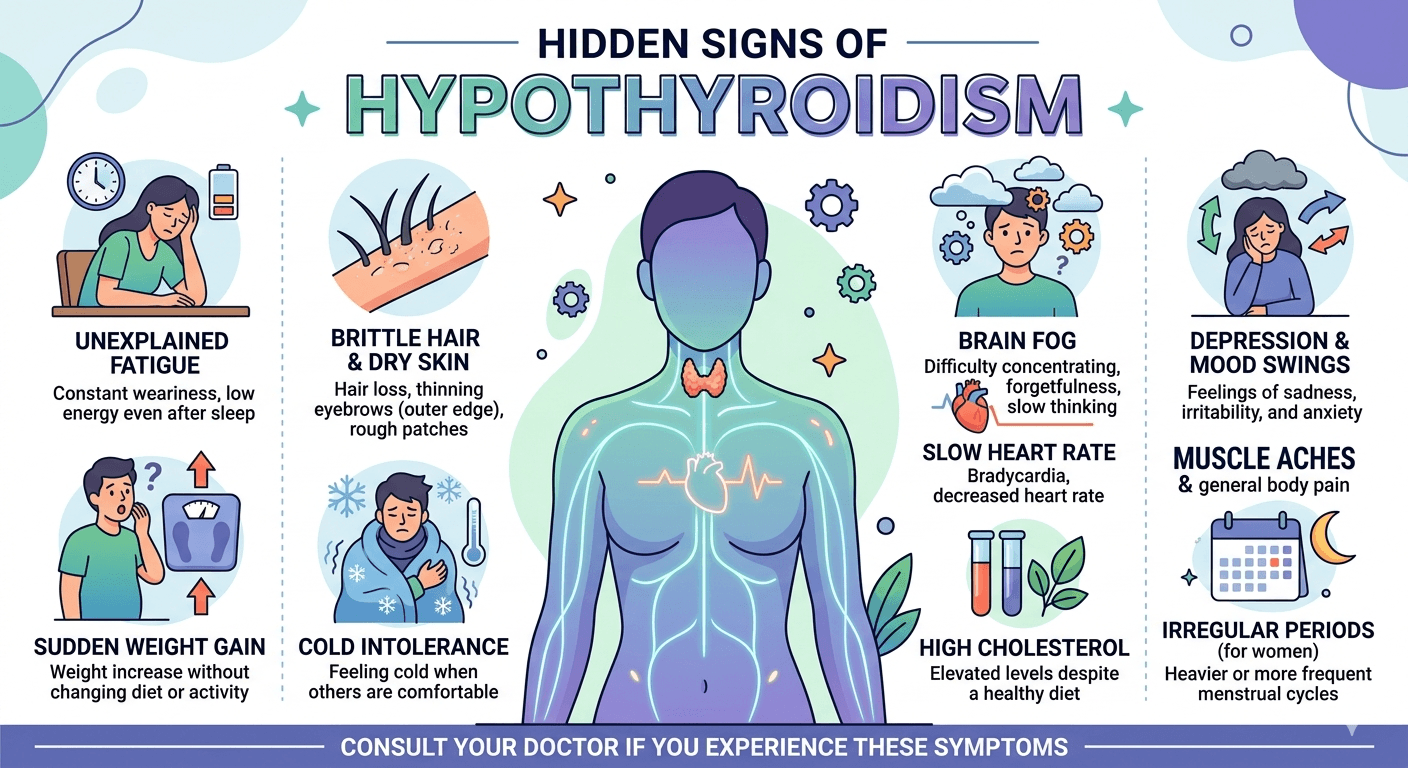
1. Ongoing Fatigue Despite Rest
Persistent exhaustion is one of the earliest and most common symptoms. Individuals may:
- Feel drained after routine tasks
- Wake up tired even after sleeping well
- Have low endurance
- Need frequent daytime naps
Low thyroid hormone levels reduce energy production at the cellular level.
2. Unexplained Weight Gain
Even mild thyroid dysfunction can lead to gradual weight increase. Common complaints include:
- Trouble losing weight
- Weight gain despite normal eating habits
- Puffiness and fluid retention
A slower metabolism reduces calorie burning, while fluid retention contributes to swelling
3. Sensitivity to Cold
People with hypothyroidism often feel cold more easily than others. Signs include:
- Cold hands and feet
- Poor tolerance to cold weather
- Frequent need for extra layers
Reduced thyroid hormone lowers heat production in the body.
4. Dry Skin and Fragile Hair
Changes involving the skin and hair are frequently overlooked. Symptoms may include:
- Rough or dry skin
- Cracked heels
- Hair thinning or loss
- Brittle nails
- Loss of eyebrow hair
Reduced oil gland activity and impaired protein production contribute to these problems.
5. Puffy Face and Swelling
Facial swelling, especially around the eyes, may indicate hypothyroidism. Patients may develop:
- Puffy eyelids
- Facial swelling
- Enlarged tongue
- Hoarse voice
Fluid-like substances accumulate in tissues, producing non-pitting swelling called Myxedema
6. Constipation
Persistent constipation can be an early sign. Symptoms include:
- Infrequent bowel movements
- Hard stools
- Abdominal bloating
Thyroid hormone deficiency slows intestinal movement.
7. Depression and Mood Changes
Hypothyroidism commonly affects emotional health. Individuals may experience:
- Depression
- Irritability
- Anxiety
- Lack of motivation
- Emotional numbness
Thyroid hormones help regulate neurotransmitters and brain metabolism.
8. Memory Issues and Brain Fog
Cognitive symptoms are often missed. Patients may report:
- Difficulty concentrating
- Forgetfulness
- Slower thinking
- Trouble learning new information
Reduced brain metabolism and blood flow may impair cognitive performance.
9. Menstrual and Fertility Problems
Women with hypothyroidism may develop:
- Heavy periods
- Irregular menstrual cycles
- Difficulty conceiving
- Recurrent miscarriages
Thyroid hormones influence ovulation and reproductive hormone balance.
10. High Cholesterol Levels
Some individuals discover hypothyroidism during routine cholesterol testing. Findings may include:
- Elevated LDL cholesterol
- Increased triglycerides
Thyroid dysfunction interferes with normal fat metabolism.
11. Slower Heart Rate
A low resting pulse may occur, leading to:
- Reduced exercise tolerance
- Fatigue during activity
- Dizziness
Thyroid hormones normally help maintain heart rate and cardiac output.
12. Muscle Weakness and Joint Pain
Musculoskeletal symptoms are common and may include:
- Muscle cramps
- Stiffness
- Joint discomfort
- Weakness
- Delayed reflexes
Abnormal muscle metabolism and tissue swelling contribute to these symptoms.
13. Hoarseness
A gradually deepening or hoarse voice may develop due to:
- Swelling of the vocal cords
- Enlarged tongue
- Tissue edema
14. Carpal Tunnel Syndrome
Hypothyroidism can place pressure on nerves, causing:
- Tingling
- Numbness
- Wrist pain
- Weak grip strength
15. Sleep Problems
Despite constant fatigue, individuals may still experience:
- Poor sleep quality
- Excessive sleepiness
- Obstructive sleep apnea
Swelling of tissues and weakened respiratory muscles may contribute.
16. Reduced Sweating
Patients may notice:
- Dry body skin
- Minimal perspiration
- Occasional heat intolerance
- This occurs because gland activity decreases.
17. Hearing Difficulties
Untreated hypothyroidism may contribute to:
- Hearing loss
- Ear fullness
- Balance problems
18. Delayed Reflexes
One classic clinical sign is slow relaxation of deep tendon reflexes, particularly in the ankle.
Common Causes of Hypothyroidism
Hashimoto’s Thyroiditis
The most common cause in regions with adequate iodine intake. The immune system gradually damages thyroid tissue.
Iodine Deficiency
Still a major cause worldwide.
Thyroid Surgery
Removing part or all of the thyroid reduces hormone production.
Radioactive Iodine Therapy
Often used to treat hyperthyroidism or thyroid cancer.
Medications
Some drugs interfere with thyroid function, including:
- Lithium
- Amiodarone
- Interferon-alpha
- Certain immunotherapy medications
Congenital Hypothyroidism
Present from birth due to an underdeveloped or absent thyroid gland.
Pituitary Disorders
Pituitary tumors or injury may reduce TSH production.
Risk Factors
Higher-risk groups include:
- Women
- Adults over 60
- Individuals with autoimmune disease
- People with a family history of thyroid disorders
- Patients with prior thyroid surgery
- Those exposed to radiation
- Pregnant or postpartum women
- Individuals with iodine deficiency
Diagnosis of Hypothyroidism
Clinical Examination
Doctors evaluate symptoms and perform a physical exam. Common findings include:
- Dry skin
- Slow heart rate
- Weight gain
- Delayed reflexes
- Puffy face
Laboratory Tests
Thyroid Profile (T3, T4, TSH, FREET3, FREET4)
Thyroid Antibodies
Anti-TPO antibodies help diagnose Hashimoto’s thyroiditis.
Additional Evaluations
Depending on symptoms, physicians may order:
- Lipid profile
- Complete blood count
- Liver tests
- Electrolyte studies
- ECG
Subclinical Hypothyroidism
This condition involves:
- Elevated TSH
- Normal free T4
Patients may still experience mild symptoms. Treatment decisions depend on TSH levels, age, pregnancy status, symptom severity, and cardiovascular risk.
Complications of Untreated Hypothyroidism
Heart Disease
Potential complications include:
- High cholesterol
- Hypertension
- Heart failure
- Atherosclerosis
Infertility
Hormonal imbalance may impair ovulation.
Peripheral Neuropathy
Chronic nerve dysfunction can damage peripheral nerves.
Mental Health Disorders
Severe depression and cognitive decline may develop.
Myxedema Coma
A rare but life-threatening emergency involving:
- Severe hypothermia
- Confusion
- Respiratory depression
- Low blood pressure
Immediate intensive care is required.
Treatment of Hypothyroidism
Levothyroxine
Synthetic T4 is the standard treatment.
Treatment Goals
- Normalize TSH levels
- Relieve symptoms
- Restore metabolism
- Prevent complications
Medication Tips
Patients should:
- Take Levothyroxine on an empty stomach
- Use it at the same time daily
- Avoid calcium or iron supplements within four hours
Monitoring
TSH levels are generally checked:
- 6–8 weeks after dose changes
- Every 6–12 months once stable
Dose requirements may change because of aging, pregnancy, weight changes, or medication interactions.
Lifestyle and Dietary Considerations
Adequate Iodine Intake
Healthy sources include:
- Iodized salt
- Dairy products
- Seafood
- Eggs
Excess iodine should also be avoided.
Selenium and Zinc
These nutrients support thyroid health. Sources include:
- Nuts
- Seeds
- Legumes
- Meat
Exercise
Regular physical activity can:
- Improve energy levels
- Support metabolism
- Maintain healthy weight
- Enhance mood
Stress Management
Helpful strategies include:
- Meditation
- Yoga
- Proper sleep
- Counseling when needed
Hypothyroidism in Special Populations
Pregnancy
Untreated hypothyroidism may increase the risk of:
- Miscarriage
- Preeclampsia
- Premature delivery
- Developmental issues in the baby
Close monitoring is essential during pregnancy.
Older Adults
Symptoms may resemble aging or dementia, including:
- Memory loss
- Weakness
- Depression
- Falls
Children and Adolescents
Hypothyroidism may cause:
- Growth delays
- Poor academic performance
- Delayed puberty
Early diagnosis is extremely important.
When to Seek Medical Attention
Consult a healthcare provider if you experience:
- Persistent fatigue
- Weight gain without explanation
- Cold intolerance
- Hair loss
- Constipation
- Depression
- Menstrual changes
- Swelling of the face or neck
Emergency care is necessary for:
- Severe lethargy
- Confusion
- Difficulty breathing
- Hypothermia
- Loss of consciousness
Key Clinical Points
- Hypothyroidism affects nearly every organ system.
- Symptoms often appear slowly and may seem unrelated.
- Elevated TSH is the hallmark of primary hypothyroidism.
- Hashimoto’s thyroiditis is the leading cause in developed countries.
- Delayed reflex relaxation is a classic sign.
- High cholesterol may result from thyroid dysfunction.
- Thyroid testing should be considered in unexplained fatigue or depression.
- Levothyroxine remains the standard therapy.
- Myxedema coma is a medical emergency.
Prognosis
With timely diagnosis and proper treatment, the outlook for hypothyroidism is generally excellent. Most patients experience:
- Better energy levels
- Improved mood
- Normalized metabolism
- Enhanced quality of life
Delayed treatment, however, can lead to lasting complications.
Conclusion
Hypothyroidism is a common but often overlooked endocrine disorder because its symptoms may develop gradually and appear unrelated. Hidden signs such as fatigue, depression, constipation, hair loss, menstrual irregularities, high cholesterol, memory problems, and sensitivity to cold should not be ignored.
Early diagnosis and proper management are essential to prevent serious complications and improve overall well-being. With effective treatment, healthy lifestyle habits, and regular monitoring, most individuals with hypothyroidism can live healthy and productive lives.
Disclaimer: The information provided in this blog post is for educational and informational purposes only and should not be considered medical advice. It is not intended to replace professional medical consultation, diagnosis, or treatment. Always seek the guidance of a qualified healthcare professional regarding any medical condition or health-related concerns. The author and publisher are not responsible for any actions taken based on the information presented in this article.