Introduction
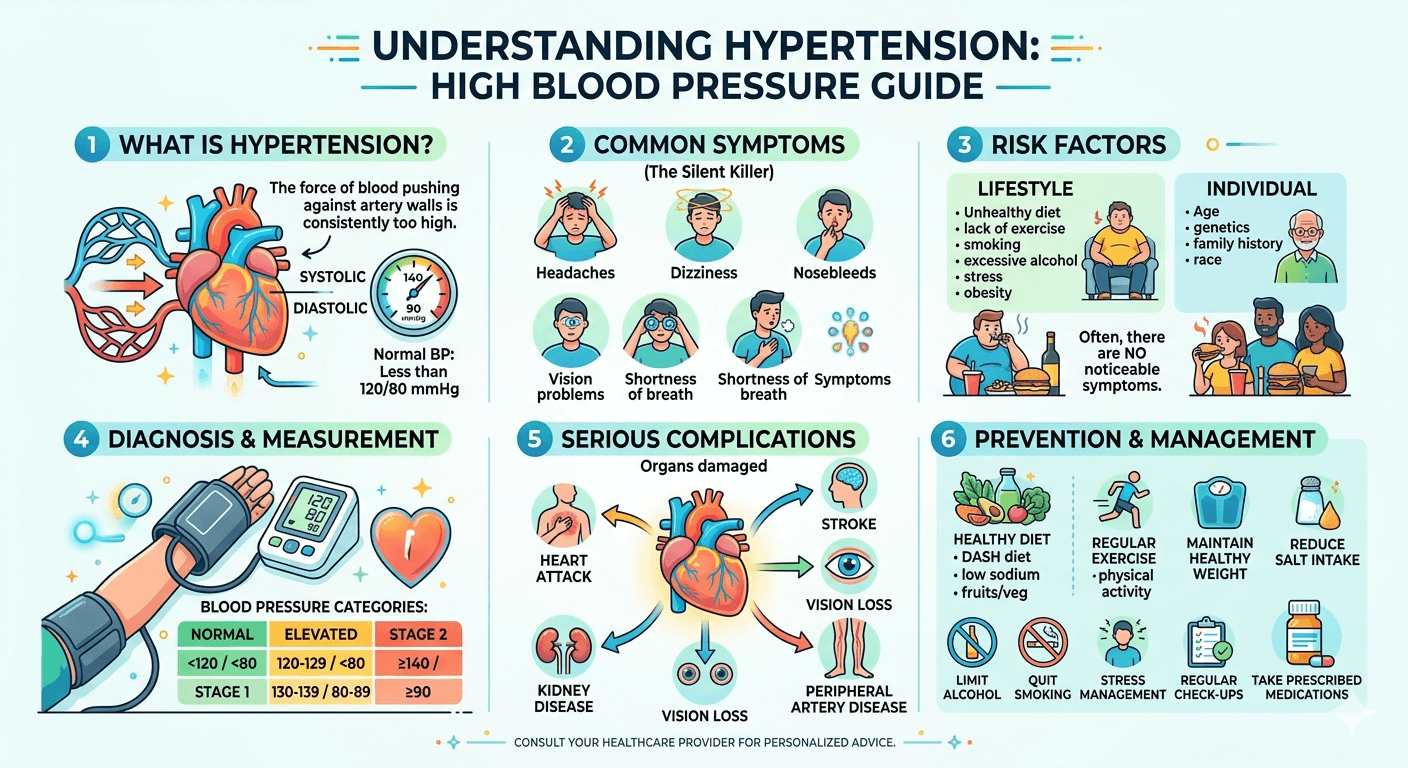
Hypertension, commonly known as high blood pressure, is one of the most prevalent cardiovascular disorders worldwide. It is often referred to as the “silent killer” because many individuals have no symptoms until significant damage has occurred to vital organs such as the heart, brain, kidneys, and eyes.
Blood pressure represents the force exerted by circulating blood against the walls of the arteries. Persistent elevation of this pressure increases the risk of serious complications, including heart attack, stroke, heart failure, chronic kidney disease, and premature death.
This article provides a detailed overview of hypertension for both patients and medical students, covering its symptoms, causes, diagnosis, treatment, and prevention.
What Is Blood Pressure?
Blood pressure is measured using two numbers:
Systolic Blood Pressure
- The upper number
- Represents pressure in the arteries when the heart contracts
Diastolic Blood Pressure
- The lower number
- Represents pressure in the arteries when the heart relaxes between beats
Example:
120/80 mmHg
- Systolic = 120 mmHg
- Diastolic = 80 mmHg
Classification of Blood Pressure
According to current clinical guidelines:
| Category | Systolic (mmHg) | Diastolic (mmHg) |
| Normal | <120 | <80 |
| Elevated | 120-129 | <80 |
| Stage 1 Hypertension | 130-139 | 80-89 |
| Stage 2 Hypertension | ≥140 | ≥90 |
| Hypertensive Crisis | ≥180 | ≥120 |
A hypertensive crisis requires immediate medical attention.
Symptoms of Hypertension
Most patients with hypertension experience no symptoms, even when blood pressure reaches dangerously high levels.
When symptoms occur, they may include:
Common Symptoms
- Persistent headaches
- Dizziness
- Fatigue
- Shortness of breath
- Blurred vision
- Palpitations
- Nosebleeds
- Chest discomfort
Symptoms of Severe Hypertension
Severely elevated blood pressure may cause:
- Severe headache
- Confusion
- Visual disturbances
- Chest pain
- Difficulty breathing
- Neurological deficits
- Seizures
These symptoms may indicate a hypertensive emergency requiring urgent treatment.
Causes of Hypertension
Hypertension is broadly divided into two categories.
1. Primary (Essential) Hypertension
This accounts for approximately 90–95% of cases.
No single cause is identified, but multiple factors contribute:
- Genetic predisposition
- Aging
- Obesity
- Sedentary lifestyle
- High salt intake
- Excess alcohol consumption
- Smoking
- Chronic stress
- Insulin resistance
2. Secondary Hypertension
Secondary hypertension results from an identifiable underlying condition.
Common causes include:
Kidney Disorders
- Chronic kidney disease
- Glomerulonephritis
- Polycystic kidney disease
- Renal artery stenosis
Endocrine Disorders
- Hyperthyroidism
- Hypothyroidism
- Cushing syndrome
- Primary hyperaldosteronism
- Pheochromocytoma
Sleep Disorders
- Obstructive sleep apnea
Medications
- Oral contraceptives
- Corticosteroids
- NSAIDs
- Decongestants
- Certain antidepressants
Other Causes
- Pregnancy-related hypertension
- Congenital vascular abnormalities
- Recreational drug use
Risk Factors for Hypertension
Several factors increase the likelihood of developing hypertension.
Non-Modifiable Risk Factors
- Increasing age
- Family history
- Male sex (younger adults)
- Postmenopausal status in women
- Ethnicity
Modifiable Risk Factors
- Obesity
- Physical inactivity
- High-sodium diet
- Excessive alcohol consumption
- Smoking
- Diabetes mellitus
- Dyslipidemia
- Chronic stress
- Poor sleep quality
Complications of Hypertension
Uncontrolled hypertension can damage multiple organs.
Cardiovascular Complications
- Coronary artery disease
- Myocardial infarction
- Heart failure
- Left ventricular hypertrophy
- Peripheral arterial disease
Neurological Complications
- Stroke
- Transient ischemic attack (TIA)
- Vascular dementia
Renal Complications
- Chronic kidney disease
- Hypertensive nephropathy
- End-stage renal disease
Ocular Complications
- Hypertensive retinopathy
- Vision loss
Vascular Complications
- Aortic aneurysm
- Aortic dissection
Diagnosis of Hypertension
Blood Pressure Measurement
Diagnosis requires:
- Proper cuff size
- Correct patient positioning
- Multiple readings on separate occasions
Home Blood Pressure Monitoring
Provides more accurate assessment in many patients and helps detect:
- White coat hypertension
- Masked hypertension
Ambulatory Blood Pressure Monitoring (ABPM)
Measures blood pressure over 24 hours and is considered the gold standard for diagnosis.
Laboratory Investigations
Initial evaluation often includes:
Blood Tests
- Complete blood count
- Blood glucose
- HbA1c
- Lipid profile
- Liver function tests
- Kidney function tests
- Electrolytes
- Thyroid function tests
Urine Tests
- Urinalysis
- Urine albumin-to-creatinine ratio
Additional Tests
- Electrocardiogram (ECG)
- Echocardiography
- Fundoscopic examination
- Renal ultrasound (when indicated)
Treatment of Hypertension
Treatment aims to reduce blood pressure and prevent complications.
Lifestyle Modifications
Lifestyle changes are recommended for all patients.
Reduce Salt Intake
Aim for less than 5 grams of salt daily.
Maintain Healthy Weight
Even modest weight loss can significantly reduce blood pressure.
Regular Physical Activity
Recommended:
- At least 150 minutes of moderate exercise weekly
Examples:
- Brisk walking
- Cycling
- Swimming
Healthy Diet
The DASH diet emphasizes:
- Fruits
- Vegetables
- Whole grains
- Lean proteins
- Low-fat dairy products
Limit Alcohol
Excessive alcohol intake contributes to hypertension.
Quit Smoking
Smoking greatly increases cardiovascular risk.
Stress Management
Helpful techniques include:
- Meditation
- Yoga
- Relaxation exercises
- Adequate sleep
Medications for Hypertension
Drug selection depends on age, comorbidities, and individual risk factors.
ACE Inhibitors
Examples:
- Lisinopril
- Enalapril
Benefits:
- Kidney protection in diabetes
- Cardiovascular risk reduction
Angiotensin Receptor Blockers (ARBs)
Examples:
- Losartan
- Valsartan
Often used when ACE inhibitors are not tolerated.
Calcium Channel Blockers
Examples:
- Amlodipine
- Nifedipine
Thiazide Diuretics
Examples:
- Hydrochlorothiazide
- Chlorthalidone
Beta Blockers
Examples:
- Metoprolol
- Atenolol
Particularly useful in certain cardiac conditions.
Hypertensive Emergency
A hypertensive emergency occurs when severe hypertension is accompanied by acute organ damage.
Possible manifestations include:
- Stroke
- Pulmonary edema
- Acute kidney injury
- Aortic dissection
- Hypertensive encephalopathy
Treatment typically requires hospitalization and intravenous antihypertensive medications.
Prevention of Hypertension
Preventive strategies include:
- Maintaining a healthy body weight
- Exercising regularly
- Limiting salt intake
- Eating a balanced diet
- Avoiding tobacco products
- Limiting alcohol consumption
- Managing diabetes and cholesterol
- Regular blood pressure monitoring
Prognosis
The outlook for hypertension is generally excellent when diagnosed early and treated appropriately. Consistent lifestyle modification, adherence to prescribed medications, and regular follow-up can significantly reduce the risk of heart disease, stroke, kidney failure, and other complications.
Key Takeaways
- Hypertension is a chronic condition characterized by persistently elevated blood pressure.
- Most patients have no symptoms, making routine screening essential.
- Major risk factors include obesity, high salt intake, aging, diabetes, smoking, and family history.
- Untreated hypertension can damage the heart, brain, kidneys, eyes, and blood vessels.
- Lifestyle modification remains the foundation of treatment.
- Medications are often necessary to achieve blood pressure control and prevent complications.
- Early diagnosis and long-term management dramatically improve outcomes and quality of life.
Frequently Asked Questions (FAQs)
1. Why is hypertension called the “silent killer”?
Because many people have high blood pressure for years without noticeable symptoms, while organ damage gradually occurs.
2. Can hypertension be cured?
Most cases cannot be permanently cured, but they can be effectively controlled through lifestyle changes and medications.
3. What is the best diet for hypertension?
The DASH diet, rich in fruits, vegetables, whole grains, and low-fat dairy products, is highly effective.
4. Can stress cause high blood pressure?
Chronic stress can contribute to elevated blood pressure and unhealthy lifestyle habits that worsen hypertension.
5. What happens if hypertension is left untreated?
Untreated hypertension increases the risk of heart attack, stroke, heart failure, kidney disease, vision loss, and premature death.
Disclaimer: The information provided in this blog post is for educational and informational purposes only and should not be considered medical advice. It is not intended to replace professional medical consultation, diagnosis, or treatment. Always seek the guidance of a qualified healthcare professional regarding any medical condition or health-related concerns. The author and publisher are not responsible for any actions taken based on the information presented in this article.