
You Should Never Ignore
Introduction
Gastrointestinal (GI) bleeding refers to bleeding that occurs anywhere within the digestive system, extending from the mouth to the rectum. The severity can vary widely, ranging from mild, slow blood loss to severe and life-threatening hemorrhage. While some individuals experience obvious symptoms such as vomiting blood or black stools, others develop subtle signs that often go unnoticed until serious complications arise.
This article discusses the concealed symptoms, causes, risk factors, diagnostic approaches, treatment methods, and prevention of gastrointestinal bleeding.
Identifying these less obvious symptoms early is essential for patients and healthcare students alike. Prompt diagnosis can reduce the risk of complications including severe anemia, shock, organ damage, and even death.
Understanding Gastrointestinal Bleeding
GI bleeding is not considered a disease on its own; instead, it is a symptom of another disorder affecting the digestive tract.
The digestive system includes:
- Mouth
- Esophagus
- Stomach
- Small intestine
- Large intestine (colon)
- Rectum
- Anus
Types of GI Bleeding
Upper Gastrointestinal Bleeding
Occurs above the ligament of Treitz and commonly affects:
- Esophagus
- Stomach
- Duodenum
Lower Gastrointestinal Bleeding
Occurs below the ligament of Treitz and may involve:
- Small intestine
- Colon
- Rectum
- Anus
Bleeding may also be categorized as:
- Acute: sudden and severe
- Chronic: slow and ongoing
- Occult: hidden blood not visible in stool
Why GI Bleeding Is Serious
Many people believe gastrointestinal bleeding always produces dramatic symptoms. However, slow chronic bleeding can continue unnoticed for weeks or even months.
Unrecognized blood loss may lead to:
- Iron deficiency anemia
- Persistent fatigue
- Reduced oxygen supply to tissues
- Increased strain on the heart
- Dizziness and falls
- Circulatory instability
- Hypovolemic shock in severe cases
In some situations, GI bleeding may be the earliest sign of conditions such as stomach ulcers, inflammatory bowel disease, or gastrointestinal cancers.
Hidden Signs of Gastrointestinal Bleeding
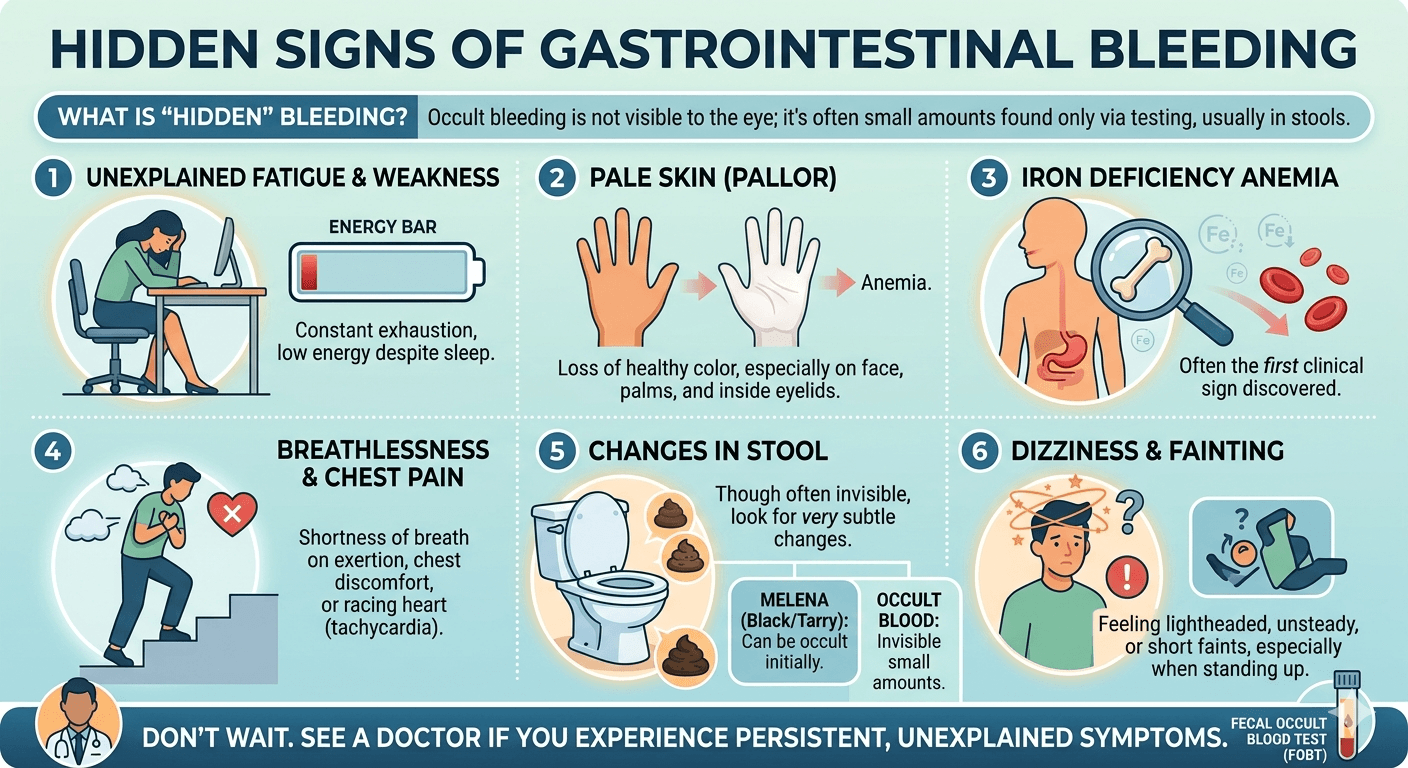
1. Persistent Fatigue and Weakness
One of the most common but overlooked signs of chronic GI bleeding is ongoing fatigue.
Gradual blood loss lowers hemoglobin levels, reducing oxygen delivery throughout the body. Patients may experience:
- Constant tiredness
- Lack of energy
- Difficulty focusing
- Reduced ability to exercise
- General weakness
Iron deficiency anemia in adults without a clear explanation should raise concern for occult GI bleeding.
2. Pale Skin and Pale Eyelids
Long-term blood loss may cause anemia, resulting in:
- Pale skin
- Pale nail beds
- Pale inner eyelids (conjunctival pallor)
Because this develops slowly, many patients fail to notice it.
3. Shortness of Breath With Mild Activity
Lower hemoglobin levels reduce the blood’s oxygen-carrying ability.
Symptoms may include:
- Breathlessness while walking
- Difficulty climbing stairs
- Fast heartbeat during exertion
- Poor stamina
Severe anemia may even trigger chest discomfort in elderly patients or those with heart disease.
4. Dizziness or Fainting
Blood loss decreases circulating blood volume and oxygen supply.
Patients may develop:
- Lightheadedness
- Dizziness when standing
- Near-fainting episodes
- Syncope (fainting)
Dizziness accompanied by black stools or vomiting blood requires urgent medical attention.
5. Black, Tarry Stools (Melena)
Melena is a classic symptom of upper GI bleeding.
The stool may appear:
- Black
- Sticky
- Tarry
- Foul-smelling
This occurs because blood becomes digested while traveling through the digestive tract.
6. Hidden Blood in Stool
Occult bleeding involves blood that is not visible to the naked eye.
Patients may have:
- Normal-looking stool
- Chronic anemia
- Fatigue without obvious bleeding
Tests such as FOBT or FIT can identify hidden blood in stool.
Possible causes include:
- Colon polyps
- Colorectal cancer
- Peptic ulcers
- Inflammatory bowel disease
- Angiodysplasia
7. Vomiting Blood (Hematemesis)
Hematemesis is a dangerous sign of upper GI bleeding.
Vomited material may appear:
- Bright red
- Dark red
- Similar to coffee grounds
Coffee-ground vomit usually indicates partially digested blood.
Common causes include:
- Peptic ulcer disease
- Esophageal varices
- Gastritis
- Mallory-Weiss tears
Immediate medical care is necessary.
8. Abdominal Pain or Discomfort
Some bleeding disorders also cause abdominal symptoms such as:
- Burning upper abdominal pain
- Cramping
- Bloating
- Tenderness
- Persistent discomfort after eating
These symptoms may suggest:
- Peptic ulcer disease
- Gastritis
- Inflammatory bowel disease
- Gastrointestinal cancer
9. Unexplained Weight Loss
Weight loss combined with GI bleeding may indicate a serious underlying illness.
Potential causes include:
- Stomach cancer
- Colorectal cancer
- Chronic inflammatory bowel disease
- Malabsorption disorders
10. Changes in Bowel Habits
Lower GI bleeding may occur alongside altered bowel patterns.
Warning signs include:
- Persistent constipation
- Chronic diarrhea
- Narrow stools
- Increased urgency
- Feeling of incomplete bowel emptying
These symptoms may occur in:
- Colorectal cancer
- Inflammatory bowel disease
- Diverticular disease
- Hemorrhoids
11. Rapid Heartbeat or Palpitations
To compensate for blood loss, the body increases heart rate.
Patients may notice:
- Heart palpitations
- Racing pulse
- Anxiety-like feelings
- Weak pulse
Severe blood loss may progress to shock.
12. Rectal Bleeding
Visible rectal bleeding may appear:
- Bright red
- Maroon-colored
- Mixed with stool
- On toilet paper
Although hemorrhoids are common, rectal bleeding should always be evaluated.
Common Causes of GI Bleeding
Frequent causes include:
- Peptic ulcer disease
- Gastritis
- Esophageal varices
- Hemorrhoids
- Diverticular disease
- Inflammatory bowel disease
- Gastrointestinal cancers
- Angiodysplasia
Risk Factors
Factors that increase risk include:
- NSAID use
- Aspirin and blood thinners
- Liver disease
- Heavy alcohol use
- Smoking
- Older age
- Previous GI disorders
Diagnosis
Doctors may use:
- Medical history and physical examination
- Complete blood count (CBC)
- Stool testing (FOBT/FIT)
- Liver function tests
- Upper endoscopy (EGD)
- Colonoscopy
- Capsule endoscopy
- CT angiography
Treatment
Treatment depends on the source and severity of bleeding.
Emergency Care
Severe cases may require:
- IV fluids
- Blood transfusion
- Oxygen therapy
- Monitoring of vital signs
Medications
Common treatments include:
- Proton pump inhibitors (PPIs)
- Antibiotics for H. pylori
- Vasoconstrictor therapy such as octreotide
Endoscopic Treatment
Endoscopy may control bleeding through:
- Injection therapy
- Thermal coagulation
- Hemoclip placement
- Variceal band ligation
Surgery
Surgery may be necessary if:
- Bleeding cannot be controlled
- Cancer is present
- Perforation develops
- Recurrent severe bleeding occurs
Complications of Untreated GI Bleeding
Ignoring GI bleeding may lead to:
- Severe anemia
- Hypovolemic shock
- Organ failure
- Cardiac complications
- Malnutrition
- Death
When Immediate Medical Attention Is Needed
Seek emergency care for:
- Vomiting blood
- Black tarry stools
- Severe rectal bleeding
- Fainting
- Rapid heartbeat
- Chest pain
- Severe weakness
- Shortness of breath
- Confusion
Prevention Strategies
Helpful preventive measures include:
- Avoiding excessive NSAID use
- Limiting alcohol intake
- Quitting smoking
- Eating a balanced diet rich in fiber and iron
- Undergoing recommended cancer screening
- Investigating unexplained anemia promptly
Important Learning Points
- GI bleeding can remain hidden and symptom-free
- Iron deficiency anemia in adults requires investigation
- Melena usually indicates upper GI bleeding
- Hematochezia commonly suggests lower GI bleeding
- Hemodynamic instability signals major blood loss
- Endoscopy is both diagnostic and therapeutic
- NSAIDs are a major cause of peptic ulcer bleeding
Conclusion
Hidden gastrointestinal bleeding can gradually harm health before severe symptoms become obvious. Fatigue, anemia, dizziness, black stools, unexplained weight loss, and bowel habit changes should never be ignored.
Early medical assessment can prevent serious complications and improve outcomes. For medical students, understanding the many presentations of GI bleeding is essential for timely diagnosis and treatment.
Recognizing these warning signs early may save lives, particularly when bleeding is linked to ulcers, inflammatory bowel disease, or gastrointestinal cancers. Anyone experiencing symptoms suggestive of GI bleeding should seek prompt medical evaluation.
Disclaimer: The information provided in this blog post is for educational and informational purposes only and should not be considered medical advice. It is not intended to replace professional medical consultation, diagnosis, or treatment. Always seek the guidance of a qualified healthcare professional regarding any medical condition or health-related concerns. The author and publisher are not responsible for any actions taken based on the information presented in this article.