
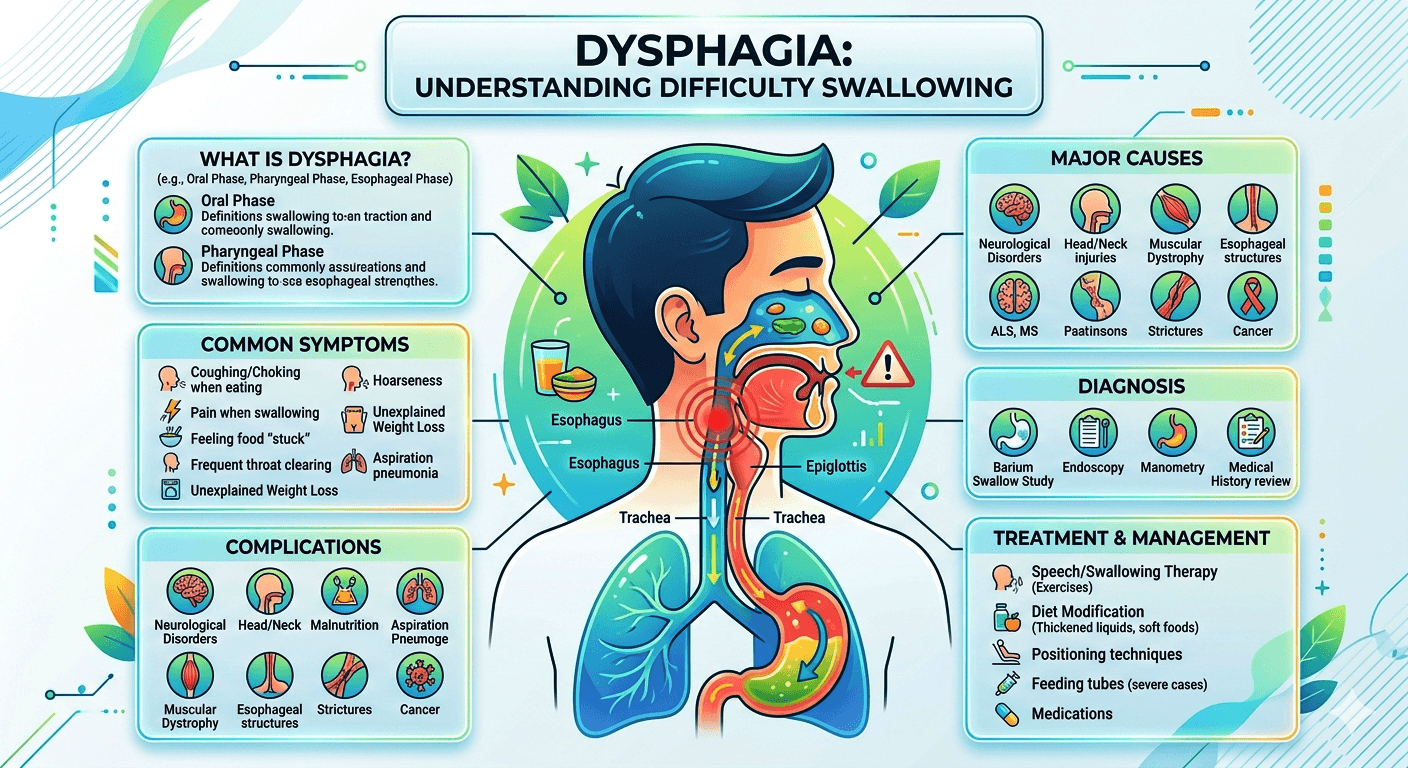
Dysphagia: Causes, Symptoms, Diagnosis, Treatment, and When to Worry
This article describes the phenomenon of dysphagia in detail, explaining its causes, possible symptoms, diagnostic methods, potential complications, available treatments, and the criteria requiring immediate medical assistance.
Introduction
Dysphagia is an extremely frightening condition for many people. Indeed, most people can relate to occasionally feeling like food went down the wrong pipe or getting stuck in their throats. On the other hand, the repeated occurrence, progression, or worsening of swallowing difficulties may suggest dysphagia.
As a healthcare professional, I would want to assure my patients that dysphagia is a condition rather than a disease. This condition may appear because of various conditions ranging from minor issues, such as gastroesophageal reflux disease, to major neurological disorders or cancers. Being aware of dysphagia is especially crucial since swallowing is a complicated process that one may underestimate until experiencing some issues.
This article describes the phenomenon of dysphagia in detail, explaining its causes, possible symptoms, diagnostic methods, potential complications, available treatments, as well as the criteria requiring immediate medical assistance. Thus, this article will not only provide patients with essential information concerning dysphagia but also give medical students a comprehensive foundation of knowledge.
What Is Dysphagia?
https://www.youtube.com/watch?v=d6Hmq3prOIM
The word dysphagia means difficulty swallowing. This condition implies any problems related to the movement of food, beverages, and even saliva from the mouth to the stomach.
Swallowing involves the coordination of more than 30 muscles and several nerves, which makes this action a rather complex process that might be disrupted, leading to dysphagia.
People with dysphagia may experience numerous symptoms, including:
- Food being trapped in the throat area
- Sticking of food in the area below the breastbone
- Difficulties starting swallowing
- Choking on food
- Coughing during meals
- Feeling of pain during swallowing
- Ground-up regurgitation of food
Although anyone can have dysphagia, this problem usually affects older people owing to age-specific factors and higher prevalence of neurological diseases among older adults.
Types of Dysphagia
Healthcare providers generally classify dysphagia into two major categories.
Oropharyngeal Dysphagia
This type involves difficulty initiating a swallow.
Patients may experience:
- Coughing during meals
- Choking episodes
- Nasal regurgitation
- Difficulty moving food from the mouth into the throat
Common causes include neurological disorders and muscle diseases.
Esophageal Dysphagia
This occurs when food has difficulty passing through the esophagus into the stomach.
Patients often describe:
- Food sticking in the chest
- Pressure behind the breastbone
- Regurgitation after swallowing
Structural abnormalities and esophageal motility disorders are common causes.
Common Causes of Dysphagia
The causes of dysphagia can be divided into neurological, muscular, structural, inflammatory, and functional disorders.
Neurological Causes
The brain and nervous system play a crucial role in swallowing.
Common neurological causes include:
- Stroke
- Parkinson’s disease
- Multiple sclerosis
- Dementia
- Amyotrophic lateral sclerosis (ALS)
- Brain tumors
- Traumatic brain injury
Stroke remains one of the most common causes of dysphagia worldwide.
Muscular Disorders
Muscles responsible for swallowing may become weak or dysfunctional.
Examples include:
- Myasthenia gravis
- Muscular dystrophy
- Polymyositis
- Dermatomyositis
These conditions often cause fatigue-related swallowing difficulties.
Structural Causes
Physical narrowing or blockage of the swallowing pathway can impair food passage.
Examples include:
- Esophageal strictures
- Esophageal rings
- Webs of tissue
- Tumors
- Enlarged thyroid gland
- Cervical osteophytes (bone spurs)
Gastroesophageal Reflux Disease (GERD)
Chronic acid reflux can damage the esophagus.
Repeated inflammation may lead to:
- Scarring
- Narrowing (stricture formation)
- Difficulty swallowing solid foods
Achalasia
Achalasia is a rare disorder in which the lower esophageal sphincter fails to relax properly.
Symptoms include:
- Difficulty swallowing solids and liquids
- Regurgitation
- Chest discomfort
- Weight loss
Esophageal Cancer
Cancer of the esophagus is an important cause of progressive dysphagia.
Typically:
- Difficulty swallowing solids appears first
- Progresses to difficulty swallowing liquids
- Significant weight loss may occur
Any progressively worsening dysphagia should be investigated promptly.
Eosinophilic Esophagitis
This chronic inflammatory condition is increasingly recognized, especially among younger individuals.
Patients often report:
- Food sticking in the esophagus
- Recurrent food impactions
- History of allergies or asthma
Risk Factors for Dysphagia
Several factors increase the likelihood of developing swallowing difficulties.
Age
Older adults are more vulnerable due to:
- Reduced muscle strength
- Neurological disease
- Medication side effects
Neurological Disease
Conditions affecting the brain and nerves significantly increase risk.
Head and Neck Cancer
Both cancer and its treatment can impair swallowing.
Radiation Therapy
Radiation can cause scarring and stiffness in swallowing structures.
Chronic Reflux
Long-standing GERD can lead to strictures and esophageal damage.
Symptoms of Dysphagia
Symptoms vary depending on the underlying cause.
Typical Symptoms
- Difficulty swallowing
- Sensation of food sticking
- Choking during meals
- Coughing while eating
- Excessive throat clearing
- Regurgitation of food
- Drooling
- Hoarseness
Associated Symptoms
Some symptoms provide clues to the underlying diagnosis.
| Symptom | Possible Cause |
| Heartburn | GERD |
| Weight loss | Cancer, severe dysphagia |
| Nasal regurgitation | Neurological disorders |
| Chest pain | Esophageal spasm, achalasia |
| Progressive symptoms | Structural blockage or cancer |
| Recurrent pneumonia | Aspiration |
Complications of Dysphagia
Untreated dysphagia can lead to serious health problems.
Aspiration
Food or liquid enters the airway instead of the esophagus.
This may result in:
- Coughing
- Breathing difficulties
- Lung infections
Aspiration Pneumonia
Aspiration pneumonia is one of the most dangerous complications.
It occurs when bacteria-containing material enters the lungs.
Symptoms include:
- Fever
- Cough
- Shortness of breath
- Chest pain
Malnutrition
Patients may avoid eating due to fear of choking.
Consequences include:
- Weight loss
- Muscle wasting
- Weakness
- Vitamin deficiencies
Dehydration
Difficulty swallowing liquids can result in inadequate fluid intake.
How Dysphagia Is Diagnosed
A careful evaluation is essential.
Medical History
The clinician will ask questions such as:
- When did symptoms begin?
- Are solids, liquids, or both affected?
- Is swallowing painful?
- Is there weight loss?
- Are choking episodes occurring?
The answers often narrow the diagnostic possibilities.
Physical Examination
Examination focuses on:
- Neurological function
- Oral cavity
- Neck
- Voice quality
- Signs of malnutrition
Diagnostic Tests
Barium Swallow Study
The patient swallows a contrast material while X-rays are taken.
This test can identify:
- Narrowing
- Obstructions
- Motility disorders
Videofluoroscopic Swallow Study
Often performed by speech-language pathologists.
This test evaluates:
- Oral phase function
- Aspiration risk
- Coordination of swallowing muscles
Upper Endoscopy (EGD)
A flexible camera is inserted through the mouth into the esophagus.
It allows physicians to identify:
- Inflammation
- Ulcers
- Tumors
- Strictures
Biopsies can be obtained if needed.
Esophageal Manometry
This test measures pressure and muscle contractions within the esophagus.
It is particularly useful for diagnosing:
- Achalasia
- Esophageal spasms
- Motility disorders
CT Scan or MRI
Imaging may be necessary when tumors or neurological disorders are suspected.
Treatment of Dysphagia
Treatment depends entirely on the underlying cause.
Swallowing Therapy
Speech-language pathologists play a central role.
Therapy may include:
- Swallowing exercises
- Postural techniques
- Compensatory strategies
- Muscle-strengthening exercises
Dietary Modifications
Food consistency may be adjusted.
Examples include:
- Pureed foods
- Soft foods
- Thickened liquids
These modifications help reduce aspiration risk.
Medications
Certain medications may improve symptoms.
Examples:
- Proton pump inhibitors for GERD
- Steroids for eosinophilic esophagitis
- Medications targeting muscle disorders
Endoscopic Procedures
Some structural abnormalities can be treated endoscopically.
Examples include:
- Dilation of strictures
- Removal of food impactions
- Treatment of esophageal rings
Surgery
Surgical intervention may be required for:
- Cancer
- Severe achalasia
- Large diverticula
- Certain structural abnormalities
Feeding Tubes
In severe cases, temporary or permanent feeding tubes may be necessary to maintain nutrition and hydration.
Dysphagia in Older Adults
Swallowing difficulties are particularly common among elderly individuals.
Contributing factors include:
- Reduced muscle strength
- Frailty
- Stroke
- Parkinson’s disease
- Dementia
Management often requires a multidisciplinary approach involving physicians, speech therapists, dietitians, and caregivers.
Dysphagia in Children
Children can also experience dysphagia.
Possible causes include:
- Congenital abnormalities
- Neurological disorders
- Developmental delays
- Gastroesophageal reflux
Warning signs include:
- Poor weight gain
- Feeding difficulties
- Frequent respiratory infections
Early evaluation is essential.
When to Worry About Dysphagia
Many cases of dysphagia require medical evaluation, but certain symptoms demand urgent attention.
Seek immediate medical care if you experience:
Food Completely Stuck in the Esophagus
This may represent an emergency requiring endoscopic removal.
Difficulty Breathing
Breathing problems combined with swallowing difficulties require urgent assessment.
Rapid Weight Loss
Unexplained weight loss may indicate a serious underlying condition.
Progressively Worsening Symptoms
Increasing difficulty swallowing over weeks or months should never be ignored.
Recurrent Aspiration or Pneumonia
Repeated lung infections suggest food or liquid is entering the airway.
Blood in Vomit or Stools
These symptoms may indicate significant gastrointestinal disease.
Persistent Pain While Swallowing
Painful swallowing can signal infection, inflammation, or malignancy.
Prevention and Lifestyle Measures
Although not all cases can be prevented, certain strategies may reduce risk.
Eat Slowly
Taking smaller bites improves swallowing safety.
Chew Thoroughly
Proper chewing reduces choking risk.
Stay Upright During Meals
Remain seated upright while eating and for at least 30 minutes afterward.
Manage Acid Reflux
Early treatment of GERD can prevent complications.
Maintain Good Oral Hygiene
This reduces bacterial load and lowers aspiration pneumonia risk.
Regular Medical Follow-Up
Patients with neurological disorders should undergo periodic swallowing assessments.
Frequently Asked Questions (FAQs)
Is dysphagia a disease or a symptom?
Dysphagia is a symptom indicating an underlying problem affecting swallowing.
Can stress cause dysphagia?
Stress and anxiety can contribute to a sensation of difficulty swallowing, often called globus sensation, but true dysphagia requires medical evaluation.
Is dysphagia always serious?
Not always. Some causes are relatively benign, but persistent or worsening symptoms should be assessed by a healthcare professional.
Can dysphagia be cured?
Many causes are treatable, and some are completely reversible. Outcomes depend on the underlying condition.
Which specialist treats dysphagia?
Depending on the cause, treatment may involve gastroenterologists, neurologists, otolaryngologists (ENT specialists), speech-language pathologists, and surgeons.
Can acid reflux cause swallowing problems?
Yes. Chronic acid reflux can damage the esophagus and lead to narrowing that makes swallowing difficult.
What foods are easier to swallow?
Soft foods such as yogurt, mashed potatoes, soups, oatmeal, and pureed foods are often easier for people with dysphagia.
Can dysphagia lead to pneumonia?
Yes. Aspiration of food or liquids into the lungs can cause aspiration pneumonia, a potentially serious complication.
Conclusion
Prompt diagnosis is crucial. In cases of coughing, difficulty in passing solid foods through the chest area, recurrent pneumonia, unexplained weight loss, and other possible symptoms, one needs to undergo an examination by a professional as soon as possible. Thankfully, nowadays, it is possible to treat many patients successfully, with the help of swallowing therapy, drugs, changes in diet, endoscopy, or surgery.
In terms of patients, knowing about dysphagia is necessary to receive the needed assistance. In terms of medical students, dysphagia should be considered an interesting clinical symptom combining gastroenterology, neurology, otorhinolaryngology, and physical rehabilitation medicine. No matter what caused this issue, the proper approach is always required.
Disclaimer: The information provided in this blog post is for educational and informational purposes only and should not be considered medical advice. It is not intended to replace professional medical consultation, diagnosis, or treatment.