
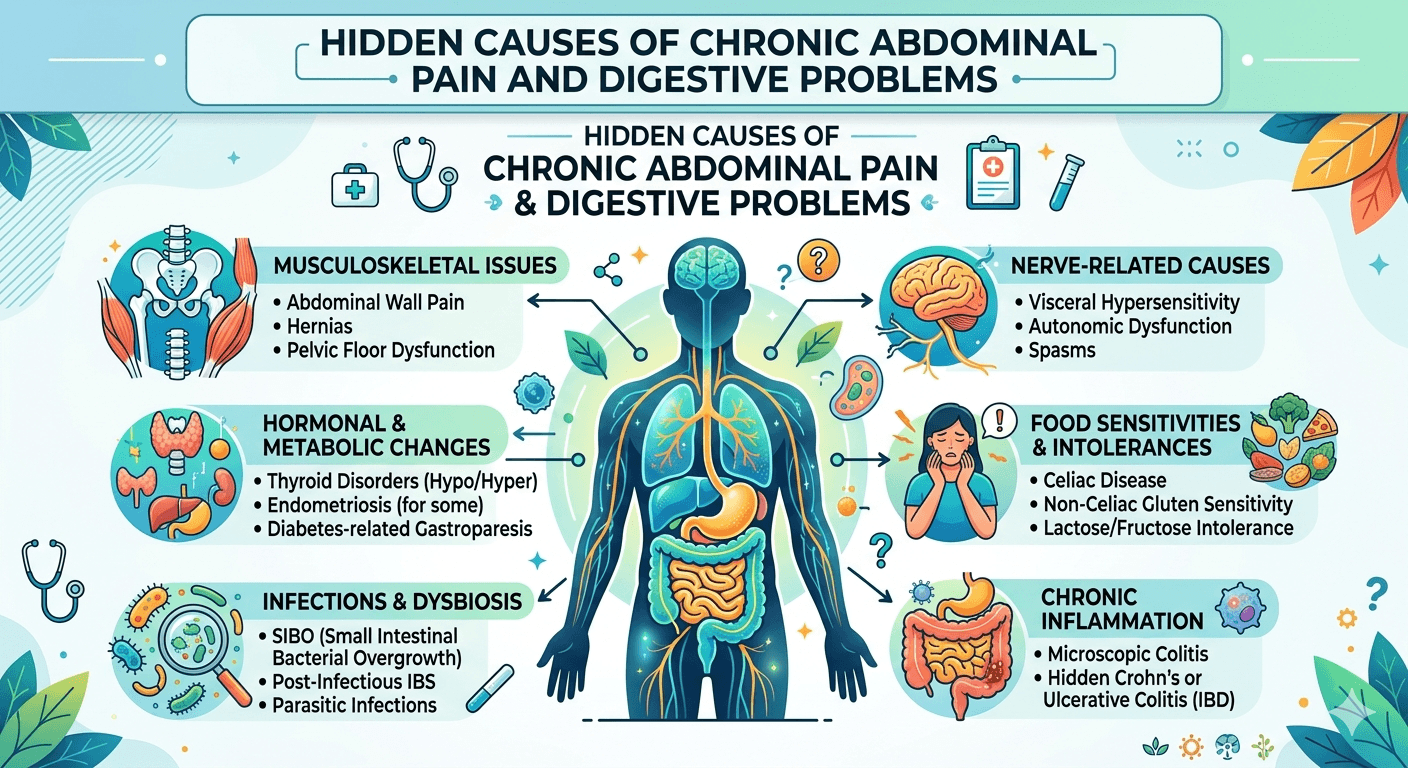
And Digestive Problems
Introduction
Chronic abdominal pain and ongoing digestive problems are among the leading causes of medical consultations worldwide. Many people experience symptoms such as bloating, stomach discomfort, constipation, diarrhea, nausea, indigestion, or unexplained weight loss for months or even years without identifying the true cause. While some conditions are mild and manageable, others may indicate serious disorders involving the digestive tract, liver, pancreas, kidneys, immune system, hormones, or even cancer.
Discover the hidden causes of chronic abdominal pain and digestive problems, including IBS, ulcers, gallbladder disease, food intolerances, pancreatitis, and more. Learn warning signs, diagnosis, and treatment options.
For patients, learning about the hidden causes of persistent digestive symptoms can encourage earlier medical evaluation and treatment. For medical students, chronic abdominal pain is an important clinical topic that requires to be detailed history-taking, physical examination, and a structured diagnostic approach.
This article explores the lesser-known causes of chronic abdominal pain and digestive disorders, along with their symptoms, diagnostic methods, treatment options, and warning signs that should not be overlooked.
What Is Chronic Abdominal Pain?
Chronic abdominal pain generally refers to pain that continues for at least three months. It may occur constantly or come and go, affecting different regions of the abdomen.
The abdominal cavity contains several important organs, including:
- Stomach
- Small intestine
- Large intestine (colon)
- Liver
- Gallbladder
- Pancreas
- Kidneys
- Urinary tract
- Blood vessels
- Reproductive organs
Because these organs share nerve pathways, pinpointing the exact source of abdominal pain can sometimes be difficult.
Common digestive symptoms associated with chronic abdominal pain include:
- Bloating
- Excessive gas
- Nausea
- Vomiting
- Heartburn
- Diarrhea
- Constipation
- Reduced appetite
- Weight loss
- Feeling full quickly
- Fatigue
- Blood in stool
- Difficulty swallowing
Persistent digestive complaints should always be properly evaluated, as they may indicate structural, inflammatory, infectious, metabolic, or functional disorders.
Functional Gastrointestinal Disorders
One of the most frequent hidden causes of chronic abdominal pain is functional gastrointestinal disorders, where symptoms are present even though no clear structural abnormality is found.
Irritable Bowel Syndrome (IBS)
Irritable Bowel Syndrome is a common condition marked by:
- Recurrent abdominal discomfort
- Bloating
- Changes in bowel habits
- Constipation
- Diarrhea
- Mucus in stool
Symptoms often become worse with stress, specific foods, or hormonal fluctuations.
Types of IBS
- IBS with constipation (IBS-C)
- IBS with diarrhea (IBS-D)
- Mixed IBS (IBS-M)
Possible Causes
- Abnormal intestinal movement
- Increased gut sensitivity
- Dysfunction of the gut-brain connection
- Altered gut bacteria
- Psychological stress
Diagnosis and Management
IBS is usually diagnosed after ruling out more serious conditions. Treatment may involve:
- Dietary adjustments
- Stress management
- Fiber supplements
- Probiotics
- Antispasmodic medications
- Psychological therapy when appropriate
Food Intolerances and Hidden Dietary Triggers
Many individuals with chronic digestive symptoms unknowingly suffer from food intolerances.
Lactose Intolerance
Lactose intolerance develops when the body does not produce enough lactase enzyme to digest dairy products.
Symptoms
- Bloating
- Gas
- Abdominal cramping
- Diarrhea
- Nausea
Symptoms typically occur after consuming milk or dairy products.
Gluten Sensitivity and Celiac Disease
Celiac disease is an autoimmune disorder triggered by gluten consumption.
Symptoms
- Persistent diarrhea
- Weight loss
- Iron deficiency anemia
- Abdominal pain
- Bloating
- Fatigue
- Malnutrition
If untreated, celiac disease can damage the small intestine and lead to long-term complications.
Diagnosis
- Tissue transglutaminase antibody testing
- Endoscopy with intestinal biopsy
Treatment
A lifelong gluten-free diet is essential.
Fructose and FODMAP Intolerance
Certain carbohydrates can ferment in the intestines and trigger:
- Bloating
- Gas
- Diarrhea
- Cramping
Low-FODMAP diets may benefit selected patients.
Inflammatory Bowel Disease (IBD)
Inflammatory Bowel Disease includes:
- Crohn’s disease
- Ulcerative colitis
These conditions involve chronic inflammation of the gastrointestinal tract.
Common Symptoms
- Persistent abdominal pain
- Chronic diarrhea
- Blood in stool
- Weight loss
- Fatigue
- Fever
- Malnutrition
Crohn’s Disease
Crohn’s disease can affect any portion of the digestive tract from mouth to anus.
Possible Complications
- Intestinal narrowing
- Fistulas
- Abscesses
- Malabsorption
Ulcerative Colitis
Ulcerative colitis mainly affects the colon and rectum.
Symptoms
- Bloody diarrhea
- Urgent bowel movements
- Rectal bleeding
- Abdominal cramps
Diagnosis and Treatment
Diagnosis may include colonoscopy, biopsy, imaging, and stool tests. Treatment options include:
- Anti-inflammatory medications
- Immunosuppressants
- Biologic therapies
- Surgery in severe cases
Chronic Gastritis and Peptic Ulcers
Chronic Gastritis
Gastritis refers to inflammation of the stomach lining and may result from:
- Helicobacter pylori infection
- Long-term NSAID use
- Alcohol consumption
- Autoimmune disease
- Stress-related injury
Symptoms
- Upper abdominal discomfort
- Nausea
- Bloating
- Indigestion
- Early fullness
Peptic Ulcer Disease
Peptic ulcers develop in the stomach or duodenum.
Warning Signs
- Burning stomach pain
- Vomiting blood
- Black stools
- Anemia
- Weight loss
Diagnosis and Treatment
Diagnosis often involves endoscopy and H. pylori testing. Treatment may include:
- Proton pump inhibitors
- Antibiotics
- Avoiding NSAIDs
Gallbladder Disorders
Gallbladder problems are often mistaken for indigestion or acidity.
Gallstones
Gallstones can temporarily block bile flow.
Symptoms
- Right upper abdominal pain
- Pain after fatty meals
- Nausea
- Vomiting
- Bloating
Pain may spread to the back or right shoulder.
Chronic Cholecystitis
Repeated gallbladder inflammation can lead to ongoing digestive discomfort.
Diagnosis and Treatment
Doctors may use ultrasound, liver function tests, or CT scans. Treatment often involves dietary modifications or gallbladder removal surgery.
Pancreatic Disorders
The pancreas plays an essential role in digestion and blood sugar regulation.
Chronic Pancreatitis
This condition causes long-term pancreatic inflammation and scarring.
Causes
- Alcohol use
- Gallstones
- Genetic disorders
- Autoimmune diseases
- High triglyceride levels
Symptoms
- Upper abdominal pain radiating to the back
- Fatty stools
- Weight loss
- Malabsorption
- Diabetes
Complications
- Pancreatic insufficiency
- Nutritional deficiencies
- Chronic pain
Pancreatic Cancer
Pancreatic cancer may initially present with subtle digestive symptoms.
Warning Signs
- Persistent abdominal pain
- Unexplained weight loss
- Jaundice
- Appetite loss
- Newly diagnosed diabetes
Liver Diseases and Digestive Symptoms
Several chronic liver disorders can contribute to digestive complaints.
Nonalcoholic fatty liver disease is increasingly common due to obesity and diabetes.
Symptoms
- Right upper abdominal discomfort
- Fatigue
- Weakness
- Mild digestive symptoms
Chronic Hepatitis
Chronic liver inflammation may cause:
- Abdominal pain
- Nausea
- Appetite loss
- Jaundice
- Enlarged liver
Cirrhosis
Advanced liver disease may lead to:
- Fluid accumulation in the abdomen
- Digestive problems
- Gastrointestinal bleeding
- Malnutrition
Small Intestinal Bacterial Overgrowth (SIBO)
SIBO occurs when excessive bacteria grow in the small intestine.
Symptoms
- Bloating
- Gas
- Diarrhea
- Abdominal discomfort
- Malabsorption
- Vitamin deficiencies
Risk Factors
- Diabetes
- Intestinal surgery
- Motility disorders
- Chronic pancreatitis
Treatment
Management may include antibiotics, nutritional support, and treatment of underlying conditions.
Chronic Infections
Some infections can produce long-term digestive symptoms.
Parasitic Infections
Possible symptoms include:
- Chronic diarrhea
- Weight loss
- Abdominal cramps
- Malnutrition
Abdominal Tuberculosis
Tuberculosis may affect the intestines or abdominal lymph nodes.
Symptoms
- Chronic abdominal pain
- Fever
- Weight loss
- Altered bowel habits
Gynecological Causes in Women
Certain reproductive disorders may mimic gastrointestinal disease.
Endometriosis
This condition occurs when tissue similar to the uterine lining grows outside the uterus.
Symptoms
- Chronic pelvic pain
- Painful periods
- Pain during intercourse
- Bloating
- Bowel-related symptoms
Ovarian Disorders
Ovarian cysts or tumors may cause:
- Abdominal fullness
- Pelvic pain
- Digestive discomfort
- Early satiety
Kidney and Urinary Tract Causes
Kidney disorders may also present as abdominal discomfort.
Kidney Stones
Symptoms may include:
- Flank pain
- Lower abdominal pain
- Nausea
- Vomiting
- Blood in urine
Chronic Kidney Disease
Chronic kidney disease may lead to:
- Nausea
- Poor appetite
- Vomiting
- Fatigue
- Abdominal discomfort
Hormonal and Metabolic Causes
Diabetes Mellitus
Diabetes can damage the nerves controlling digestion.
Diabetic Gastroparesis
This condition slows stomach emptying and may cause:
- Nausea
- Vomiting
- Bloating
- Early fullness
- Abdominal discomfort
Thyroid Disorders
- Hypothyroidism may lead to constipation and bloating
- Hyperthyroidism may cause diarrhea
Psychological Factors and the Gut-Brain Connection
Mental health significantly affects digestive function.
Conditions linked to digestive symptoms include:
- Anxiety
- Depression
- Chronic stress
- Panic disorders
Stress may worsen:
- IBS
- Acid reflux
- Functional dyspepsia
- Appetite changes
The gut-brain axis plays a major role in chronic digestive symptoms.
Gastrointestinal Cancers
Persistent digestive complaints should never be ignored because some cancers develop gradually.
Colorectal Cancer
Possible symptoms include:
- Changes in bowel habits
- Blood in stool
- Weight loss
- Anemia
- Chronic abdominal pain
Stomach Cancer
Early symptoms may include:
- Indigestion
- Feeling full quickly
- Weight loss
- Nausea
Ovarian Cancer
Ovarian cancer may also present with bloating and abdominal discomfort.
Warning Signs Requiring Immediate Medical Attention
The following symptoms may indicate serious disease:
- Blood in stool
- Vomiting blood
- Black tarry stools
- Significant weight loss
- Persistent vomiting
- Difficulty swallowing
- Ongoing fever
- Night sweats
- Severe anemia
- Jaundice
- New digestive symptoms in older adults
- Family history of gastrointestinal cancer
Prompt medical evaluation is essential when these symptoms occur.
Diagnostic Evaluation
A thorough and systematic assessment is necessary.
Medical History
Doctors commonly ask about:
- Pain location and duration
- Relationship to meals
- Bowel habits
- Weight changes
- Medication use
- Diet
- Family history
- Psychological stress
Physical Examination
The abdomen is checked for:
- Tenderness
- Masses
- Enlarged organs
- Fluid buildup
- Signs of malnutrition
Laboratory Tests
Common investigations include:
- Complete blood count
- Liver function tests
- Kidney function tests
- Blood sugar testing
- Inflammatory markers
- Thyroid function tests
- Stool analysis
- Urine analysis
Imaging and Procedures
Depending on symptoms, tests may include:
- Ultrasound
- CT scan
- MRI
- Endoscopy
- Colonoscopy
- Breath testing
- Biopsy
Treatment Approaches
Treatment depends on the underlying condition.
Lifestyle and Dietary Changes
- Avoid trigger foods
- Eat balanced meals
- Stay hydrated
- Reduce alcohol intake
- Quit smoking
- Exercise regularly
- Manage stress
Medications
Treatment may involve:
- Acid-reducing drugs
- Antibiotics
- Anti-inflammatory medications
- Probiotics
- Antispasmodics
- Digestive enzyme supplements
- Immunosuppressants
Surgery
Some conditions may require surgery, including:
- Gallstones
- Certain cancers
- Severe inflammatory bowel disease
- Intestinal obstruction
Prevention and Long-Term Digestive Health
Healthy habits can reduce the risk of chronic digestive disorders.
Preventive Measures
- Eat fiber-rich foods
- Limit processed foods
- Maintain a healthy weight
- Exercise consistently
- Avoid unnecessary NSAID use
- Limit alcohol intake
- Practice food safety
- Undergo recommended cancer screenings
Seeking medical care early often helps prevent complications.
Conclusion
Chronic abdominal pain and digestive problems can arise from many hidden causes, including functional disorders, food intolerances, inflammatory diseases, infections, metabolic conditions, and cancers. Since symptoms often overlap, accurate diagnosis requires careful evaluation and systematic clinical reasoning.
Persistent digestive symptoms should never be ignored, especially when accompanied by weight loss, bleeding, anemia, fever, or severe pain. Early diagnosis and treatment improve outcomes and help prevent complications.
For medical students, chronic abdominal pain demonstrates the importance of detailed history-taking, broad clinical thinking, and understanding the complex interactions between digestive, metabolic, infectious, hormonal, and psychological factors.
Timely medical evaluation, healthy lifestyle choices, and evidence-based care remain essential for maintaining digestive health and improving quality of life.