
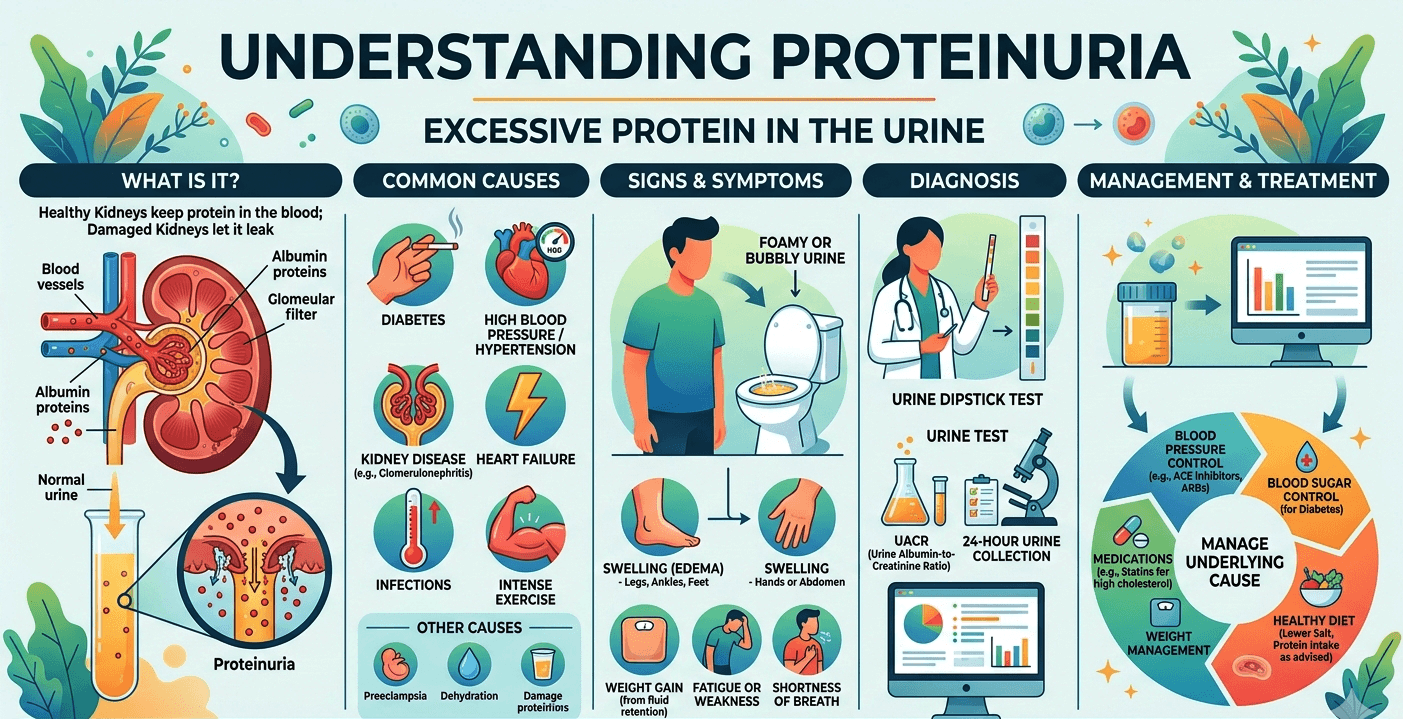
Proteinuria: Why Is There Protein in Your Urine? A Comprehensive Guide
Learn about what proteinuria is, why proteins appear in your urine, their causes, symptoms, diagnosis, and treatment methods.
Introduction
Learning that you have protein in your urine can be scary. Patients often become concerned about having some type of kidney disease, whereas medical students want to know the physiological background of this condition.
Learn about what proteinuria is, why proteins appear in your urine, their causes, symptoms, diagnosis, and treatment methods. This article will help both patients learn more about their condition and medical students to obtain knowledge about kidney diseases and kidney physiology.
As a doctor, I always make sure to tell my patients that proteinuria is not the disease but a symptom which may indicate various diseases.
What Is Proteinuria?
Proteinuria means that there is an abnormal level of protein in the urine.
Healthy kidneys filter out protein from the urine under normal conditions. However, if the filtration process of the kidneys becomes impaired or overloaded, proteins start appearing in the urine.
The criteria of significant proteinuria in most laboratories are:
• More than 150 mg of protein per day in 24 hour collection
• Elevated protein/creatinine ratio (PCR)
• Elevated albumin/creatinine ratio (ACR)
The main protein in urine is albumin. Therefore, the terms albuminuria and proteinuria are mostly interchangeable, especially in diabetes and chronic kidney disease.
Understanding Normal Kidney Function
To understand proteinuria, it helps to review basic kidney physiology.
The Nephron: The Functional Unit of the Kidney
Each kidney contains approximately one million nephrons.
A nephron consists of:
- Glomerulus—the filtering unit
- Bowman’s capsule
- Renal tubules
Blood enters the glomerulus under pressure, allowing water and small molecules to pass through while retaining larger molecules such as proteins and blood cells.
The Three-Layer Filtration Barrier
The glomerular filtration barrier includes:
| Layer | Function |
| Endothelium | Prevents passage of cells |
| Basement membrane | Blocks large proteins |
| Podocytes | Provide selective filtration |
Together, these structures ensure that proteins remain in the bloodstream.
When any part of this barrier is damaged, proteins can leak into the urine.
Why Are Proteins Important in the Body?
Proteins perform numerous essential functions:
- Maintain fluid balance
- Transport hormones and medications
- Support immune function
- Assist blood clotting
- Build and repair tissues
Albumin, the most abundant blood protein, helps keep fluid inside blood vessels.
When excessive amounts are lost through urine, complications may develop, including:
- Swelling (edema)
- Malnutrition
- Increased cardiovascular risk
- Progression of kidney disease
Types of Proteinuria
Proteinuria can be classified according to its cause.
1. Glomerular Proteinuria
This is the most common type.
It occurs when the glomerular filtration barrier becomes damaged.
Examples include:
- Diabetic kidney disease
- Glomerulonephritis
- Lupus nephritis
- Focal segmental Glomerulosclerosis (FSGS)
- Membranous nephropathy
The primary protein lost is albumin.
2. Tubular Proteinuria
Normally, small proteins filtered by the kidney are reabsorbed by the renal tubules.
Tubular injury reduces this reabsorption.
Causes include:
- Acute tubular injury
- Interstitial nephritis
- Drug-induced kidney damage
- Heavy metal toxicity
3. Overflow Proteinuria
Protein production exceeds the kidney’s ability to reabsorb filtered proteins.
Examples include:
- Multiple myeloma
- Hemolysis
- Rhabdomyolysis
In these conditions, abnormal proteins enter the urine despite relatively normal filtration barriers.
4. Post-Renal Proteinuria
Protein enters the urine after it leaves the kidney.
Causes include:
- Urinary tract infections
- Kidney stones
- Bladder inflammation
- Urinary tract tumors
Transient vs. Persistent Proteinuria
One of the most important distinctions in clinical practice is whether proteinuria is temporary or persistent.
Transient Proteinuria
Temporary proteinuria may occur due to:
- Fever
- Intense exercise
- Dehydration
- Emotional stress
- Acute illness
This form often resolves once the triggering factor disappears.
Persistent Proteinuria
Persistent proteinuria is more concerning and may indicate:
- Chronic kidney disease
- Diabetes
- Hypertension
- Autoimmune disorders
Repeated testing is necessary to confirm persistence.
Orthostatic Proteinuria
A fascinating and generally benign condition is orthostatic (postural) proteinuria.
This occurs when:
- Protein appears in urine while standing
- Protein disappears during sleep
It is most common in:
- Adolescents
- Young adults
The long-term prognosis is usually excellent.
Common Causes of Proteinuria
Diabetes Mellitus
Diabetes is the leading cause of chronic kidney disease worldwide.
High blood sugar damages glomerular capillaries, allowing albumin leakage.
Microalbuminuria often represents the earliest sign of diabetic kidney disease.
Hypertension
Long-standing high blood pressure damages renal blood vessels.
Over time, this leads to:
- Reduced kidney function
- Increased protein leakage
- Progressive Nephron loss
Glomerulonephritis
Glomerulonephritis refers to inflammation of the glomeruli.
It may occur due to:
- Infections
- Autoimmune diseases
- Immune complex deposition
Patients may experience:
- Proteinuria
- Blood in urine
- Swelling
- High blood pressure
Autoimmune Diseases
Conditions such as:
- Systemic Lupus Erythematosus
- Vasculitis
- IgA nephropathy
can damage kidney tissue and produce significant proteinuria.
Pregnancy
Proteinuria during pregnancy requires careful evaluation.
It may indicate:
- Preeclampsia
- Underlying kidney disease
- Transient physiological changes
New-onset proteinuria accompanied by elevated blood pressure warrants urgent medical attention.
Infections
Examples include:
- Urinary tract infections
- Hepatitis
- HIV infection
- Endocarditis
These conditions can produce temporary or persistent proteinuria.
Symptoms of Proteinuria
Proteinuria itself often causes no symptoms.
Many individuals discover it during routine health screening.
When protein loss becomes substantial, symptoms may include:
Foamy Urine
Excess protein can cause urine to appear unusually frothy or bubbly.
Although not always diagnostic, persistent foamy urine deserves evaluation.
Swelling (Edema)
Protein loss lowers blood albumin levels.
This allows fluid to leak into tissues, causing swelling of:
- Feet
- Ankles
- Legs
- Face
- Eyelids
Weight Gain
Fluid retention can cause rapid increases in body weight.
Fatigue
Patients may experience tiredness due to:
- Kidney dysfunction
- Inflammation
- Protein loss
How Proteinuria Is Diagnosed
Urine Dipstick Test
The simplest screening tool.
Advantages:
- Fast
- Inexpensive
- Widely available
Limitations:
- Less sensitive for small amounts of albumin
- Can be affected by urine concentration
Urine Albumin-to-Creatinine Ratio (ACR)
This is the preferred screening test for many patients.
Especially useful for:
- Diabetes
- Hypertension
- Chronic kidney disease monitoring
Protein-to-Creatinine Ratio (PCR)
Provides an estimate of daily protein excretion without requiring a 24-hour collection.
24-Hour Urine Collection
Historically considered the gold standard.
Measures total daily protein excretion directly.
Blood Tests
Important investigations include:
- Serum creatinine
- Estimated glomerular filtration rate (eGFR)
- Albumin level
- Electrolytes
These help assess overall kidney function.
The Clinical Significance of Proteinuria
For clinicians and medical students, proteinuria is more than a laboratory abnormality.
It serves as:
- A marker of kidney injury
- A predictor of kidney disease progression
- A cardiovascular risk indicator
Research consistently shows that increasing levels of proteinuria are associated with:
- Higher risk of chronic kidney disease
- Increased cardiovascular events
- Greater mortality
Even mild albuminuria may indicate endothelial dysfunction throughout the body.
Nephrotic Syndrome and Heavy Proteinuria
When protein loss becomes severe, nephrotic syndrome may develop.
Classic diagnostic features include:
- Proteinuria greater than 3.5 g/day
- Low serum albumin
- Generalized edema
- Hyperlipidemia
Common causes include:
- Minimal change disease
- Membranous nephropathy
- FSGS
- Diabetic nephropathy
Patients often present with dramatic swelling and significant fluid retention.
Treatment of Proteinuria
Treatment depends on the underlying cause.
Blood Pressure Control
Controlling blood pressure is one of the most effective interventions.
Preferred medications include:
- ACE inhibitors
- Angiotensin receptor blockers (ARBs)
These drugs reduce protein leakage and protect kidney function.
Diabetes Management
Optimal glucose control helps prevent progression of diabetic kidney disease.
Key strategies include:
- Blood sugar monitoring
- Medication adherence
- Lifestyle modification
Lifestyle Changes
Patients are often advised to:
- Reduce sodium intake
- Maintain healthy weight
- Exercise regularly
- Stop smoking
- Limit excessive alcohol use
These measures improve both kidney and cardiovascular health.
Treating Underlying Diseases
Specific therapies may include:
- Immunosuppressive medications
- Antibiotics
- Antiviral treatment
- Cancer therapy
depending on the underlying diagnosis.
Can Proteinuria Be Reversed?
The answer depends on the cause.
Temporary proteinuria often resolves completely.
Examples include:
- Fever-related proteinuria
- Exercise-induced proteinuria
- Dehydration-associated proteinuria
In chronic kidney diseases, complete reversal may not be possible. However, early diagnosis and treatment can significantly reduce proteinuria and slow disease progression.
When Should Patients Seek Medical Attention?
Medical evaluation is recommended if you experience:
- Persistent foamy urine
- Swelling of legs or face
- High blood pressure
- Blood in urine
- Reduced urine output
- Known diabetes with abnormal urine testing
Early intervention frequently leads to better outcomes.
Frequently Asked Questions (FAQs)
Is protein in urine always a sign of kidney disease?
No. Temporary proteinuria can occur after exercise, fever, stress, or dehydration. Persistent proteinuria requires further evaluation.
Can dehydration cause proteinuria?
Yes. Dehydration can temporarily concentrate urine and produce mild proteinuria.
What foods cause protein in urine?
Dietary protein itself usually does not cause significant proteinuria. Persistent proteinuria generally results from kidney-related conditions rather than food intake.
Is foamy urine always caused by protein?
No. Rapid urination, concentrated urine, and toilet cleaning agents can also create foam. Persistent foamy urine should be assessed medically.
Can proteinuria be prevented?
Not all cases can be prevented, but controlling diabetes, hypertension, maintaining a healthy lifestyle, and avoiding kidney-toxic medications can reduce risk.
What level of proteinuria is considered serious?
Higher levels mostly indicate greater concern. Protein loss exceeding 3.5 grams per day suggests nephrotic-range proteinuria and requires specialist evaluation.
Does proteinuria mean kidney failure is inevitable?
No. Many patients with proteinuria never develop kidney failure, especially when the underlying cause is identified and treated early.
Conclusion
Proteinuria is among the most valuable markers of kidney damage or increased stress on the kidneys. While presence of protein in the urine is alarming in itself, it should not be forgotten that proteinuria is just an indicator rather than a disease. It can occur in temporary conditions and in severe kidney pathologies requiring treatment.
From the perspective of patients, knowledge about proteinuria will help them to ease their fears and go through medical tests. From the perspective of medical students, proteinuria is a basic marker connecting the physiology and pathology of the kidneys and clinical practice. Whatever the cause of the condition is, early detection is essential. Investigation and monitoring of the underlying diseases can make a great difference.