
to Causes, Symptoms, Diagnosis, and Treatment
Introduction
Discovering that you have an enlarged spleen or hearing the term splenomegaly for the first time can be unsettling. Patients often wonder whether it is serious, while medical students may be trying to understand the many conditions that can cause it. The good news is that splenomegaly is not a disease itself; rather, it is a sign that something else is affecting the body.
Explore splenomegaly (enlarged spleen) with this comprehensive guide covering causes, symptoms, diagnosis, treatment, complications, and warning signs that require medical attention.
This guide aims to bridge the gap between patient education and medical learning. Whether you are seeking reassurance about your health or building your clinical knowledge, understanding splenomegaly begins with understanding the remarkable organ at the center of it all: the spleen.
What Is Splenomegaly?
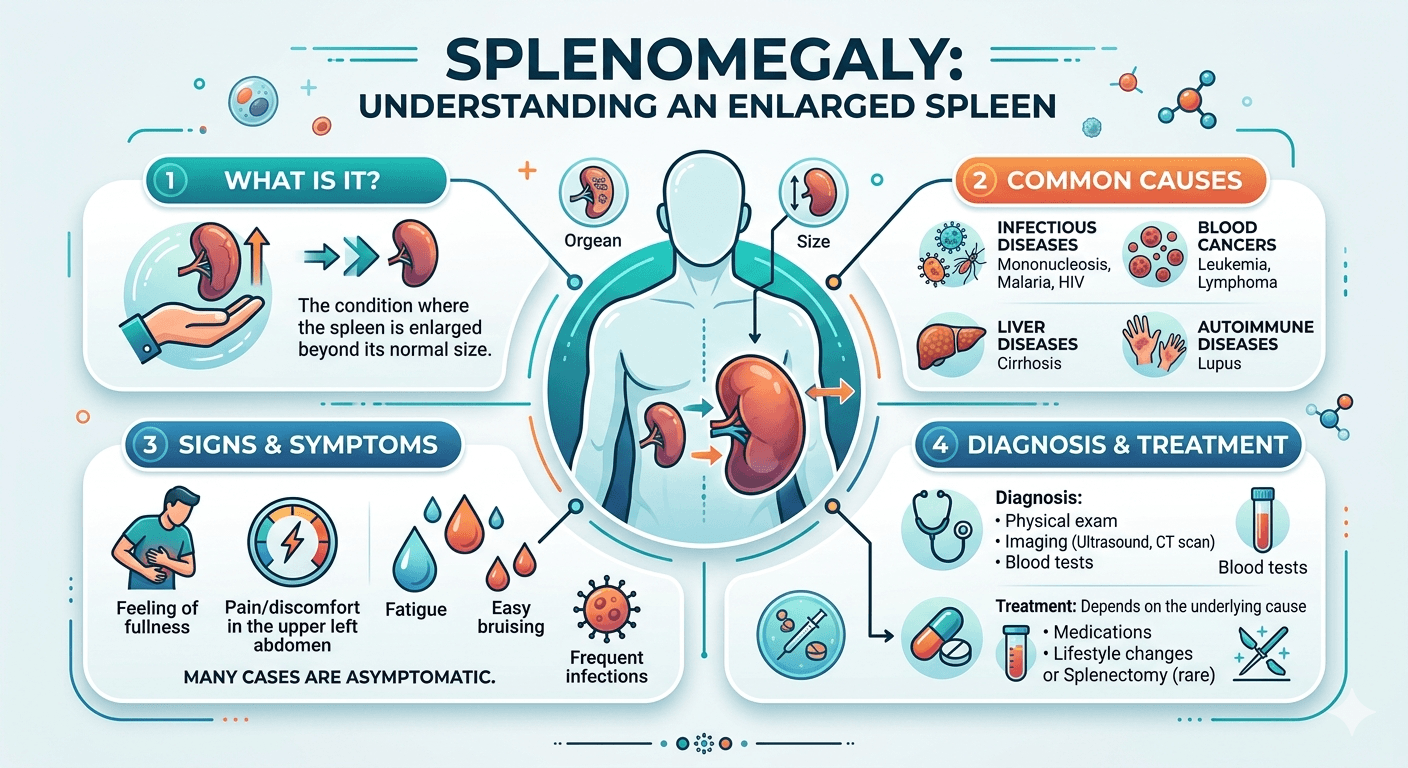
Splenomegaly is the medical term for an enlarged spleen.
In healthy adults, the spleen is usually about the size of a clenched fist and is typically not felt during a physical examination. When the spleen becomes larger than normal, it is described as splenomegaly.
From a clinical perspective, splenomegaly is important because it often serves as a clue to an underlying medical condition. These conditions range from temporary infections to chronic liver disease, blood disorders, autoimmune diseases, and cancers.
For patients, it is helpful to remember that an enlarged spleen is a symptom or finding not a diagnosis by itself.
Understanding the Spleen: Anatomy and Function
Where Is the Spleen Located?
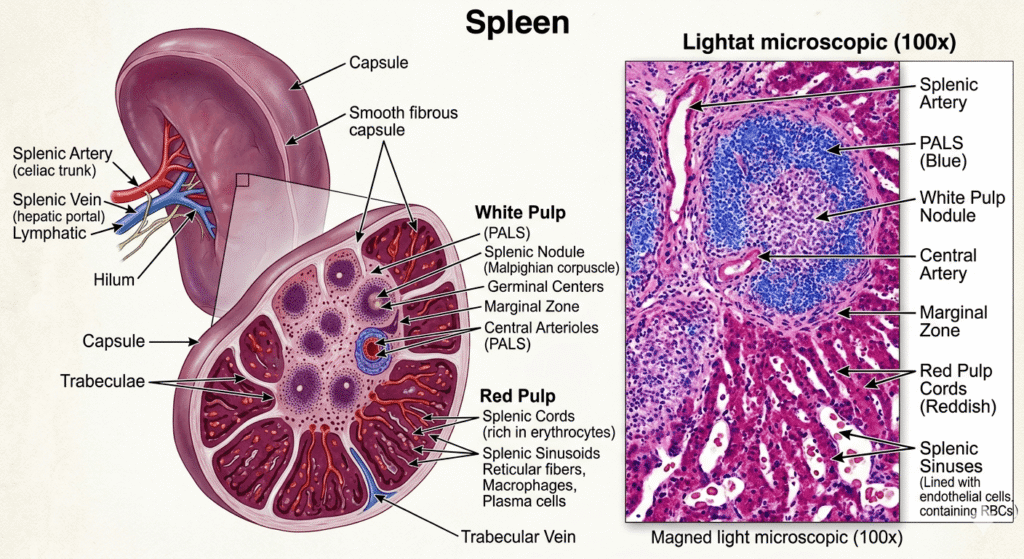
The spleen sits in the upper left part of the abdomen, tucked beneath the rib cage and behind the stomach.
Normally, the spleen is protected by the lower ribs and cannot be felt externally.
What Does the Spleen Do?
Although many people rarely think about the spleen, it plays several critical roles:
1. Blood Filtration
The spleen acts like a sophisticated filter, removing:
- Old red blood cells
- Damaged blood cells
- Cellular debris
2. Immune Defense
The spleen helps the body fight infections by:
- Producing immune cells
- Filtering bacteria and viruses from the bloodstream
- Supporting antibody production
3. Blood Storage
The spleen stores:
- Platelets
- White blood cells
- Small reserves of blood
4. Fetal Blood Production
Before birth, the spleen helps produce blood cells. Certain diseases can reactivate this function later in life, contributing to enlargement.
How Does Splenomegaly Develop?
The spleen enlarges when it becomes overworked, congested, infiltrated by abnormal cells, or stimulated by immune activity.
Common mechanisms include:
- Increased destruction of blood cells
- Excess immune activation
- Blood flow obstruction
- Cancer cell infiltration
- Infection-related inflammation
For medical students, splenomegaly is often categorized as:
- Congestive
- Infectious
- Hematologic
- Neoplastic
- Inflammatory/autoimmune
- Infiltrative
This framework helps narrow the differential diagnosis.
Causes of Splenomegaly
The causes are numerous, but they can be organized into major categories.
Infections
Infections are among the most common causes worldwide.
Viral Infections
Examples include:
- Infectious Mononucleosis
- COVID-19
- Viral hepatitis
- Cytomegalovirus (CMV)
- HIV infection
Bacterial Infections
Examples:
- Tuberculosis
- Infective endocarditis
- Typhoid fever
Parasitic Infections
Common in certain regions:
- Malaria
- Leishmaniasis
- Schistosomiasis
Liver Disease and Portal Hypertension
One of the most common causes of significant splenomegaly in adults is liver disease.
Conditions include:
- Cirrhosis
- Chronic hepatitis
- Portal vein thrombosis
When blood flow through the liver becomes restricted, pressure increases in the portal venous system. Blood backs up into the spleen, causing congestive splenomegaly.
Blood Disorders
Several hematologic conditions enlarge the spleen.
Hemolytic Anemias
The spleen removes damaged red blood cells. If destruction becomes excessive, the spleen enlarges.
Examples:
- Sickle Cell Disease
- Hereditary spherocytosis
- Autoimmune hemolytic anemia
Myeloproliferative Disorders
Examples:
- Polycythemia Vera
- Primary Myelofibrosis
- Essential thrombocythemia
These conditions often produce marked enlargement.
Cancers
Cancer-related splenomegaly usually occurs when abnormal cells infiltrate the spleen.
Examples include:
- Leukemia
- Lymphoma
- Metastatic cancers
Massive splenomegaly is classically associated with certain leukemias and Myeloproliferative diseases.
Autoimmune and Inflammatory Diseases
The immune system can stimulate splenic enlargement.
Examples:
- Systemic Lupus Erythematosus
- Rheumatoid Arthritis
- Felty syndrome
- Sarcoidosis
Storage and Infiltrative Disorders
These are less common but important.
Examples:
- Gaucher Disease
- Amyloidosis
- Niemann-Pick disease
Abnormal substances accumulate within the spleen, causing enlargement.
Symptoms of Splenomegaly
Many people with mild splenomegaly have no symptoms at all.
When symptoms occur, they may arise directly from the enlarged spleen or from the underlying disease.
Upper Left Abdominal Pain
Patients may experience:
- Dull discomfort
- Pressure sensation
- Fullness under the ribs
Pain Radiating to the Left Shoulder
Known as Kehr’s sign, this may occur if the spleen irritates the diaphragm.
Early Satiety
A growing spleen can press against the stomach.
Patients often report:
I feel full after eating only a small amount.
Abdominal Distension
A very enlarged spleen may create a visible abdominal bulge.
Symptoms Related to the Underlying Cause
Infection-Related Symptoms
- Fever
- Chills
- Fatigue
- Night sweats
Blood Disorder Symptoms
- Weakness
- Shortness of breath
- Easy bruising
Cancer-Related Symptoms
- Weight loss
- Persistent fatigue
- Enlarged lymph nodes
- Night sweats
Liver Disease Symptoms
- Jaundice
- Swollen abdomen
- Leg swelling
How Is Splenomegaly Diagnosed?
Diagnosis involves determining both:
- Whether the spleen is enlarged
- Why it is enlarged
Medical History
Doctors ask about:
- Recent infections
- Travel history
- Alcohol use
- Family history
- Weight loss
- Fever
- Bleeding problems
For medical students, history-taking often provides the strongest clues to etiology.
Physical Examination
During examination, the physician feels beneath the left rib cage.
A normal spleen is usually not palpable.
Findings may include:
- Palpable spleen tip
- Massive enlargement extending across the abdomen
- Associated liver enlargement
Blood Tests
Blood work frequently reveals the underlying cause.
Common tests include:
| Test | Purpose |
| Complete Blood Count (CBC) | Evaluates red cells, white cells, platelets |
| Peripheral Blood Smear | Examines blood cell morphology |
| Liver Function Tests | Assesses liver disease |
| Viral Testing | Detects viral infections |
| Inflammatory Markers | Evaluates immune disorders |
| Coagulation Studies | Assesses clotting function |
Ultrasound
First-Line Imaging Study
Ultrasound is:
- Safe
- Inexpensive
- Radiation-free
It accurately measures spleen size and evaluates blood flow.
CT Scan
CT scans provide detailed images and help identify:
- Tumors
- Abscesses
- Trauma
- Portal hypertension
MRI
MRI is particularly useful when:
- Soft tissue characterization is needed
- Vascular abnormalities are suspected
- Radiation exposure should be minimized
Bone Marrow Biopsy
When blood cancers or marrow disorders are suspected, a bone marrow biopsy may be necessary.
This test can diagnose:
- Leukemia
- Lymphoma
- Myelofibrosis
- Other hematologic diseases
For medical students, this is typically a key step in evaluating unexplained splenomegaly with abnormal blood counts.
Treatment of Splenomegaly
The most important principle is simple:
Treat the underlying cause, not just the enlarged spleen.
Treatment of Infections
Examples include:
- Antibiotics for bacterial infections
- Antiviral therapies when indicated
- Antiparasitic medications for malaria and related diseases
Once the infection resolves, the spleen often returns to normal size.
Treatment of Liver Disease
Management may involve:
- Avoiding alcohol
- Treating viral hepatitis
- Managing portal hypertension
- Liver transplantation in advanced cases
Treatment of Blood Disorders
Depending on the condition:
- Corticosteroids
- Immunosuppressive medications
- Blood transfusions
- Targeted therapies
Treatment of Cancer
Cancer treatment may include:
- Chemotherapy
- Radiation therapy
- Immunotherapy
- Stem cell transplantation
Successful treatment often reduces spleen size.
Splenectomy (Spleen Removal)
In selected situations, removal of the spleen may be necessary.
Common indications:
- Severe hypersplenism
- Splenic rupture
- Certain blood disorders
- Persistent symptomatic enlargement
However, splenectomy increases susceptibility to certain infections.
Patients require:
- Vaccinations
- Preventive medical follow-up
- Education about infection risks
Prognosis
The outlook for splenomegaly varies considerably.
Generally Favorable Prognosis
Examples:
- Infectious mononucleosis
- Temporary viral infections
- Treatable bacterial infections
Variable Prognosis
Examples:
- Cirrhosis
- Autoimmune disorders
- Chronic hemolytic anemia
More Serious Prognosis
Examples:
- Advanced leukemia
- Aggressive lymphoma
- Severe myelofibrosis
Ultimately, prognosis depends on:
- Underlying diagnosis
- Severity of disease
- Response to treatment
- Presence of complications
Living With Splenomegaly
For patients, receiving a diagnosis of splenomegaly can feel overwhelming. Fortunately, many people live well while the underlying condition is investigated and treated.
Protect Your Spleen
Avoid activities with a high risk of abdominal trauma, including:
- Contact sports
- Martial arts
- High-impact activities unless approved by your doctor
Attend Follow-Up Appointments
Regular monitoring helps track:
- Spleen size
- Blood counts
- Treatment effectiveness
Know the Warning Signs
Seek urgent medical attention if you develop:
- Severe left-sided abdominal pain
- Fainting
- Sudden dizziness
- Significant bleeding
- High fever
These symptoms may indicate a serious complication.
Maintain General Health
Helpful measures include:
- Eating a balanced diet
- Staying physically active as advised
- Avoiding excessive alcohol
- Keeping vaccinations up to date
Managing chronic illnesses carefully
Key Takeaways
For patients, the most important message is reassurance: many causes of splenomegaly are treatable, and modern diagnostic tools allow physicians to identify the underlying problem effectively. For medical students, splenomegaly remains a classic clinical finding that reflects diverse pathophysiologic processes and demands a systematic diagnostic approach. Understanding why the spleen enlarges is often the key to understanding the disease itself.
Disclaimer: The information provided in this blog post is for educational and informational purposes only and should not be considered medical advice. It is not intended to replace professional medical consultation, diagnosis, or treatment. Always seek the guidance of a qualified healthcare professional regarding any medical condition or health-related concerns.