
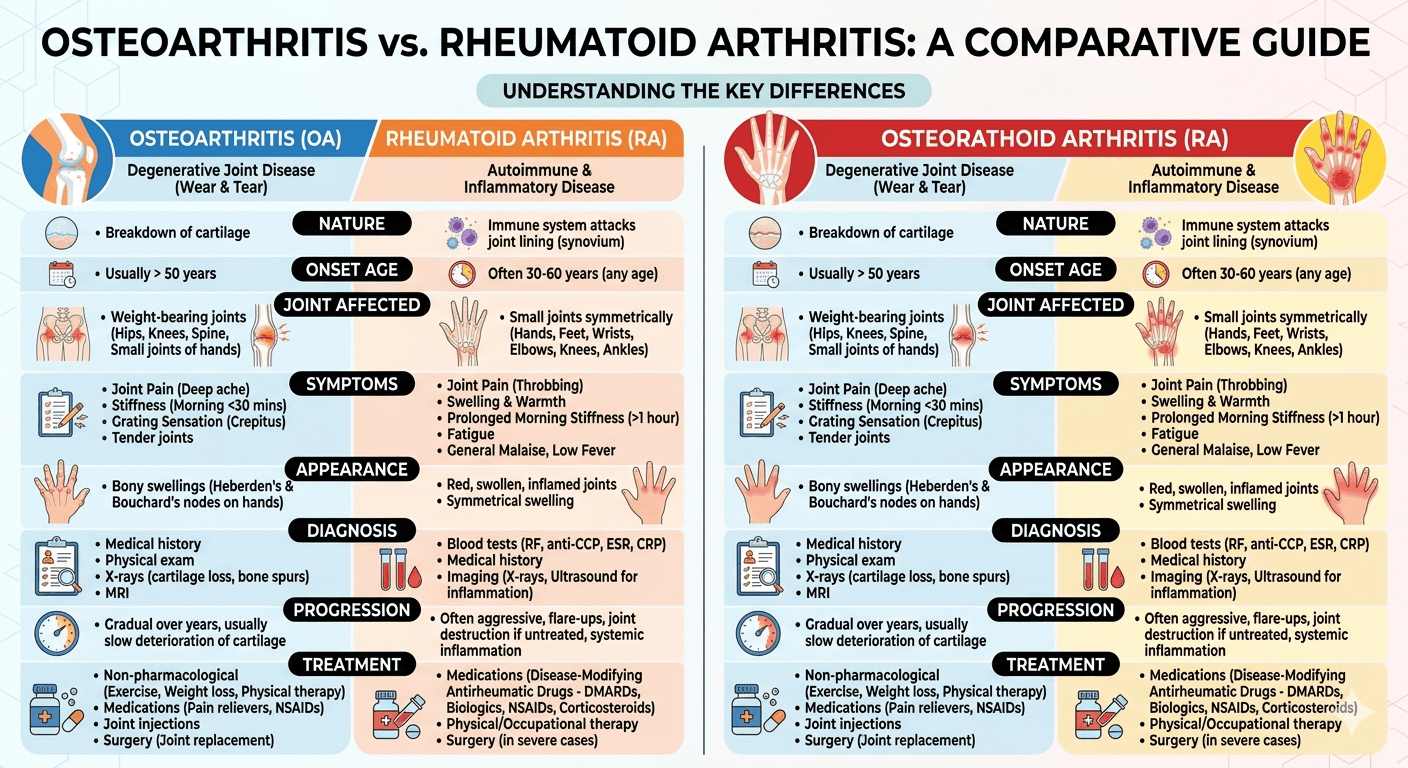
Key Differences & Symptoms
Introduction
Arthritis is a common condition that affects millions of people worldwide, causing joint pain, stiffness, and reduced mobility. Among the many types of arthritis, Osteoarthritis (OA) and Rheumatoid Arthritis (RA) are the most frequently diagnosed. Although both conditions impact the joints and can significantly impact quality of life, they have different causes, symptoms, and treatment approaches.
Learn the key differences between Osteoarthritis (OA) and Rheumatoid Arthritis (RA), including symptoms, causes, risk factors, diagnosis, and treatment options. Discover how to recognize early warning signs and manage joint pain effectively.
What Is Osteoarthritis (OA)?
Osteoarthritis is the most common form of arthritis. It is a degenerative joint disease that occurs when the protective cartilage covering the ends of bones gradually wears away. As cartilage deteriorates, bones may rub against each other, causing pain, stiffness, and reduced joint function.
OA is often referred to as a wear-and-tear arthritis because it typically develops over time due to aging and repeated stress on the joints.
Commonly Affected Joints in OA
- Knees
- Hips
- Hands
- Lower back
- Neck
- Feet
What Is Rheumatoid Arthritis (RA)?
Rheumatoid arthritis is a chronic autoimmune disease in which the body’s immune system mistakenly attacks the lining of the joints (synovium). This causes inflammation that can damage cartilage, bone, and surrounding tissues.
Unlike OA, RA is a systemic disease, meaning it can affect other organs such as the lungs, heart, eyes, and blood vessels.
Commonly Affected Joints in RA
- Fingers
- Wrists
- Hands
- Feet
- Ankles
- Elbows
- Knees
RA usually impacts the same joints on both sides of the body.
Key Differences Between OA and RA
| Feature | Osteoarthritis (OA) | Rheumatoid Arthritis (RA) |
| Cause | Wear and tear of cartilage | Autoimmune inflammation |
| Age of Onset | Usually after age 50 | Can occur at any age |
| Joint Involvement | Often affects one side more than the other | Usually symmetrical |
| Morning Stiffness | Less than 30 minutes | More than 30–60 minutes |
| Inflammation | Mild or absent | Significant inflammation |
| Systemic Symptoms | Rare | Common |
| Disease Progression | Gradual | Can progress rapidly |
| Other Organ Involvement | No | Yes |
Symptoms of Osteoarthritis (OA)
Osteoarthritis (OA) is a degenerative joint disease caused by the gradual breakdown of cartilage. Symptoms often develop slowly and worsen over time. Common symptoms include:
- Joint pain that increases with activity and improves with rest
- Morning stiffness lasting less than 30 minutes
- Reduced range of motion and joint flexibility
- Joint swelling or tenderness
- A grating or cracking sensation (crepitus) during movement
- Bony enlargement of affected joints, especially the fingers, knees, hips, and spine
Symptoms of Rheumatoid Arthritis (RA)
Rheumatoid Arthritis (RA) is a chronic autoimmune disease that causes inflammation of the joints and other tissues. Symptoms often affect multiple joints symmetrically and may include:
- Persistent joint pain, swelling, and tenderness
- Morning stiffness lasting more than 30–60 minutes
- Warm, inflamed joints, especially in the hands, wrists, and feet
- Fatigue, weakness, and reduced energy levels
- Low-grade fever and general malaise
- Loss of joint function and progressive deformity in advanced disease
Risk Factors for Osteoarthritis
Several factors increase the risk of developing OA:
- Aging
- Obesity
- Metabolic disorders such as diabetes and dyslipidemia
- Previous joint injuries
- Repetitive joint stress
- Family history
- Joint deformities
- Certain occupations involving heavy physical work
Risk Factors for Rheumatoid Arthritis
Risk factors for RA include:
- Family history
- Female sex
- Smoking
- Obesity
- Environmental exposures
- Hormonal influences
- Certain genetic factors
Diagnosis
Diagnosing Osteoarthritis
Doctors may use:
Lab Tests: There is no specific diagnostic lab test for Osteoarthritis. However, lab tests play a massive role in the diagnostic process. Their primary job is differential diagnosis to rule out other conditions (like Rheumatoid Arthritis or gout) that mimic OA.
Medical history
Physical examination
X-rays
MRI scans in selected cases
Typical findings include cartilage loss, narrowed joint spaces, and bone spurs.
Diagnosing Rheumatoid Arthritis
Diagnosis may involve:
Physical examination
Blood tests
- Rheumatoid Factor (RF)
- Anti-CCP antibodies
- ESR
- CRP
- Kidney Function Tests: (Chronic NSAID use can impair renal function).
- Liver Function Tests: (To monitor liver health if the patient is using high-dose acetaminophen or certain prescription NSAIDs for pain management)
- X-rays
- Ultrasound
- MRI scans
These tests help identify inflammation and joint damage.
Treatment of Osteoarthritis
Treatment focuses on symptom relief and maintaining joint function.
Lifestyle Changes
- Weight loss
- Regular exercise
- Physical therapy
- Joint protection techniques
Medications
- Acetaminophen
- Nonsteroidal anti-inflammatory drugs (NSAIDs) like ibuprofen, naproxen, or meloxicam.
- Topical pain relievers
Advanced Treatments
- Corticosteroid injections
- Hyaluronic acid injections
- Joint replacement surgery
Treatment of Rheumatoid Arthritis
Early treatment is essential to prevent permanent joint damage.
Disease-Modifying Medications
- DMARDs such as methotrexate (usually once a week)
- Biologic agents
- Targeted synthetic DMARDs
Symptom Relief
- NSAIDs like ibuprofen, naproxen, or meloxicam.
- Corticosteroids
Supportive Care
- Physical therapy
- Occupational therapy
- Regular exercise
- Smoking cessation
Can OA and RA Occur Together?
Yes. Some individuals with rheumatoid arthritis may also develop osteoarthritis, especially as they age. In such cases, diagnosis and treatment become more complex and require careful evaluation by a healthcare professional.
When to See a Doctor
Seek medical attention if you experience:
- Persistent joint pain
- Joint swelling
- Morning stiffness lasting more than 30 minutes
- Difficulty performing daily activities
- Unexplained fatigue or weight loss
- Progressive loss of joint movement
Early diagnosis can significantly improve long-term outcomes.
Conclusion
Although osteoarthritis and rheumatoid arthritis both cause joint pain and stiffness, they are fundamentally different diseases. Osteoarthritis results from cartilage degeneration, whereas rheumatoid arthritis is an autoimmune condition characterized by chronic inflammation. OA typically develops gradually with age, while RA can affect people of any age and may involve multiple organs.
Recognizing the key differences and symptoms of these conditions allows for earlier diagnosis, better treatment, and improved quality of life. If you experience persistent joint symptoms, consult a healthcare professional for proper evaluation and management.
Frequently Asked Questions (FAQs)
1. What is the main difference between osteoarthritis and rheumatoid arthritis?
Osteoarthritis is caused by the breakdown of joint cartilage, while rheumatoid arthritis is an autoimmune disease that attacks joint tissues.
2. Which condition is more painful, OA or RA?
Both can cause significant pain. RA often causes more inflammation and systemic symptoms, while OA pain is usually related to joint use and degeneration.
3. Can rheumatoid arthritis be cured?
There is currently no cure for RA, but modern treatments can control symptoms and slow disease progression.
4. Is osteoarthritis an autoimmune disease?
No. Osteoarthritis is a degenerative joint condition that is not caused by an abnormal immune response.
5. Does exercise help arthritis?
Yes. Appropriate exercise can improve joint flexibility, strengthen muscles, reduce pain, and enhance overall function in both OA and RA.
Disclaimer: The information provided in this blog post is for educational and informational purposes only and should not be considered medical advice. It is not intended to replace professional medical consultation, diagnosis, or treatment. Always seek the guidance of a qualified healthcare professional regarding any medical condition or health-related concerns. The author and publisher are not responsible for any actions taken based on the information presented in this article.