
Heart Palpitations: Causes, Symptoms, Diagnosis, and When to Worry
Learn about heart palpitations, including their causes, symptoms, diagnosis, treatment options, and warning signs that require medical attention. A comprehensive guide for patients and medical students.
Introduction
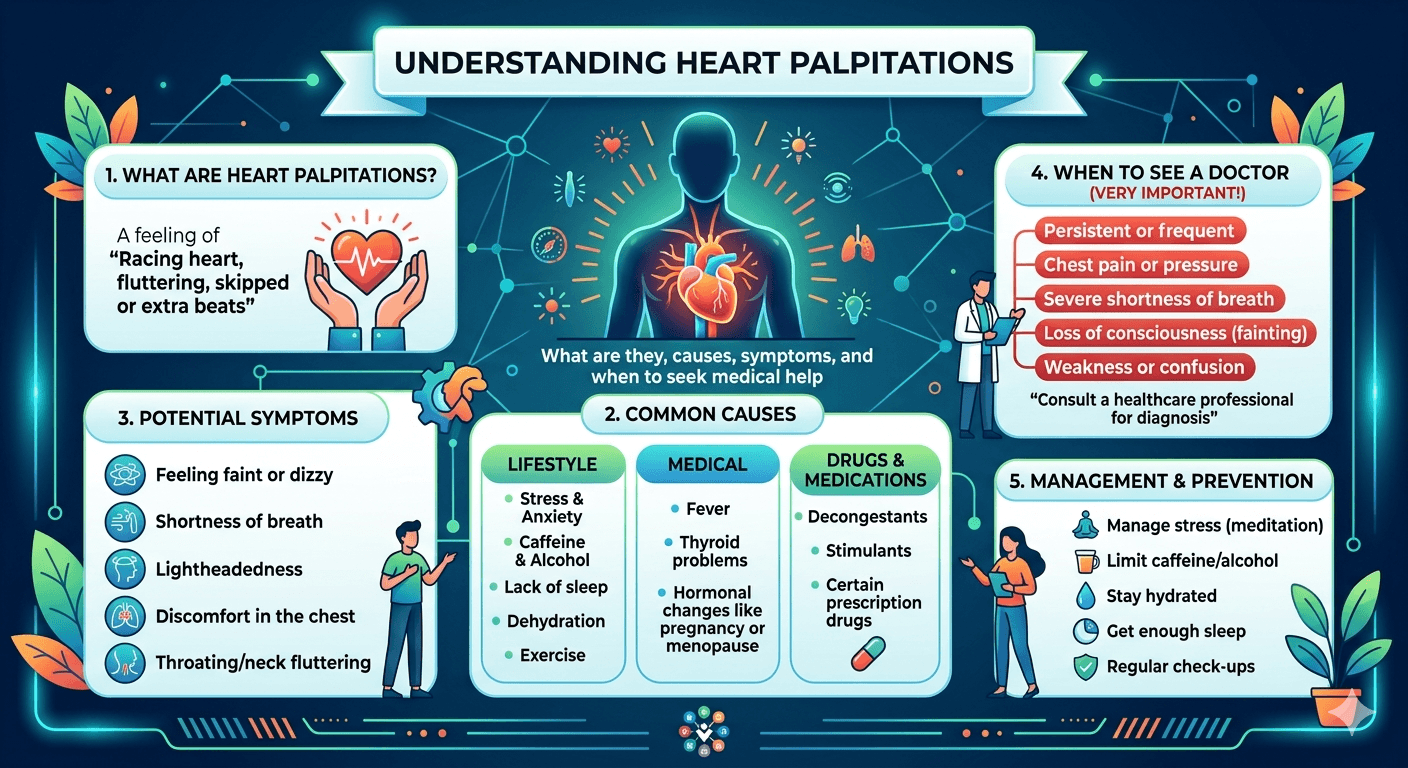
Heart palpitations are quite common and can be worrying for many individuals. Patients tend to describe palpitations as the sensation of racing heart, fluttering, pounding, skipping, or irregular heartbeat. Most cases of heart palpitations are harmless; however, sometimes they indicate some underlying disease that should be evaluated immediately by a doctor.
Being a healthcare worker who has helped numerous individuals cope with palpitations, I understand how distressing such sensations are. When dealing with patients suffering from palpitations, the very first question they ask is, Is there anything wrong with my heart? This issue depends on several factors such as causes, additional symptoms, and individual health risks.
This article provides both patients and future healthcare workers with essential information about heart palpitations.
What Are Heart Palpitations?
Heart palpitations imply one’s awareness of heartbeat. Normally, one does not pay attention to his/her heartbeat. However, some health issues can make palpitations appear.
Some common descriptions are:
- Fluttering in the chest area
- Fast heartbeat
- Missing heartbeats
- Extra heartbeats
- Pounding sensation
- Flip-flopping sensation in the chest area
- Thumping sensation in the neck or throat area
Palpitations might happen at rest, during exercise, when lying down, and even in dreams. Such sensations might last from a few seconds to minutes and even longer periods of time.
How Does the Heart Usually Function?
To understand what happens during palpitations, it is necessary to consider normal functioning of the cardiac system.
The cardiac cycle starts with the sinoatrial node, a natural pacemaker of the heart. Electrical impulses run through the atria making them contract. After passing the atrioventricular node, the signal reaches ventricles.
A properly coordinated electrical activity of the heart leads to sinus rhythm.
For healthy adults:
- Normal heart rate at rest is 60-100 bpm
- In case with athletes, this indicator can be lower than 60 bpm
- Normally, one’s heart rate increases during physical and mental efforts
Any disruptions in the described above electrical system can lead to palpitations.
Common Causes of Heart Palpitations
1. Stress and Anxiety
One of the most frequent causes of palpitations is psychological stress.
When a person experiences stress, fear, or anxiety, the body releases:
- Adrenaline
- Noradrenaline
- Cortisol
These hormones stimulate the heart, increasing both heart rate and contractility.
Common triggers include:
- Work-related stress
- Financial concerns
- Panic attacks
- Emotional trauma
- Sleep deprivation
Many patients notice palpitations during periods of heightened emotional stress.
2. Caffeine and Stimulants
Stimulants can increase sympathetic nervous system activity.
Common examples include:
- Coffee
- Energy drinks
- Tea
- Cola beverages
- Certain supplements
Excessive caffeine intake may lead to:
- Increased heart rate
- Premature beats
- Sensations of fluttering
Not everyone is equally sensitive. Some individuals experience palpitations after relatively small amounts of caffeine.
3. Nicotine and Tobacco Products
Nicotine stimulates the release of catecholamines, increasing heart rate and blood pressure.
Sources include:
- Cigarettes
- Cigars
- Vaping products
- Smokeless tobacco
Long-term tobacco use also increases the risk of cardiovascular disease, making evaluation particularly important.
4. Alcohol Consumption
Alcohol can trigger rhythm disturbances, especially in susceptible individuals.
A well-known phenomenon called holiday heart syndrome refers to arrhythmias occurring after heavy alcohol consumption, even in otherwise healthy people.
Alcohol-related palpitations may occur:
- During drinking
- Several hours afterward
- The next day
5. Exercise
Exercise naturally increases heart rate to meet the body’s oxygen demands.
Most exercise-related palpitations are normal.
However, evaluation may be necessary if symptoms occur with:
- Chest pain
- Dizziness
- Syncope (fainting)
- Unexplained shortness of breath
6. Hormonal Changes
Hormonal fluctuations frequently affect heart rhythm perception.
Examples include:
Pregnancy
During pregnancy:
- Blood volume increases
- Heart rate rises
- Cardiac output increases
Many pregnant women notice occasional palpitations.
Menopause
Declining estrogen levels may contribute to:
- Palpitations
- Hot flashes
- Sleep disturbances
Thyroid Disorders
An overactive thyroid (hyperthyroidism) is a classic cause of palpitations.
Symptoms often include:
- Weight loss
- Tremors
- Heat intolerance
- Anxiety
- Rapid heartbeat
Medical Conditions That Can Cause Palpitations
Cardiac Arrhythmias
An arrhythmia is an abnormal heart rhythm.
Common arrhythmias include:
Premature Atrial Contractions (PACs)
These are extra beats originating in the atria.
Characteristics:
- Common
- Usually benign
- Often felt as a skipped beat
Premature Ventricular Contractions (PVCs)
Extra beats arising from the ventricles.
Patients frequently describe:
- A pause
- Followed by a stronger heartbeat
Occasional PVCs are common in healthy individuals.
Atrial Fibrillation
One of the most critical arrhythmias.
Features include:
- Irregular rhythm
- Rapid heartbeat
- Increased stroke risk
Symptoms may include:
- Fatigue
- Breathlessness
- Palpitations
Supraventricular Tachycardia (SVT)
A rapid rhythm originating above the ventricles.
Heart rates often exceed:
- 150 beats per minute
Patients frequently report:
- Sudden onset
- Sudden termination
- Rapid pounding heartbeat
Ventricular Tachycardia
A potentially life-threatening rhythm arising from the ventricles.
This condition requires urgent medical attention.
Structural Heart Disease
Palpitations can occur in patients with:
- Heart valve disease
- Cardiomyopathy
- Congenital heart defects
- Prior heart attacks
Structural abnormalities may alter electrical conduction and increase arrhythmia risk.
Anemia
Low hemoglobin reduces oxygen delivery to tissues.
To compensate, the heart works harder.
Symptoms may include:
- Fatigue
- Weakness
- Shortness of breath
- Palpitations
Electrolyte Imbalances
Electrolytes play critical roles in cardiac electrical activity.
Important electrolytes include:
- Potassium
- Magnesium
- Calcium
- Sodium
Abnormal levels can trigger arrhythmias and palpitations.
Medications Associated with Palpitations
Certain medications may contribute to symptoms.
Examples include:
- Asthma inhalers
- Decongestants
- ADHD medications
- Thyroid hormone replacement
- Some antidepressants
- Weight-loss medications
A careful medication review is an essential part of clinical evaluation.
Symptoms Associated with Heart Palpitations
Palpitations may occur alone or alongside other symptoms.
Common Accompanying Symptoms
- Rapid heartbeat
- Irregular pulse
- Chest discomfort
- Mild shortness of breath
- Anxiety
- Sweating
More Concerning Symptoms
- Severe chest pain
- Syncope
- Near-fainting
- Significant breathlessness
- Confusion
- Persistent dizziness
These symptoms may indicate a serious cardiovascular issue.
How Doctors Diagnose Heart Palpitations
Medical History
Diagnosis begins with a detailed history.
Important questions include:
- When did symptoms start?
- How often do they occur?
- How long do they last?
- What triggers them?
- Are there associated symptoms?
- Is there a family history of heart disease?
The patient’s description often provides valuable diagnostic clues.
Physical Examination
Healthcare providers assess:
- Heart rate
- Blood pressure
- Cardiac murmurs
- Signs of thyroid disease
- Signs of heart failure
A thorough examination can reveal important underlying conditions.
Electrocardiogram (ECG)
The ECG is typically the first diagnostic test.
It evaluates:
- Heart rhythm
- Heart rate
- Conduction abnormalities
- Evidence of prior heart damage
However, a normal ECG does not exclude intermittent arrhythmias.
Holter Monitor
A Holter monitor continuously records heart rhythms for 24–48 hours.
Useful when symptoms occur daily.
Event Monitor
For infrequent symptoms, event monitors may be worn for weeks.
These devices help capture intermittent rhythm disturbances.
Echocardiogram
An echocardiogram uses ultrasound to evaluate:
- Heart chambers
- Heart valves
- Pumping function
- Structural abnormalities
This test is particularly valuable when structural heart disease is suspected.
Laboratory Testing
Common laboratory studies include:
| Test | Purpose |
| Complete Blood Count | Detect anemia |
| Thyroid Function Tests | Identify hyperthyroidism |
| Electrolytes | Evaluate mineral imbalances |
| Kidney Function | Assess metabolic causes |
| Cardiac Biomarkers | Evaluate acute cardiac injury. |
Treatment of Heart Palpitations
Treatment depends on the underlying cause.
Lifestyle Modifications
Many patients improve with simple lifestyle changes.
Recommendations include:
- Reducing caffeine intake
- Limiting alcohol
- Quitting smoking
- Managing stress
- Staying hydrated
- Improving sleep quality
Stress Reduction Techniques
Helpful strategies include:
- Deep breathing exercises
- Meditation
- Yoga
- Cognitive behavioral therapy
- Regular physical activity
Managing anxiety can significantly reduce symptom frequency.
Medication Therapy
Depending on the diagnosis, medications may include:
- Beta blockers
- Calcium channel blockers
- Antiarrhythmic drugs
- Thyroid medications
- Treatments for underlying conditions
Medication selection depends on the specific rhythm disorder and patient characteristics.
Catheter Ablation
For certain arrhythmias, catheter ablation can provide a cure.
This minimally invasive procedure:
- Identifies abnormal electrical pathways.
- Uses energy to destroy problematic tissue.
- Restores normal rhythm.
Success rates are often excellent for conditions such as SVT.
When Should You Worry About Heart Palpitations?
Most palpitations are benign. However, some situations require prompt medical attention.
Seek immediate medical care if palpitations occur with:
- Chest pain
- Fainting
- Severe shortness of breath
- Sudden weakness
- Confusion
- Persistent rapid heart rate
- Symptoms of stroke
These may indicate serious cardiovascular disease.
Schedule a Medical Evaluation If:
- Symptoms are recurrent
- Episodes are increasing in frequency
- There is a family history of sudden cardiac death
- Known heart disease is present
- Palpitations interfere with daily activities
Early assessment often provides reassurance and identifies treatable conditions.
Heart Palpitations in Special Populations
Children and Adolescents
Common causes include:
- Anxiety
- Dehydration
- Excess caffeine
- Benign arrhythmias
Persistent symptoms should still be evaluated.
Athletes
Athletes often have unique cardiac adaptations.
While many rhythm changes are benign, symptoms accompanied by fainting or exercise intolerance require specialist evaluation.
Older Adults
In older individuals, palpitations are more likely to be associated with:
- Atrial fibrillation
- Structural heart disease
- Medication effects
Prompt assessment is particularly important.
Frequently Asked Questions (FAQs)
Are heart palpitations always a sign of heart disease?
No. Many palpitations are caused by stress, caffeine, lack of sleep, or other benign factors and are not related to serious heart disease.
Can anxiety cause heart palpitations?
Yes. Anxiety and panic attacks are among the most common causes of palpitations due to increased adrenaline release.
What do skipped heartbeats feel like?
Many people describe them as a brief pause followed by a stronger heartbeat, often caused by premature beats.
Is caffeine dangerous if I have palpitations?
Not necessarily. However, some individuals are highly sensitive to caffeine and may notice symptom improvement by reducing intake.
Can dehydration trigger palpitations?
Yes. Dehydration can affect heart rate and electrolyte balance, increasing the likelihood of palpitations.
When should I go to the emergency room for palpitations?
Seek emergency care if palpitations occur with chest pain, fainting, severe shortness of breath, or neurological symptoms such as weakness or difficulty speaking.
Can heart palpitations be cured?
Many causes are reversible or treatable. Some arrhythmias can be permanently corrected through catheter ablation.
Are occasional palpitations normal?
Occasional palpitations are common and often harmless, especially when not accompanied by concerning symptoms.
Conclusion
Heart palpitations are a very common cause of physician visits, which vary from benign sensations to serious indications of heart disease. A grasp of the causes and risk factors involved allows patients to be better informed on how to seek help if necessary.
As far as the patient goes, he or she must realize that palpitations may seem serious yet be absolutely harmless, but if they worsen, persist, or occur in association with other symptoms, it is worth seeking a doctor’s assistance. For the medical student, heart palpitations constitute an interesting manifestation that requires a thorough examination using a systematic approach.
In conclusion, a careful investigation of the patient’s problem should assist in making the distinction between innocent palpitations and cardiac problems requiring further treatment.
Disclaimer: The information provided in this blog post is for educational and informational purposes only and should not be considered medical advice. It is not intended to replace professional medical consultation, diagnosis, or treatment.
Suggested Reading: American Heart Association