
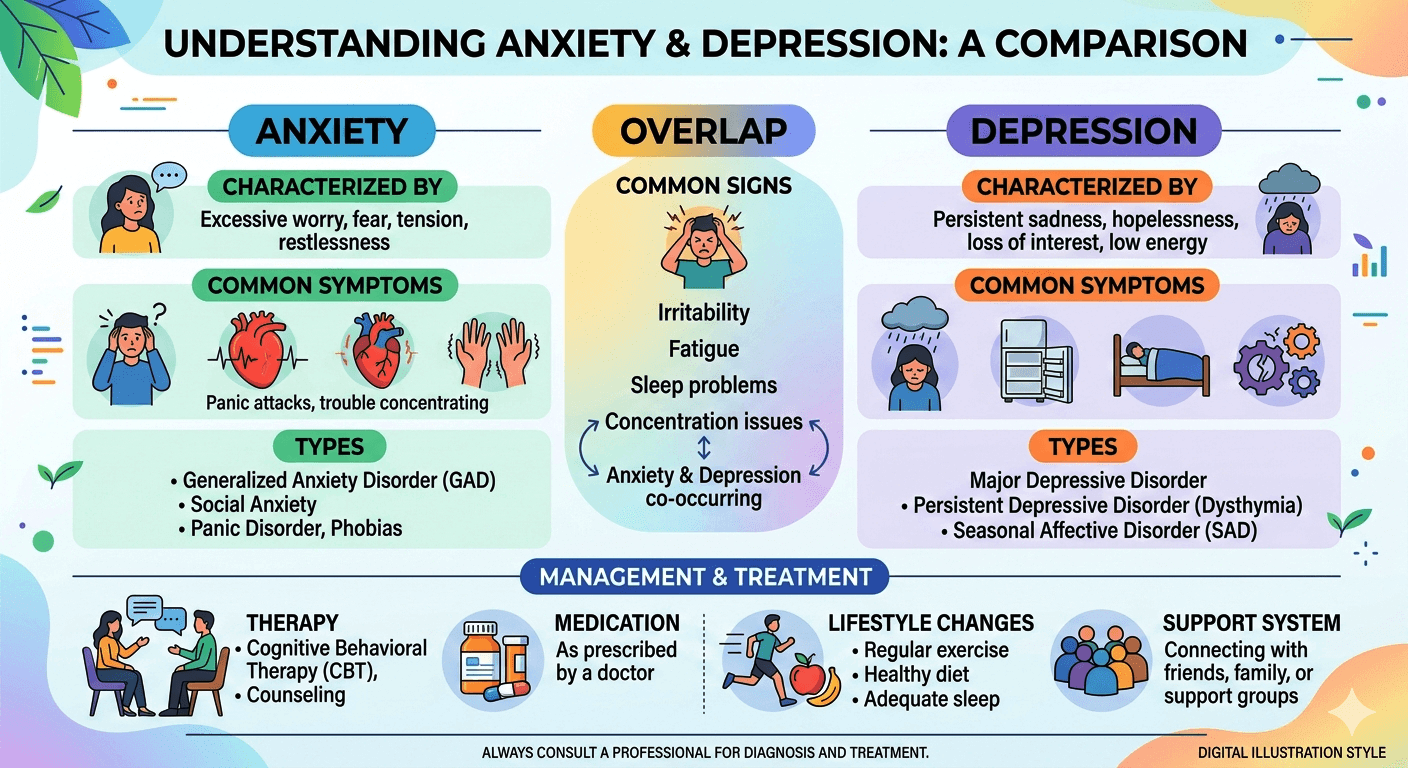
How Anxiety and Depression Affect the Brain and Body: A Comprehensive Guide
This guide explores how anxiety and depression affect the brain and body, why symptoms occur, and how treatment can help restore balance.
Introduction
Anxiety and depression are two of the most widespread forms of mental illnesses, which afflict millions of people regardless of age or background. Although these are referred to as mental or emotional illnesses, they have far-reaching impacts that go beyond just affecting one’s thoughts and emotions. Such disorders affect brain activity, change body systems, have implications on one’s physical well-being, and may even have profound effects on one’s everyday life.
Knowing what is really going on inside the brain and body helps lessen fear and self-blame on the patient’s side, while being informed about the biological and physiological processes involved is crucial for medical students. This manual seeks to explain the brain and bodily processes associated with such disorders.
Understanding Anxiety and Depression
Although anxiety and depression are distinct conditions, they frequently occur together and share several biological mechanisms.


What Is Anxiety?
Anxiety is a state of excessive worry, fear, or anticipation of potential threats. While some anxiety is normal and even protective, anxiety disorders involve persistent and disproportionate fear that interferes with daily functioning.
Common symptoms include:
- Excessive worrying
- Restlessness
- Muscle tension
- Racing thoughts
- Rapid heartbeat
- Difficulty concentrating
- Sleep disturbances
What Is Depression?
Depression is more than sadness. It is a medical condition characterized by persistent low mood and loss of interest or pleasure in activities.
Common symptoms include:
- Persistent sadness
- Fatigue
- Loss of motivation
- Feelings of worthlessness
- Changes in appetite
- Sleep disturbances
- Difficulty concentrating
- Thoughts of death or suicide
Both conditions involve complex interactions among genetics, brain chemistry, environmental stressors, and life experiences.
The Brain: Command Center of Emotion and Behavior
To understand anxiety and depression, it is important to first understand the major brain regions involved in emotional regulation.
Several key structures work together to process emotions, memory, decision-making, and stress responses:
| Brain Region | Primary Function |
| Amygdala | Fear and threat detection |
| Prefrontal Cortex | Decision-making and emotional control |
| Hippocampus | Memory formation and learning |
| Hypothalamus | Stress response regulation |
| Brainstem | Basic survival functions |
| Anterior Cingulate Cortex | Emotional processing and attention |
When these regions become dysregulated, symptoms of anxiety and depression can emerge.
How Anxiety Affects the Brain
The Amygdala Becomes Overactive
The amygdala acts as the brain’s alarm system.
In people with anxiety disorders, the amygdala often becomes hyperactive, causing the brain to perceive danger even when no real threat exists.
This heightened activity leads to:
- Increased fear responses
- Hypervigilance
- Excessive worrying
- Panic symptoms
The individual may feel constantly on edge because the brain repeatedly activates its danger-detection systems.
Reduced Control from the Prefrontal Cortex
The prefrontal cortex helps regulate emotions and evaluate whether a perceived threat is genuine.
In anxiety disorders:
- Emotional regulation becomes less effective
- Fear responses become harder to control
- Logical reasoning may be overridden by worry
Patients often describe knowing their fears are irrational but being unable to stop them.
Changes in the Hippocampus
The hippocampus plays a critical role in memory and contextual understanding.
Chronic anxiety can impair hippocampal functioning, leading to:
- Difficulty distinguishing real threats from perceived threats
- Impaired memory formation
- Increased sensitivity to stress
Over time, prolonged stress may contribute to structural changes within this region.
How Depression Affects the Brain
Alterations in Neurotransmitters
Neurotransmitters are chemical messengers that allow brain cells to communicate.
Several neurotransmitters are closely linked to depression:
Serotonin
Serotonin helps regulate:
- Mood
- Sleep
- Appetite
- Emotional stability
Reduced serotonin activity has long been associated with depressive symptoms.
Dopamine
Dopamine is involved in:
- Motivation
- Reward
- Pleasure
Low dopamine activity may contribute to:
- Loss of interest
- Lack of motivation
- Emotional numbness
Norepinephrine
Norepinephrine influences:
- Energy
- Alertness
- Focus
Reduced activity can lead to fatigue and concentration difficulties.
It is important to note that depression cannot be explained solely by a chemical imbalance. Modern research shows that it involves complex changes in neural networks, inflammation, genetics, and environmental influences.
Shrinkage of the Hippocampus
One of the most consistently observed findings in major depression is reduced hippocampal volume.
Possible causes include:
- Chronic stress
- Elevated cortisol levels
- Reduced neuroplasticity
Consequences may include:
- Memory difficulties
- Poor concentration
- Increased vulnerability to future depressive episodes
Encouragingly, effective treatment may partially reverse these changes through neuroplasticity.
Reduced Activity in the Prefrontal Cortex
The prefrontal cortex helps us:
- Plan
- Solve problems
- Regulate emotions
Depression is often associated with reduced activity in this region, leading to:
- Difficulty making decisions
- Slowed thinking
- Reduced emotional regulation
- Negative thought patterns
This helps explain why even simple daily tasks can feel overwhelming during a depressive episode.
The Stress System: A Common Link
One of the most important biological systems involved in both anxiety and depression is the hypothalamic-pituitary-adrenal (HPA) axis.
This system controls the body’s response to stress.
When a threat is perceived:
- The hypothalamus sends signals to the pituitary gland.
- The pituitary activates the adrenal glands.
- The adrenal glands release stress hormones.
The most important stress hormone is cortisol.
Chronic Cortisol Elevation
Short-term cortisol release is beneficial.
However, prolonged activation can cause:
- Anxiety
- Sleep disruption
- Impaired memory
- Immune dysfunction
- Increased inflammation
Many individuals with chronic anxiety or depression experience persistent activation of this stress-response system.
How Anxiety Affects the Body
Anxiety is often experienced physically because the brain constantly prepares the body for danger.
Cardiovascular Effects
Common symptoms include:
- Rapid heartbeat
- Palpitations
- Elevated blood pressure
- Chest discomfort
These occur because the sympathetic nervous system activates the fight-or-flight response.
Although uncomfortable, these symptoms are usually not dangerous in otherwise healthy individuals.
Respiratory Effects
Anxiety frequently alters breathing patterns.
People may experience:
- Rapid breathing
- Hyperventilation
- Shortness of breath
- Sensation of choking
These symptoms can be frightening and sometimes mimic serious medical conditions.
Gastrointestinal Effects
The gut and brain communicate continuously through what is often called the gut-brain axis.
Anxiety can cause:
- Nausea
- Diarrhea
- Stomach pain
- Bloating
- Irritable bowel symptoms
Many patients notice worsening digestive symptoms during stressful periods.
Musculoskeletal Effects
Persistent muscle tension may lead to:
- Neck pain
- Shoulder pain
- Headaches
- Jaw clenching
- Chronic fatigue
This occurs because muscles remain partially activated during prolonged states of stress.
How Depression Affects the Body
Depression affects nearly every organ system.
Sleep Disturbances
Sleep problems are extremely common.
Some individuals experience:
- Insomnia
- Early morning awakening
- Frequent nighttime waking
Others may experience:
- Excessive sleeping
- Difficulty getting out of bed
Both patterns can worsen depressive symptoms.
Changes in Appetite and Weight
Depression may lead to:
- Loss of appetite
- Weight loss
- Reduced interest in food
Alternatively, some individuals experience:
- Increased appetite
- Emotional eating
- Weight gain
Both responses are common.
Reduced Energy and Fatigue
One of the hallmark symptoms of depression is profound fatigue.
Patients often describe:
- Feeling physically heavy
- Lack of stamina
- Difficulty initiating tasks
- Exhaustion despite adequate rest
This fatigue is not simply laziness or lack of willpower; it reflects genuine biological changes in brain and body function.
Increased Pain Sensitivity
Depression can amplify pain perception.
Common complaints include:
- Back pain
- Joint pain
- Headaches
- Generalized body aches
Research suggests that depression alters pain-processing pathways in the nervous system.
How Treatment Helps the Brain and Body
Psychotherapy
Therapies such as cognitive behavioral therapy (CBT) help patients:
- Identify unhelpful thought patterns
- Develop coping skills
- Reduce stress responses
- Improve emotional regulation
Brain imaging studies show measurable changes in neural circuits following successful therapy.
Medications
Common antidepressants and anti-anxiety medications may help regulate neurotransmitter systems involved in mood and stress.
These medications can:
- Reduce symptoms
- Improve functioning
- Support recovery when combined with therapy
Exercise
Regular physical activity can:
- Increase dopamine and serotonin activity
- Improve sleep
- Reduce inflammation
- Lower stress hormone levels
Exercise is one of the most effective non-pharmacological interventions for both anxiety and depression.
Sleep Restoration
Healthy sleep supports:
- Memory consolidation
- Emotional regulation
- Stress resilience
Improving sleep often produces meaningful improvements in mental health symptoms.
Frequently Asked Questions (FAQs)
Can anxiety physically damage the brain?
Chronic, severe anxiety may contribute to changes in brain structure and function, particularly in areas involved in stress and memory. However, many of these changes can improve with appropriate treatment and recovery.
Is depression caused only by low serotonin?
No. Depression is far more complex than a simple serotonin deficiency. Genetics, stress, inflammation, neural networks, life experiences, and multiple neurotransmitters all contribute.
Why do anxiety and depression often occur together?
They share overlapping brain circuits, neurotransmitter systems, genetic influences, and stress-response pathways, making co-occurrence common.
Can depression cause physical pain?
Yes. Depression can increase pain sensitivity and contribute to headaches, back pain, joint pain, and generalized body aches.
Can the brain recover from anxiety and depression?
In many cases, yes. Through neuroplasticity, the brain can adapt and recover. Effective treatment often improves both symptoms and underlying brain function.
Why does anxiety affect the stomach?
The brain and gastrointestinal system communicate through the gut-brain axis. Stress and anxiety can directly alter digestive function, causing nausea, cramping, diarrhea, and other symptoms.
Does exercise really help mental health?
Yes. Exercise has been shown to improve mood, reduce anxiety, support neuroplasticity, and enhance overall brain health.
Conclusion
These conditions cannot be viewed only in terms of changes in the patient’s mood; on the contrary, they are whole body disorders affecting the brain, nervous system, immune system, hormone levels, heart and blood circulation, digestion, and sleep. The knowledge of these facts may assist patients in realizing the serious nature of their illness and its medical importance.
As far as medical students are concerned, studying such phenomena helps in comprehending the complex interconnection of neurology, psychology, endocrinology, and physiological processes. For patients, it may be an important discovery that may give them peace of mind.
Above all, it should be pointed out that anxiety and depression are illnesses that have high chances of being successfully treated. Thanks to proper care and treatment, patients will manage to recover both psychologically and physically, although recovery takes time and effort.