
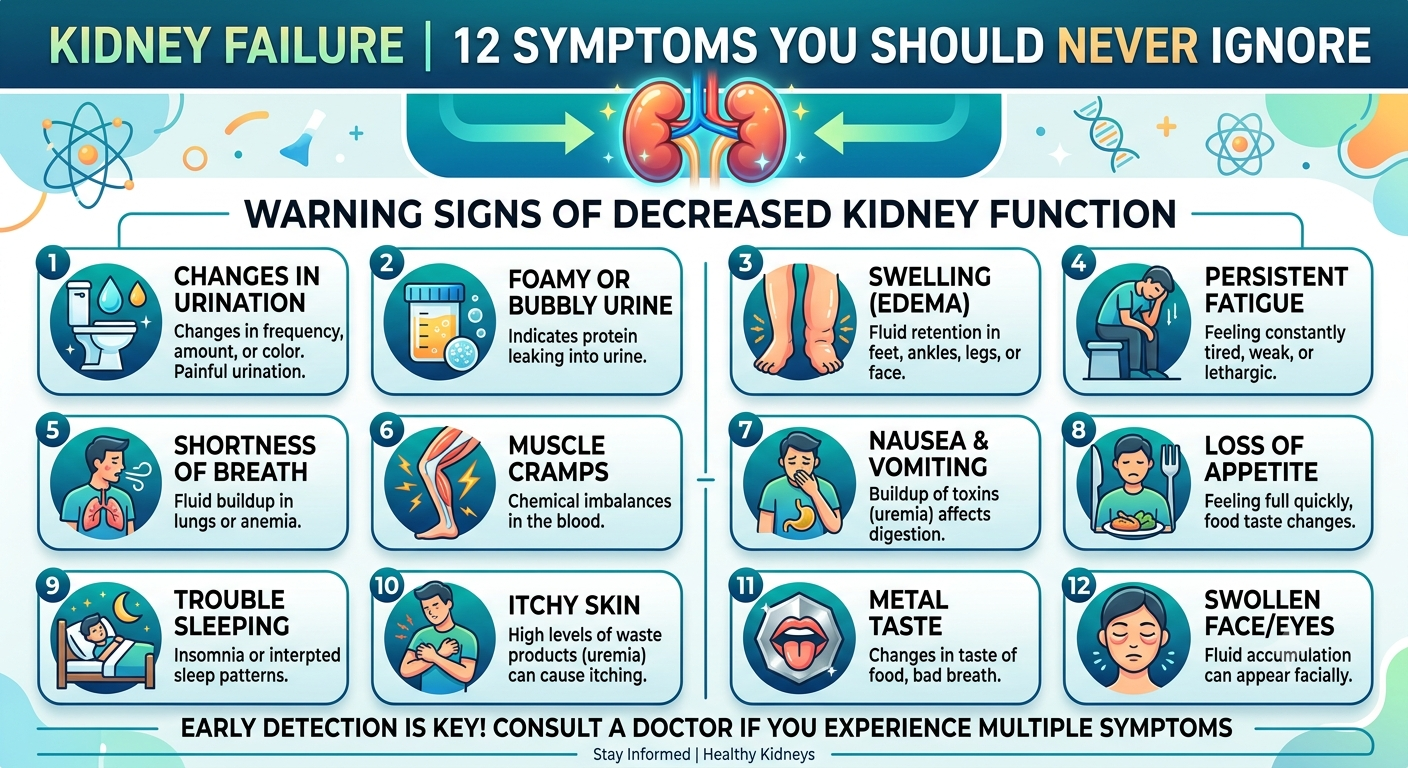
Learn the Kidney Failure 12 Symptoms You Should Never Ignore, understand kidney anatomy, the different types of kidney failure, and how early diagnosis can help protect your kidney health.
Introduction
Your kidneys are among the hardest-working organs in your body, quietly performing life-sustaining tasks every minute of every day. They filter approximately 180 liters of blood daily, removing waste products, balancing fluids and electrolytes, regulating blood pressure, producing hormones that stimulate red blood cell production, and helping maintain healthy bones. Despite their remarkable resilience, kidney disease often develops silently. By the time noticeable symptoms appear, significant kidney damage may have already occurred.
Kidney failure, also known as renal failure or end-stage kidney disease (ESKD) in its advanced form, occurs when the kidneys lose their ability to effectively filter waste products and excess fluid from the bloodstream. Without prompt diagnosis and appropriate treatment, kidney failure can lead to life-threatening complications affecting nearly every organ system.
The encouraging news is that early recognition of warning signs, timely medical evaluation, and appropriate treatment can often slow or even prevent further kidney damage. Understanding the symptoms and risk factors empowers individuals to seek medical care before irreversible complications develop.
This comprehensive guide explains the Kidney Failure Symptoms You Should Never Ignore, understands kidney anatomy, the different types of kidney failure, and how early diagnosis can help protect your kidney health.
What Is Kidney Failure?
Kidney failure is a serious medical condition in which one or both kidneys can no longer perform their essential functions adequately. Healthy kidneys continuously filter blood, eliminating waste products, excess water, toxins, and medications through urine while maintaining the body’s delicate balance of minerals and fluids.
When kidney function declines significantly:
- Waste products accumulate in the bloodstream.
- Fluid builds up in the body.
- Electrolyte levels become abnormal.
- Blood pressure often rises.
- Hormonal functions become impaired.
- Red blood cell production decreases.
- Bone metabolism becomes disrupted.
Kidney failure is generally diagnosed when kidney function falls below approximately 15% of normal, although symptoms may begin much earlier depending on the underlying cause and the speed of disease progression.
Without treatment, kidney failure may require dialysis or kidney transplantation to sustain life.
Types of Kidney Failure
Kidney failure is broadly classified into two major categories.
1. Acute Kidney Injury (AKI)
Previously known as acute renal failure, acute kidney injury develops suddenly, often within hours or days.
Common characteristics include:
- Rapid decline in kidney function
- Often reversible if treated promptly
- Frequently occurs during severe illness or hospitalization
- May result from dehydration, infection, medications, surgery, or reduced blood flow to the kidneys
Many patients recover completely when the underlying cause is identified and treated early.
2. Chronic Kidney Disease (CKD) Leading to Kidney Failure
Chronic kidney disease develops gradually over months or years.
Unlike AKI, chronic kidney disease usually causes:
- Progressive loss of kidney function
- Permanent kidney damage
- Slow onset of symptoms
- Increased cardiovascular risk
When chronic kidney disease advances to end-stage kidney disease (ESKD), dialysis or kidney transplantation becomes necessary for survival.
Other Clinical Classifications
Healthcare professionals often categorize kidney failure according to its underlying mechanism:
Prerenal Kidney Failure
Occurs when insufficient blood reaches the kidneys.
Examples include:
- Severe dehydration
- Major blood loss
- Heart failure
- Shock
Intrinsic (Renal) Kidney Failure
Results from direct damage to kidney tissue.
Causes include:
- Glomerulonephritis
- Acute tubular necrosis
- Autoimmune diseases
- Certain medications
- Severe infections
Postrenal Kidney Failure
Develops when the urine flow becomes blocked.
Examples include:
- Kidney stones
- Enlarged prostate
- Urinary tract tumors
- Severe urinary obstruction
Removing the obstruction early can often restore kidney function.
Kidney Anatomy: Understanding How Your Kidneys Work
Understanding kidney anatomy helps explain why kidney disease affects so many body systems.
Location
Most people have two kidneys, located:
- On either side of the spine
- Just below the rib cage
- Behind the abdominal cavity
Each kidney is approximately the size of a clenched fist.
Major Structures of the Kidney
Renal Cortex
The outer layer, where blood filtration begins.
Renal Medulla
The inner portion, containing pyramids responsible for concentrating urine.
Nephrons
Each kidney contains approximately one million nephrons, the microscopic functional units responsible for filtration.
Each nephron consists of:
- Glomerulus
- Bowman’s capsule
- Proximal tubule
- Loop of Henle
- Distal tubule
- Collecting duct
Renal Artery
Supplies oxygen-rich blood to the kidneys.
Renal Vein
Returns filtered blood back to circulation.
Ureters
Carry urine from the kidneys to the bladder.
Functions of Healthy Kidneys
Healthy kidneys perform numerous vital functions:
Blood Filtration
They remove:
- Urea
- Creatinine
- Excess salts
- Toxins
- Drug metabolites
Fluid Balance
Kidneys carefully regulate:
- Water content
- Sodium
- Potassium
- Calcium
- Phosphate
Blood Pressure Regulation
Kidneys produce renin, an enzyme involved in controlling blood pressure.
Red Blood Cell Production
They release erythropoietin, which stimulates bone marrow to produce red blood cells.
Bone Health
Kidneys activate vitamin D, enabling proper calcium absorption and healthy bone metabolism.
Pathophysiology of Kidney Failure
Kidney failure develops when the kidneys lose functioning nephrons faster than the body can compensate.
Initially, surviving nephrons enlarge and work harder to maintain filtration. This process, known as hyperfiltration, temporarily preserves kidney function. Over time, however, the increased workload damages these remaining nephrons, creating a cycle of progressive kidney injury.
As kidney function declines:
- Waste products such as urea and creatinine accumulate in the bloodstream.
- Fluid retention leads to swelling and elevated blood pressure.
- Potassium levels may rise to dangerous levels, increasing the risk of life-threatening heart rhythm disturbances.
- Acid builds up in the body, causing metabolic acidosis.
- Reduced erythropoietin production results in anemia, leading to fatigue and weakness.
- Impaired activation of vitamin D contributes to weakened bones and disturbances in calcium and phosphate balance.
In advanced stages, nearly every organ system can be affected, including the heart, lungs, nervous system, digestive tract, bones, and immune system.
Kidney Failure: 12 Symptoms You Should Never Ignore
Kidney disease is often called a “silent disease” because many people experience no symptoms until significant damage has occurred. Recognizing the following warning signs can lead to earlier diagnosis and better outcomes.
1. Persistent Fatigue and Weakness
One of the earliest and most common symptoms is unexplained tiredness.
As kidney function declines:
- Waste products accumulate in the blood.
- Anemia develops due to reduced erythropoietin production.
- Oxygen delivery to tissues decreases.
Patients often describe:
- Constant exhaustion
- Reduced stamina
- Difficulty concentrating
- Feeling weak despite adequate sleep
2. Swelling of the Feet, Ankles, Legs, or Face
Healthy kidneys remove excess fluid.
When they fail, fluid accumulates in body tissues, causing swelling (edema).
Common areas include:
- Ankles
- Feet
- Lower legs
- Hands
- Eyelids
- Face
Swelling that persists or worsens should never be ignored.
3. Changes in Urination
Changes in urination are often among the earliest indicators of kidney disease.
Watch for:
- Urinating more frequently
- Urinating less than usual
- Foamy urine
- Dark-colored urine
- Blood in urine
- Difficulty urinating
- Pain during urination
- Frequent nighttime urination
4. Shortness of Breath
Kidney failure can cause breathing difficulties because:
- Fluid accumulates in the lungs.
- Severe anemia reduces oxygen delivery.
- Metabolic acidosis increases breathing effort.
Sudden or worsening shortness of breath requires immediate medical evaluation.
5. Persistent High Blood Pressure
High blood pressure is both:
- A major cause of kidney disease
- A common consequence of kidney failure
When the kidneys cannot regulate blood pressure effectively, hypertension becomes increasingly difficult to control.
6. Nausea and Vomiting
Accumulation of toxins in the bloodstream (uremia) frequently affects the digestive system.
Symptoms may include:
- Persistent nausea
- Vomiting
- Metallic taste
- Loss of appetite
- Feeling full quickly
7. Loss of Appetite and Unintentional Weight Loss
Many patients gradually lose interest in eating because waste products alter taste perception and reduce appetite.
Over time, this may result in:
- Weight loss
- Muscle wasting
- Nutritional deficiencies
8. Persistent Itching (Pruritus)
Advanced kidney disease commonly causes widespread itching due to:
- Elevated phosphorus levels
- Dry skin
- Accumulation of waste products
- Inflammation
The itching can become severe enough to interfere with sleep and daily activities.
9. Muscle Cramps
Damaged kidneys struggle to maintain a normal electrolyte balance.
Abnormal levels of:
- Calcium
- Potassium
- Magnesium
- Sodium
can trigger painful muscle cramps, especially at night.
10. Difficulty Concentrating or Confusion
As toxins accumulate in the bloodstream, brain function may be affected.
People may notice:
- Poor memory
- Difficulty focusing
- Confusion
- Reduced alertness
In severe kidney failure, an altered mental status is a medical emergency.
11. Chest Pain or Pressure
Kidney failure increases the risk of:
- Fluid around the heart (pericardial effusion)
- Heart disease
- Electrolyte-related heart rhythm abnormalities
Chest pain should always be evaluated promptly, particularly in individuals with known kidney disease.
12. Persistent Bad Breath and Metallic Taste
A buildup of urea in the blood can lead to a distinctive metallic taste in the mouth and ammonia-like breath odor (uremic fetor). These symptoms often accompany advanced kidney dysfunction and may contribute to poor appetite and nausea.
When Should You Seek Immediate Medical Care?
Seek emergency medical attention if kidney-related symptoms are accompanied by:
- Severe shortness of breath
- Chest pain
- Confusion or decreased consciousness
- Complete inability to urinate
- Rapidly worsening swelling
- Persistent vomiting with dehydration
- Very high blood pressure with headache or vision changes
Read More https://www.kidney.org
Continue Reading Part 2 Kidney Failure Treatment, Diagnosis & Causes Explained
Part 3 Living with Kidney Failure: Expert Tips for Better Kidney Health