
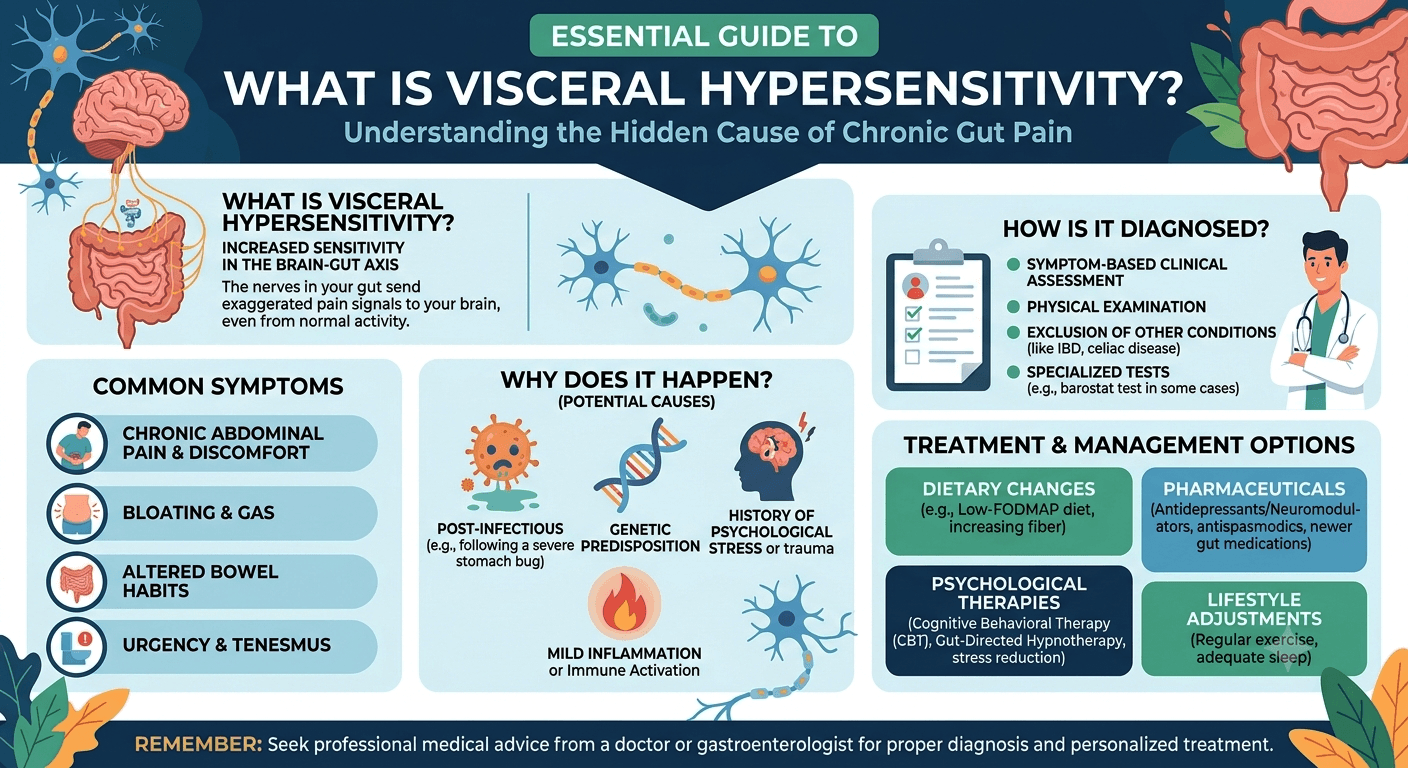
Essential Guide to What Is Visceral Hypersensitivity?
What Is Visceral Hypersensitivity? Understanding the Hidden Cause of Chronic Gut Pain is explained in detail, including causes, symptoms, diagnosis, treatment, prognosis, and practical advice for patients and medical students.
Understanding the Hidden Cause of Chronic Gut Pain.
Among the most frustrating cases I have considered as a doctor are those where the patient suffers from some form of stomach pain, bloating, or indigestion, while all tests show normal results. Many of such people have been told that they do not have any problem while they suffer from obvious symptoms.
A possible cause of the problem could be visceral hypersensitivity, which occurs due to high sensitivity of the internal organs’ nerves to normal processes. It is thought to be one of the key causes of chronic gastrointestinal disorders, especially Irritable Bowel Syndrome (IBS).
The knowledge of the problem is beneficial for patients as it helps to understand why their symptoms are valid. For medical students, this condition shows how complex the interrelation between the gut and central nervous system really is.
Definition and Significance
What Is Visceral Hypersensitivity?
Visceral hypersensitivity is a condition where the internal organs become more sensitive to stimuli that would not otherwise be painful or uncomfortable.
In normal people:
- The stretching of the stomach after eating a meal,
- The passage of gases within the intestine,
- And normal intestinal movements
- Are usually not even noticed or only noticed mildly.
In people with visceral hypersensitivity:
- The same normal sensations become painful.
- A slight distention of the intestine may be severely felt.
- Essentially normal digestive actions create considerable pain.
Such hypersensitivity occurs due to the disruption of the signaling pathway among:
- The digestive system
- The peripheral nerves
- The spinal cord
- The brain.
Visceral hypersensitivity is being understood more and more as a major source of abdominal pain.
Anatomy and Function: How Normal Gut Sensation Works
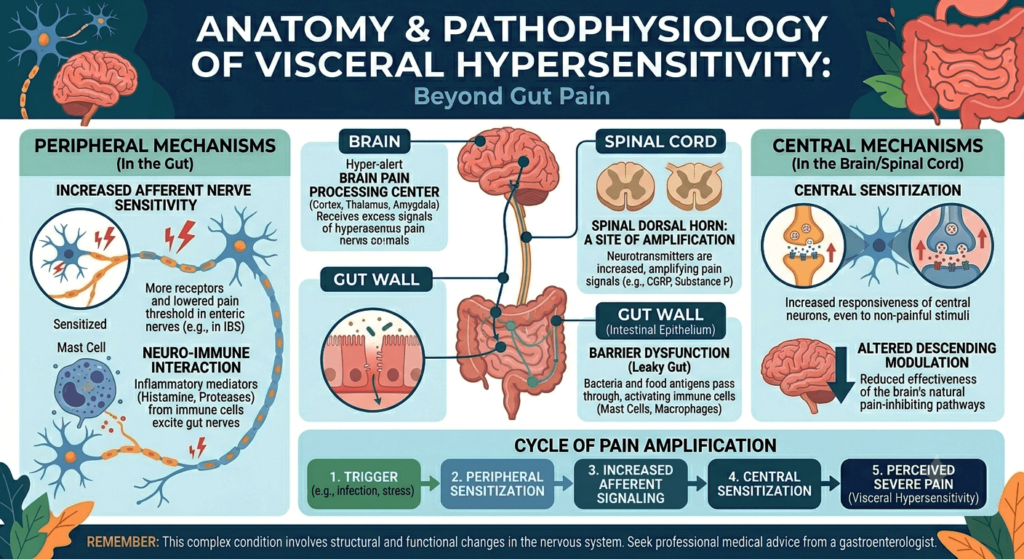
The Visceral Nervous System
There are millions of neurons present in the alimentary canal, and together, they constitute the enteric nervous system, which is also referred to as the second brain.
Main elements include:
Visceral sensory receptors
This receptor responds to:
• Stretching
• Pressure
• Inflammation
• Chemical change
Peripheral nerves
These are used for carrying signals from:
• Vagal pathways
• Sympathetic pathways
• Spinal afferent nerves
Central nervous system
Here, the brain receives signals to understand whether they are:
• Normal sensation
• Discomfort
• Pain
Process in visceral hypersensitivity
There is an increase in sensitivity in the pain system.
It implies that:
• Normal sensation feels like pain.
• Mild stimulation causes disproportionate sensation of pain.
• Sensation of pain is processed by the brain on an exaggerated level.
An example of a metaphor here would be using a microphone with the volume increased.
Causes of Visceral Hypersensitivity
Visceral hypersensitivity is often multifactorial. Several mechanisms may contribute simultaneously.
1. Gastrointestinal Disorders
The most common causes include:
Irritable Bowel Syndrome (IBS)
Irritable Bowel Syndrome (IBS) is strongly associated with visceral hypersensitivity.
Research suggests many IBS patients experience:
- Lower pain thresholds
- Increased bowel sensitivity
- Enhanced brain responses to gut stimulation
Functional Dyspepsia
Patients often experience:
- Upper abdominal pain
- Early satiety
- Post-meal fullness
due partly to hypersensitive stomach nerves.
2. Previous Gastrointestinal Infections
Some individuals develop symptoms after:
- Food poisoning
- Gastroenteritis
- Bacterial infections
3. Chronic Inflammation
Conditions associated with ongoing inflammation include:
- Inflammatory bowel disease (IBD)
- Microscopic colitis
- Chronic gastritis
Even after inflammation improves, hypersensitivity may persist.
4. Psychological and Emotional Factors
The gut and brain communicate continuously through the gut-brain axis.
Contributing factors include:
- Anxiety
- Depression
- Chronic stress
- Trauma
These conditions do not cause symptoms to be imagined. Rather, they can amplify pain-processing pathways.
5. Central Sensitization
In some patients, the nervous system itself becomes over reactive.
This process is similar to what occurs in:
- Fibromyalgia
- Chronic fatigue syndrome
- Migraine disorders
6. Genetic and Biological Factors
Less common contributing factors include:
- Genetic predisposition
- Altered neurotransmitter activity
- Changes in serotonin signaling
- Abnormal pain modulation pathways
Symptoms of Visceral Hypersensitivity
Symptoms vary depending on the affected organ system.
Direct Symptoms
Chronic Abdominal Pain
The hallmark symptom.
Pain may be:
- Crampy
- Burning
- Sharp
- Diffuse
Bloating
Patients regularly feel significant abdominal distension even when objective swelling is minimal.
Pain After Eating
Normal stomach expansion after meals may trigger discomfort.
Gas-Related Discomfort
Small amounts of intestinal gas may produce severe symptoms.
Symptoms Associated with Underlying Disorders
IBS-Related Symptoms
- Diarrhea
- Constipation
- Alternating bowel habits
- Urgency
Functional Dyspepsia Symptoms
- Early fullness
- Nausea
- Upper abdominal discomfort
Pelvic Symptoms
Some patients experience:
- Pelvic pain
- Bladder sensitivity
- Increased urinary frequency
Diagnosis of Visceral Hypersensitivity
There is no single blood test that confirms visceral hypersensitivity.
Diagnosis usually involves:
- Clinical evaluation
- Excluding structural disease
- Identifying associated disorders
Medical History
Important questions include:
- Duration of symptoms
- Pain characteristics
- Relationship to meals
- Bowel habits
- Stress factors
- Previous infections
Physical Examination
A physician evaluates for:
- Abdominal tenderness
- Organ enlargement
- Signs of inflammation
- Weight loss
Most patients have a relatively normal examination.
Laboratory Tests
Blood tests may include:
- Complete blood count (CBC)
- Inflammatory markers (CRP, ESR)
- Liver function tests
- Lipid profile
- Thyroid studies
- Diabetes screening
- Celiac disease screening
These help exclude other conditions.
Imaging Studies
Ultrasound (whole abdomen)
CT Scan (Abdomen)
MRI
Endoscopy and Colonoscopy
These procedures may be performed to exclude:
- Ulcers
- Cancer
- Inflammatory bowel disease
Specialized Testing
Research settings may use:
- Rectal balloon distension tests
- Barostat studies
- Sensory threshold testing
These assess visceral sensitivity directly.
Treatment of Visceral Hypersensitivity
Core Principle: Treat the Underlying Cause
Management focuses on:
- Identifying associated disorders
- Reducing nerve sensitivity
- Improving quality of life
Lifestyle and Dietary Modifications
Dietary Changes
Depending on the diagnosis:
- Low-FODMAP diet
- Trigger-food avoidance
- Smaller, frequent meals
- Adequate hydration
These strategies often reduce symptom severity.
Stress Reduction
Because of the gut-brain connection, stress management is important.
Helpful approaches include:
- Meditation
- Yoga
- Mindfulness training
- Relaxation exercises
Medications
Neuromodulators
Low doses of medications can reduce pain sensitivity.
Examples include:
- Tricyclic antidepressants
- SSRIs
- SNRIs
These are frequently prescribed for pain modulation rather than depression.
Antispasmodic Medications
May help reduce:
- Cramping
- Intestinal spasms
Gut-Specific Treatments
Depending on the underlying condition:
- IBS medications
- Anti-inflammatory therapy
- Acid-suppressing drugs
Psychological Therapies
Evidence strongly supports:
Cognitive Behavioral Therapy (CBT)
Helps modify pain perception and coping mechanisms.
Emerging Treatments
Researchers are studying:
- Microbiome-targeted therapies
- Neuromodulation techniques
- Novel pain signaling medications
These approaches may expand future treatment options.
Living with Visceral Hypersensitivity
Practical Advice for Patients
Keep a Symptom Journal
Track:
- Foods
- Stress levels
- Symptoms
- Bowel habits
Patterns typically become apparent over time.
Maintain Regular Physical Activity
Exercise may:
- Improve bowel function
- Reduce stress
- Enhance pain tolerance
Avoid Unnecessary Dietary Restrictions
Extreme elimination diets can lead to:
- Nutritional deficiencies
- Increased anxiety around food
Work with a healthcare professional whenever possible.
When to Seek Medical Attention
Seek prompt medical evaluation if symptoms are accompanied by:
- Unexplained weight loss
- Blood in stool
- Persistent vomiting
- Fever
- Difficulty swallowing
- Severe nighttime symptoms
- Family history of gastrointestinal cancer
These may indicate a condition other than visceral hypersensitivity.
Frequently Asked Questions (FAQs)
Disclaimer: The information provided in this blog post is for educational and informational purposes only and should not be considered medical advice. It is not intended to replace professional medical consultation, diagnosis, or treatment.