
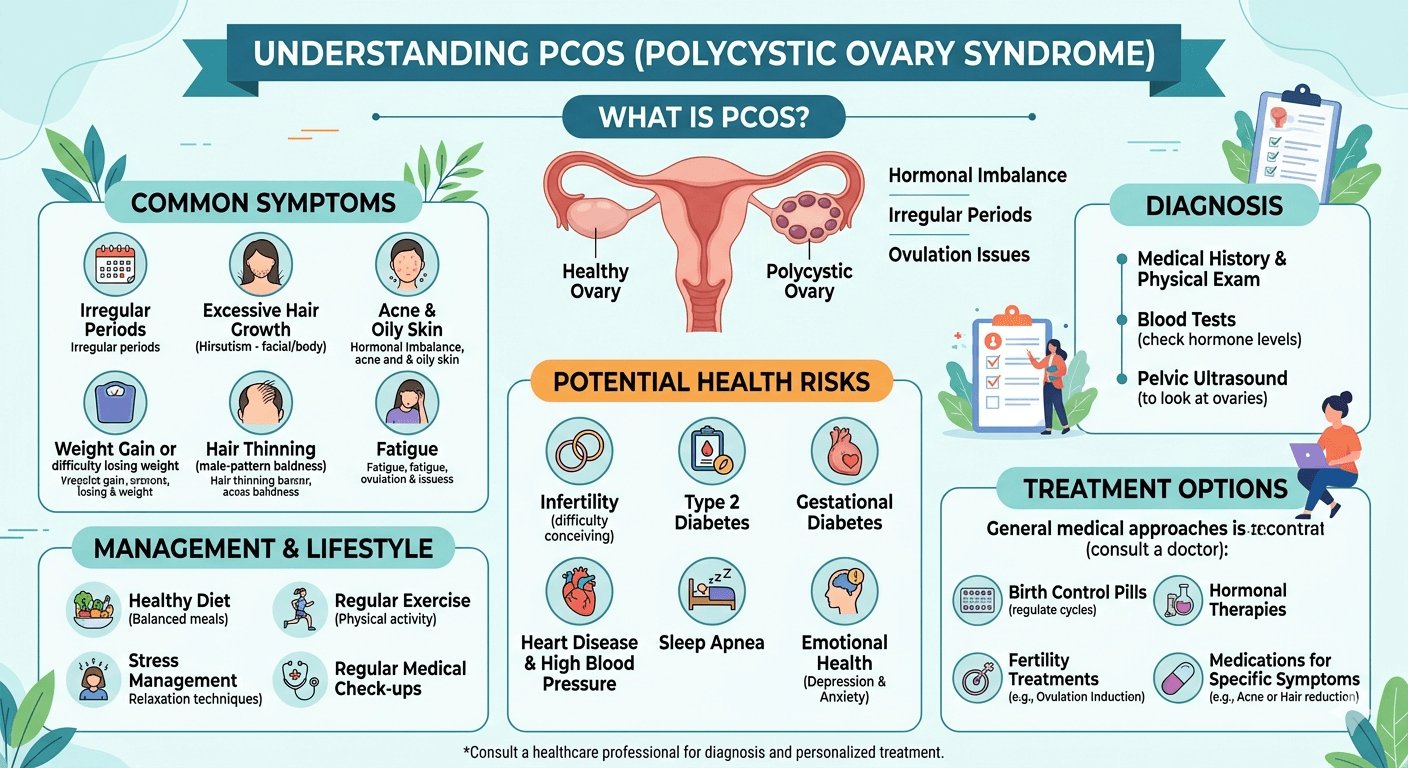
introduction
Polycystic Ovary Syndrome (PCOS) is one of the most common hormonal disorders affecting women of reproductive age. It involves a combination of hormonal imbalances, metabolic issues, and problems with ovarian function. Globally, PCOS affects approximately 6–13% of women in their reproductive years, although many cases remain undiagnosed because symptoms can differ greatly from person to person.
PCOS is not only related to reproductive health. It is also associated with serious metabolic and psychological complications, including insulin resistance, infertility, type 2 diabetes, cardiovascular disease, and mental health disorders such as anxiety and depression.
This article explains the pathophysiology, causes, symptoms, diagnosis, and treatment strategies for PCOS in a simplified and evidence-based format.
Understanding the Pathophysiology of PCOS
PCOS develops due to several interacting factors, including disruptions in hormone regulation, insulin metabolism, and ovarian activity.
1. Hormonal Imbalance
Normally, the hypothalamus and pituitary gland regulate ovarian function through the release of hormones. The hypothalamus secretes gonadotropin-releasing hormone (GnRH), which stimulates the pituitary gland to produce:
- Luteinizing hormone (LH)
- Follicle-stimulating hormone (FSH)
In women with PCOS:
- LH levels are often elevated
- FSH levels may remain normal or decrease
This imbalance overstimulates ovarian theca cells, causing excess androgen production, including testosterone. High androgen levels interfere with normal follicle growth and ovulation.
A large number of women with PCOS experience insulin resistance, where body cells fail to respond properly to insulin. As a result:
- The pancreas produces excess insulin
- High insulin levels stimulate increased androgen production
- Elevated androgens further worsen hormonal imbalance
This creates a cycle that reinforces both insulin resistance and androgen excess.
Insulin resistance also increases the likelihood of:
- Type 2 diabetes
- Obesity
- Metabolic syndrome
3. Ovarian Dysfunction
Hormonal disturbances affect normal ovarian function In PCOS:
- Follicles begin developing but do not fully mature
- Ovulation becomes irregular or may stop completely
These immature follicles collect around the ovaries and appear as small cyst-like structures on ultrasound imaging. Despite the name “polycystic ovary,” these are actually underdeveloped follicles rather than true cysts.
4. Chronic Inflammation
Research suggests that women with PCOS commonly experience low-grade chronic inflammation. Inflammatory processes may contribute to:
- Increased androgen production
- Greater insulin resistance
This further worsens both reproductive and metabolic complications linked to PCOS
Causes and Risk Factors
The exact cause of PCOS remains unclear, but several contributing factors have been identified.
1. Genetics
Family history plays a significant role. Women with close relatives affected by PCOS are more likely to develop the condition.
Genes associated with:
- Insulin regulation
- Hormone production
- Ovarian function
may contribute to susceptibility.
2. Metabolic Factors
Insulin resistance is considered one of the major metabolic contributors to PCOS. Risk increases in women with:
- Obesity
- Sedentary lifestyle
- Poor dietary habits
- Metabolic syndrome
However, lean women can also develop PCOS, showing that weight alone is not the only factor involved.
3. Hormonal Disturbances
Excess androgen production is central to the condition and negatively affects:
- Ovulation
- Menstrual regularity
- Follicular development
4. Environmental and Lifestyle Influences
Certain environmental and lifestyle factors may increase the risk of PCOS, including:
- High-glycemic diets
- Chronic stress
- Lack of exercise
- Exposure to endocrine-disrupting chemicals
Symptoms of PCOS
Symptoms vary significantly among women and can range from mild to severe.
1. Irregular Menstrual Cycles
Women may experience:
- Oligomenorrhea (infrequent periods)
- Amenorrhea (absence of periods)
Ovulation may occur inconsistently or not at all.
2. Symptoms of Excess Androgens
Common androgen-related symptoms include:
Hirsutism
- Excess facial hair
- Hair growth on the chest, abdomen, or back
Acne
- Persistent hormonal acne
- Acne concentrated around the jawline and chin
Androgenic Alopecia
- Hair thinning
- Male-pattern hair loss
3. Polycystic Ovaries
Ultrasound examination may reveal enlarged ovaries containing numerous small follicles. However, not every woman with polycystic ovaries has PCOS.
4. Weight Gain
Many women with PCOS struggle with:
- Increased abdominal fat
- Difficulty losing weight
5. Fertility Challenges
Irregular ovulation can make conception difficult. With appropriate treatment and symptom control, many women can successfully become pregnant.
6. Metabolic Complications
PCOS increases the risk of:
- Insulin resistance
- Type 2 diabetes
- High cholesterol
- Hypertension
- Metabolic syndrome
7. Mental Health Concerns
Women with PCOS may also experience:
- Depression
- Anxiety
- Low self-esteem
- Body image concerns
Hormonal imbalances and visible symptoms often contribute to emotional distress.
Diagnosing PCOS
According to the Rotterdam Criteria, PCOS is diagnosed when at least two of the following are present:
- Irregular or absent ovulation
- Clinical or laboratory evidence of elevated androgen levels
- Multiple ovarian follicles seen on ultrasound
Doctors must also rule out other conditions with similar symptoms, such as:
- Thyroid disorders
- Hyperprolactinemia
- Congenital adrenal hyperplasia
Treatment Approaches for PCOS
Although there is no permanent cure for PCOS, symptoms can often be managed successfully through lifestyle changes and medical treatment.
1. Lifestyle Modifications
Lifestyle changes are considered the first-line treatment, especially for women with insulin resistance or obesity.
Nutrition
Recommended dietary approaches include:
- Low-glycemic foods
- Whole grains
- Lean proteins
- Fiber-rich vegetables
Exercise
Beneficial forms of physical activity include:
- Aerobic exercise such as walking or jogging
- Resistance training such as weightlifting
Research shows that losing even 5–10% of body weight can improve:
- Ovulation
- Insulin sensitivity
- Menstrual regularity
2. Medications
Hormonal Contraceptives
Birth control pills may help:
- Regulate menstrual cycles
- Lower androgen levels
- Improve acne and excessive hair growth
Insulin-Sensitizing Medications
Metformin is commonly prescribed to improve insulin response and may:
- Promote ovulation
- Reduce androgen levels
- Improve metabolic health
Ovulation-Inducing Medications
Women trying to conceive may benefit from:
- Letrozole
- Clomiphene citrate
These medications help stimulate ovulation.
Anti-Androgen Drugs
Medications such as spironolactone may reduce symptoms like acne and unwanted hair growth. These are usually prescribed alongside contraception because they may affect pregnancy.
3. Fertility Treatments
If standard ovulation treatments are unsuccessful, additional fertility options include:
- Gonadotropin injections
- In vitro fertilization (IVF)
These therapies can improve the chances of pregnancy.
4. Cosmetic Treatments
Some women use cosmetic procedures to manage physical symptoms, including:
- Laser hair removal
- Electrolysis
- Dermatological acne treatments
While these methods do not treat the root cause, they can improve confidence and quality of life.
Long-Term Health Risks
Without proper management, PCOS may increase the risk of:
- Type 2 diabetes
- Cardiovascular disease
- Endometrial cancer
- Infertility
- Sleep apnea
Early diagnosis and long-term lifestyle management can greatly reduce these complications.
Conclusion
Polycystic Ovary Syndrome (PCOS) is a widespread endocrine and metabolic disorder affecting millions of women globally. It develops through a combination of hormonal imbalance, insulin resistance, genetic factors, and ovarian dysfunction. Although there is currently no cure, effective symptom management through lifestyle improvements, medications, and fertility treatments can significantly enhance reproductive and metabolic health. Early awareness, diagnosis, and proper care are essential for improving long-term outcomes and overall well-being.
Disclaimer: The information provided in this blog post is for educational and informational purposes only and should not be considered medical advice. It is not intended to replace professional medical consultation, diagnosis, or treatment. Always seek the guidance of a qualified healthcare professional regarding any medical condition or health-related concerns. The author and publisher are not responsible for any actions taken based on the information presented in this article.