
Introduction
Learn about Pain in the Right Upper Quadrant Region, including its causes, symptoms, diagnosis, treatment options, and when to seek medical attention for RUQ pain.
Right upper quadrant (RUQ) pain refers to discomfort felt on the upper right side of the abdomen beneath the ribs. This area contains several vital organs responsible for digestion, metabolism, filtration, and circulation. The pain can vary from mild, short-term discomfort to intense pain that may require immediate medical care.
The type, intensity, and duration of the pain often help identify its underlying cause. Some conditions, such as indigestion or muscle strain, are relatively minor, while others including gallbladder disorders, liver disease, kidney infections, or appendicitis may be serious. Recognizing related symptoms and possible causes is important for prompt diagnosis and treatment.
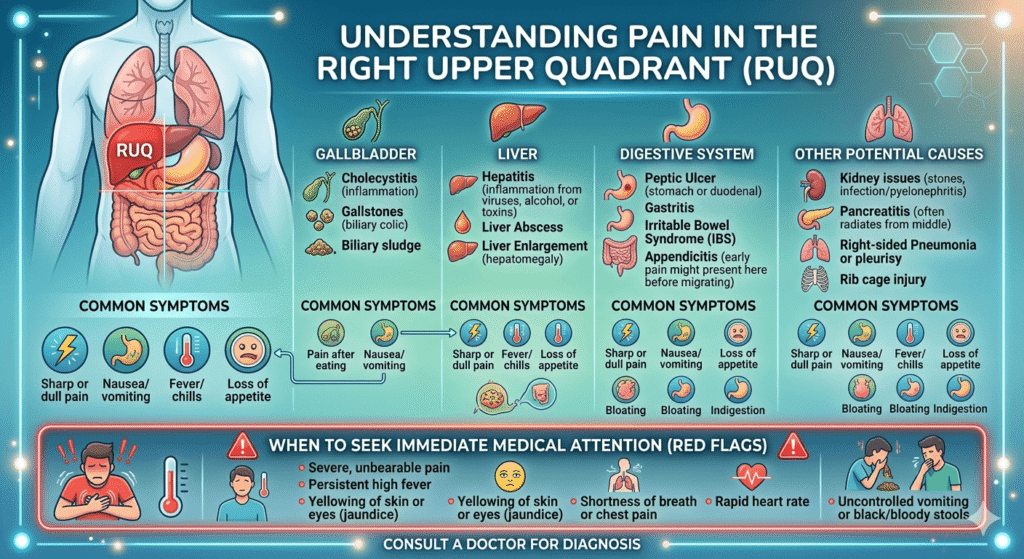
Organs Associated with Right Upper Quadrant Pain
Many organs are located within or near the RUQ, and pain may arise directly from them or from nearby structures.
1. Liver
The liver is the body’s largest internal organ and plays a major role in detoxification, metabolism, bile formation, and nutrient storage. Conditions such as liver inflammation, enlargement, infection, or tumors may trigger RUQ pain.
2. Gallbladder
The gallbladder stores bile produced by the liver and releases it during digestion. Gallstones, inflammation, or blockage of bile flow commonly lead to severe RUQ discomfort.
3. Bile Ducts
These channels carry bile from the liver and gallbladder to the intestine. Infections or blockages in these ducts may result in pain, fever, and jaundice.
4. Right Kidney
Part of the right kidney lies near the RUQ. Kidney infections, stones, or inflammation can cause pain that spreads toward the flank or back.
5. Pancreas
Although mainly central in location, the head of the pancreas extends toward the right side. Pancreatic inflammation may produce pain in the upper abdomen and RUQ.
6. Intestines
The upper portions of the intestines can also contribute to RUQ pain due to inflammation, infection, gas buildup, or digestive disorders.
7. Right Lung and Pleura
Conditions affecting the lower right lung or pleural lining, such as pneumonia or pleuritis, may create pain felt in the RUQ.
8. Muscles and Ribs
Injuries or strain involving muscles, ribs, or the chest wall can mimic pain originating from internal organs.
Mechanisms Behind Right Upper Quadrant Pain
The development of RUQ pain depends on the affected organ and the disease process involved.
Inflammation
Inflammatory conditions stimulate pain receptors and cause tissue swelling. Disorders such as hepatitis, pancreatitis, cholecystitis, and kidney infections commonly produce pain through inflammation.
Obstruction
Blockage within ducts or hollow organs raises internal pressure and stretches tissues, resulting in discomfort. Gallstones obstructing the bile duct are a common example.
Infection
Viral, bacterial, or parasitic infections trigger immune responses that cause tissue injury, swelling, fever, and pain.
Ischemia
Reduced blood supply deprives tissues of oxygen and nutrients, causing damage and pain.
Muscle Spasm
Spasms in smooth muscles of the intestines or bile ducts may cause intermittent cramping sensations.
Capsule Stretching
Organs such as the liver and kidneys are enclosed in fibrous coverings. Enlargement or swelling stretches these capsules and leads to discomfort.
Common Causes of Right Upper Quadrant Pain
1. Gallstones (Cholelithiasis)
Gallstones are hardened deposits inside the gallbladder that may block bile flow and cause sudden, severe pain known as biliary colic.
Symptoms
- Sharp RUQ pain after eating fatty foods
- Nausea and vomiting
- Pain spreading to the right shoulder or back
2. Acute Cholecystitis
This refers to inflammation of the gallbladder, usually caused by gallstone blockage.
Symptoms
- Continuous severe RUQ pain
- Fever
- Tenderness over the gallbladder
- Nausea and vomiting
3. Hepatitis
Hepatitis is liver inflammation caused by viruses, alcohol, medications, or autoimmune conditions.
Symptoms
- RUQ discomfort
- Fatigue
- Reduced appetite
- Jaundice
- Dark urine
4. Fatty Liver Disease
Excess fat buildup in the liver may enlarge the organ and produce discomfort.
Risk Factors
- Obesity
- Diabetes
- High cholesterol
- Heavy alcohol use
5. Liver Abscess
A liver abscess is a pus-filled infection within the liver.
Symptoms
- Fever and chills
- Severe RUQ pain
- Weight loss
- Weakness
6. Pancreatitis
Inflammation of the pancreas may cause upper abdominal pain extending toward the RUQ.
Causes
- Gallstones
- Alcohol misuse
- Elevated triglycerides
7. Peptic Ulcer Disease
Ulcers in the stomach or duodenum can produce pain that resembles RUQ discomfort.
8. Kidney Stones
Stones in the right kidney may cause flank pain radiating to the RUQ.
Symptoms
- Severe colicky pain
- Blood in urine
- Pain during urination
9. Kidney Infection (Pyelonephritis)
A bacterial kidney infection can lead to fever, flank pain, and RUQ discomfort.
10. Pneumonia
Infection of the lower right lung may irritate the diaphragm and cause referred abdominal pain.
11. Appendicitis
Although usually associated with lower abdominal pain, appendicitis may initially present with upper abdominal discomfort.
12. Musculoskeletal Causes
Muscle strain, rib fractures, or chest wall inflammation can also produce localized RUQ pain.
Symptoms Associated with Right Upper Quadrant Pain
Symptoms differ depending on the underlying condition.
Common Symptoms
- Sharp or dull pain in the RUQ
- Burning or cramping sensation
- Pain radiating to the shoulder or back
- Nausea and vomiting
- Fever
- Bloating
- Loss of appetite
- Fatigue
- Abdominal tenderness
Warning Signs Requiring Immediate Attention
- Jaundice
- Persistent vomiting
- High fever
- Breathing difficulty
- Black stools
- Severe abdominal stiffness
- Fainting or dizziness
- Confusion
- Low BP (Hypotension)
- Rebound tenderness.
These symptoms may indicate a serious medical emergency.
Diagnosis of Right Upper Quadrant Pain
Proper diagnosis requires a detailed medical history and physical examination.
Medical History
Doctors typically ask about:
- Duration and nature of pain
- Relationship to meals
- Associated symptoms
- Alcohol use
- Medication history
- Previous illnesses
Physical Examination
The physician may assess:
- Tenderness
- Enlarged organs
- Fever
- Jaundice
- Abdominal guarding
Laboratory Tests
Blood Tests
- Complete blood count (CBC)
- Liver function tests (LFTs)
- Kidney function tests
- Lipid Profile
- Pancreatic enzyme levels (S Amylase, S Lipase)
- Inflammatory markers
- Blood sugar (RBS)
Urine Analysis
Helps identify kidney infections or blood in the urine.
Imaging Studies
Ultrasound
Often the first imaging test used to evaluate gallstones, liver conditions, and bile duct disorders.
CT Scan
Provides detailed images of abdominal organs.
MRI or MRCP
Useful for examining bile ducts and liver structures.
Chest X-ray
May reveal pneumonia or lung-related causes.
Endoscopy
Used to detect ulcers or gastrointestinal diseases.
When to Seek Medical Care
Medical attention is recommended if RUQ pain:
- Persists for several hours
- Becomes severe or progressively worse
- Occurs with fever
- Causes jaundice
- Is associated with vomiting
- Occurs alongside chest pain or breathing problems
- Leads to weakness or fainting
- Involves blood in vomit or stool
Sudden, intense abdominal pain requires immediate emergency evaluation.
Treatment of Right Upper Quadrant Pain
Treatment depends on the underlying cause.
1. Medications
Pain Relievers
Used to control mild to moderate pain.
Antibiotics
Prescribed for bacterial infections such as kidney infections or cholecystitis.
Antiviral Medications
Helpful in certain viral hepatitis infections.
Antacids and Proton Pump Inhibitors
Used for ulcers and acid reflux conditions.
Antispasmodics
Help reduce spasms in the bile ducts or intestines.
2. Dietary Changes
- Avoid fried and fatty foods
- Limit alcohol consumption
- Eat smaller, frequent meals
- Stay well hydrated
- Increase fruits and vegetables intake
3. Surgical Treatment
Cholecystectomy
Removal of the gallbladder for gallstones or gallbladder inflammation.
Drainage of Liver Abscess
Performed when pus accumulates inside the liver.
Surgery for Appendicitis or Obstruction
Needed in emergency situations.
4. Management of Liver Disorders
- Weight loss for fatty liver disease
- Avoiding alcohol
- Treating hepatitis
- Regular liver monitoring
5. Treatment of Kidney Conditions
- Adequate hydration
- Antibiotics for infections
- Removal of kidney stones if required
Prevention and Precautions
Many causes of RUQ pain can be reduced through healthy lifestyle habits.
Healthy Diet
- Limit oily and processed foods
- Eat balanced, fiber-rich meals
- Reduce excess sugar intake
Maintain a Healthy Weight
Obesity increases the likelihood of gallstones and fatty liver disease.
Avoid Excess Alcohol
Alcohol can damage both the liver and pancreas.
Stay Hydrated
Proper hydration supports digestive and kidney health.
Exercise Regularly
Physical activity improves metabolism and overall organ function.
Vaccination
Vaccines for hepatitis A and B help prevent viral hepatitis.
Safe Medication Practices
Avoid unnecessary medications that may harm the liver.
Routine Medical Checkups
Early detection of liver disease, gallstones, or metabolic disorders lowers the risk of complications.
Conclusion
Right upper quadrant pain is a common symptom with many possible causes involving the liver, gallbladder, kidneys, pancreas, lungs, intestines, or musculoskeletal structures. While some conditions are mild, others can become life-threatening if not treated promptly.
Recognizing associated symptoms, warning signs, and risk factors is essential for early diagnosis and proper treatment. Healthy lifestyle choices, balanced nutrition, preventive care, and timely medical evaluation all play an important role in minimizing complications and improving overall health outcomes.
Anyone experiencing persistent or severe RUQ pain should seek professional medical care for accurate diagnosis and treatment.